












TakahiroFujimoto.com

HOME MAIL
HOME PROFILE BOOKS MUSIC PAPERS CONFERENCES BLOG MAIL CLOSE

BLOG 藤本幸弘オフィシャルブログ

カテゴリー:Fraxelフラクセル

フラクセルは僕にとって原点回帰

1927nmのツリウムグラスの波長が いま業界で再注目をされていることを今月の出張で学んできました。


実はちょうど僕自身もフラクセルについて改めて考えていた時期だったので、嬉しかったですね。

美容医療の世界に入って、ずいぶん長い時間が経ちました。振り返ると、僕がこの領域でやってきたことは、化粧品で肌を整える時代から、医療機器で皮膚そのものを再構築する時代への転換だったのだと思います。

若返りといえば、高級化粧品、コラーゲン、燕の巣、ふかひれ、すっぽん、さまざまな漢方。。。そんな時代が以前ありました。もちろん、化粧品や栄養が無意味だと言いたいわけではありません。けれど僕が惹かれたのは、そこではありませんでした。

光。熱。波長。パルス幅。エネルギー密度。そして、それに対する皮膚の組織反応。医療機器によって、皮膚にどのような再生のスイッチを入れられるのか。美容医療を、感覚や流行ではなく、物理学と生体医学の接点として組み立てられないか。

その意味で、フラクセルは僕にとって特別な機器です。フラクセルを僕なりの言葉で言えば、レーザー照射を積分化する技術だったと思います。

従来のレーザー治療は、どうしても「一点を強く叩く」あるいは「面を一気に削る」という発想に近かった。しかしフラクセルは違いました。点状の微細な熱損傷を、皮膚の中に無数に配置する。一つひとつの点は小さい。

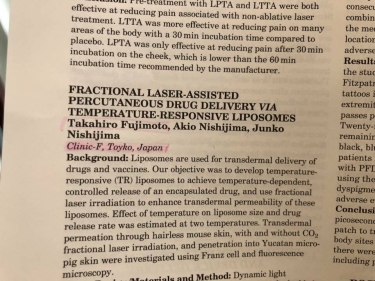
けれど、それが一定の密度で並ぶことで、皮膚全体としては面の変化になる。つまり、点を面に変えたのです。この fractional photothermolysis という概念は、2004年にMansteinらが Lasers in Surgery and Medicine に発表した論文で提唱されました。皮膚全体を一度に傷つけるのではなく、微細な熱損傷領域を点状に作り、周囲の正常組織から修復を促すという考え方です {PMID:15216537}。

僕はこの発想に、美容医療の次の時代を見ました。化粧品で肌を整えるのではなく、医療機器で皮膚に再生のきっかけを与える。表面を飾るのではなく、組織そのものの反応をデザインする。

ただし、フラクセルは誤解されやすい治療でもありました。かつては「一回で何%肌が入れ替わる」「五回打てばほぼ全部入れ替わる」といった説明がされることもありました。

分かりやすい表現ではありますが、実際の皮膚は、そんな単純な足し算では動きません。照射密度。出力。肌質。炎症の出方。乾燥傾向。肝斑の有無。紫外線曝露。治療後の保湿。すべてが結果に関わります。特にアジア人の肌では、ただ強く照射すればよいというものではありません。

炎症後色素沈着や肝斑悪化のリスクもあり、肌の土台を整え、炎症をどうコントロールするかが大切になります。だから僕は、フラクセルを「ただ打つ機械」とは考えていません。

何をゴールにするのか。シミなのか。毛穴なのか。ニキビ跡なのか。小じわなのか。あるいは、肌質そのもののメンテナンスなのか。そこを明確にして初めて、治療として意味を持ちます。

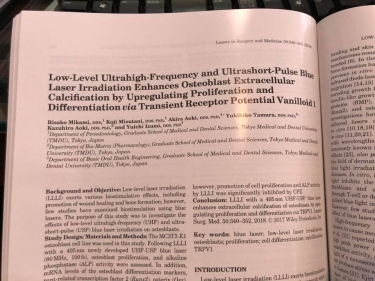
2006年には、Laubachらがフラクショナルレーザー照射後の皮膚反応を Lasers in Surgery and Medicine に報告しています。微細な熱損傷の後、表皮・真皮の修復反応が進み、メラニンを含む微小な壊死組織が排出される過程が観察されました {PMID:16392146}。

つまりフラクセルは、単なる表面処理ではありません。皮膚の修復機構そのものを利用する治療なのです。

考えてみれば、クリニックFの方向性は、この機器によってかなり明確になりました。僕は、化粧品で若返りを語る時代から、医療機器で皮膚を再構築する時代へ。そのパラダイムシフトを、自分の臨床の中心に据えてきました。

その後、DEKAスマートサイドスクエア、マドンナリフト、Sciton Halo、Quanta、ピコ秒レーザー、高周波、超音波、プラズマなど、さまざまな機器と出会いました。技術は進化しました。機器の名前も変わりました。

けれど、根底にある考え方は変わっていません。大切なのは、生体がどう反応するかです。どの刺激が、どの層に届き、どの細胞が反応し、どのような修復過程が起こるのか。その連鎖を理解したうえで、機器を選び、組み合わせ、治療計画を作る。僕が美容医療でやりたかったのは、まさにそこでした。

来年、レーザーによる肌質の改善治療に特化した「クリニックF」は2027年で20周年を迎えます。医師免許を取得して12年目、レーザー治療に魅了されて8年目のことでした。その前に、もう一度、自分がなぜこの道に入ったのかを考えています。

僕は、人の美醜そのものに過剰な関心があるタイプではありません。シミの一つ、皺の一本を、感情的に大きく語るタイプでもありません。けれど、皮膚が光や熱に反応し、組織が修復し、時間をかけて肌質が変わっていく過程には、今でも強く惹かれます。

そこには、医学があります。工学があります。薬科学があります。そして、患者さんの人生の時間があります。

フラクセルは、僕にとって古い機械ではありません。レーザーを「破壊の道具」から、「再生反応を設計する道具」へ変えた機器。点を面に変え、美容医療を化粧品の時代から医療機器の時代へ押し出した機器。

20周年を前に、原点に戻る。僕にとってソルタメディカル社のフラクセル、そしてその流れを組むサイトン社のヘイロー:トライバードとは、そういう存在なのです。

Fraxel: A Return to My Origins

During my business trip this month, I learned that the 1927-nm thulium-glass wavelength is once again attracting significant attention within the aesthetic medicine industry. The timing could not have been better, because I had recently found myself reflecting on Fraxel all over again. It was gratifying to see that others were arriving at the same realization.

It has been many years since I entered the field of aesthetic medicine. Looking back, I realize that what I have pursued throughout my career has been a shift—from an era in which we tried to improve the skin with cosmetics to one in which we reconstruct the skin itself using medical devices.

There was a time when rejuvenation was associated with luxury skincare, collagen, bird’s nest soup, shark fin, soft-shelled turtle, and countless herbal remedies.

I am not suggesting that cosmetics or nutrition are meaningless.

But that was never what truly fascinated me.

What captivated me was light.

Heat.

Wavelength.

Pulse duration.

Fluence.

And, above all, the biological response of the skin to those physical stimuli.

Could medical devices trigger the skin’s own regenerative mechanisms?

Could aesthetic medicine be built not upon intuition or fashion, but upon the intersection of physics and biomedical science?

In that sense, Fraxel has always been a very special device for me.

If I were to describe Fraxel in my own words, I would say that it introduced the concept of integrating laser energy.

Traditional laser treatments tended to follow one of two approaches: either concentrating intense energy onto a single target or resurfacing an entire area at once.

Fraxel introduced an entirely different philosophy.

Instead of treating the whole surface, it created countless microscopic thermal injuries distributed throughout the skin.

Each individual injury was tiny.

Yet when those microscopic treatment zones were arranged at an appropriate density, the cumulative biological response became a treatment of the entire skin surface.

It transformed points into a plane.

This revolutionary concept—fractional photothermolysis—was first introduced by Manstein and colleagues in 2004. Rather than injuring the entire skin surface simultaneously, the technique creates microscopic zones of thermal injury that stimulate repair from the surrounding untreated tissue (Lasers in Surgery and Medicine, 2004).

When I first encountered this idea, I felt I was witnessing the future of aesthetic medicine.

Instead of merely improving the appearance of the skin with cosmetics, medical devices could initiate genuine tissue regeneration.

Rather than decorating the surface, we could design the biological responses occurring within the tissue itself.

Fraxel, however, has also been one of the most misunderstood treatments.

Years ago, it was often explained in overly simplistic terms:

“One treatment replaces a certain percentage of your skin.”

“Five treatments replace almost all of it.”

These explanations were easy to understand.

But skin biology does not work through simple arithmetic.

Treatment density.

Energy settings.

Skin type.

The degree of inflammation.

Baseline dryness.

Whether melasma is present.

Ultraviolet exposure.

Post-treatment skincare.

All of these factors influence the final outcome.

This is especially true for Asian skin.

Success is never achieved simply by delivering stronger energy.

There is always the risk of post-inflammatory hyperpigmentation or exacerbation of melasma.

Preparing the skin appropriately and carefully controlling inflammation are essential.

That is why I have never viewed Fraxel as simply “a machine that delivers laser shots.”

Everything begins with defining the treatment goal.

Is it pigmentation?

Enlarged pores?

Acne scars?

Fine wrinkles?

Or simply improving overall skin quality?

Only when the objective is clearly established does the treatment acquire real meaning.

In 2006, Laubach and colleagues described the skin’s biological response following fractional laser treatment. They demonstrated the sequential repair of both the epidermis and dermis, along with the elimination of microscopic necrotic epidermal debris containing melanin (Lasers in Surgery and Medicine, 2006).

Fraxel, therefore, is far more than a resurfacing procedure.

It is a treatment that harnesses the skin’s intrinsic repair mechanisms.

Looking back, I realize that the philosophy of Clinic F became firmly established through this very technology.

I wanted to move beyond an era in which rejuvenation was discussed primarily in terms of cosmetics and into an era in which medical devices could genuinely reconstruct the skin.

That paradigm shift became the foundation of my clinical practice.

Over the years, I have worked with many remarkable technologies—DEKA SmartXide Square, Madonna Lift, Sciton HALO, Quanta lasers, picosecond lasers, radiofrequency, focused ultrasound, and plasma devices.

The technology has evolved.

The names of the devices have changed.

But the underlying philosophy has never changed.

What truly matters is how living tissue responds.

Which stimulus reaches which anatomical layer?

Which cells respond?

What repair processes are initiated?

Only after understanding those biological cascades can we choose the appropriate technology, combine treatments intelligently, and design a meaningful therapeutic strategy.

That has always been my vision of aesthetic medicine.

Next year, Clinic F, which specializes in laser-based skin rejuvenation, will celebrate its 20th anniversary.

I founded the clinic in my twelfth year as a physician and after eight years of being completely captivated by laser medicine.

Before reaching that milestone, I have found myself reflecting once again on why I chose this path in the first place.

I have never been someone excessively preoccupied with conventional notions of beauty.

Nor am I the type to become emotionally invested in a single spot of pigmentation or one fine wrinkle.

What continues to fascinate me is something much deeper:

How skin responds to light and heat.

How tissues repair themselves.

How skin quality gradually changes over time through biological regeneration.

Within that process lies medicine.

Engineering.

Pharmaceutical science.

And, perhaps most importantly, the passage of time in a patient’s life.

To me, Fraxel is not an outdated machine.

It was the technology that transformed lasers from instruments of destruction into instruments for designing regeneration.

It transformed points into planes.

It helped propel aesthetic medicine from the age of cosmetics into the age of medical technology.

As I approach the twentieth anniversary of Clinic F, I find myself returning to where it all began.

For me, Fraxel by Solta Medical, and its technological successor, Sciton’s HALO with TRL (Tunable Resurfacing Laser) technology, represent exactly that—a return to my origins.


16年前の今日の出来事

16年前の今日の出来事。

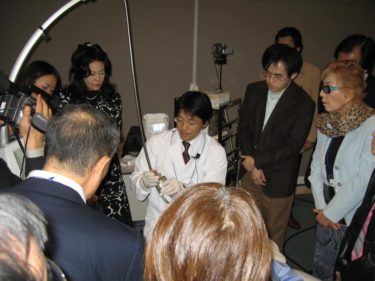
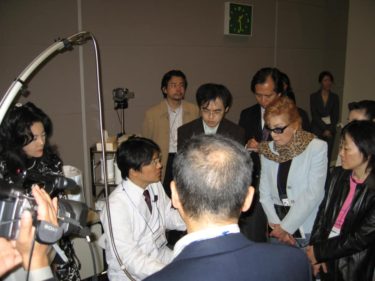
米国リライアント社のフラクショナルレーザーのフラクセル日本一号機のデモでした。
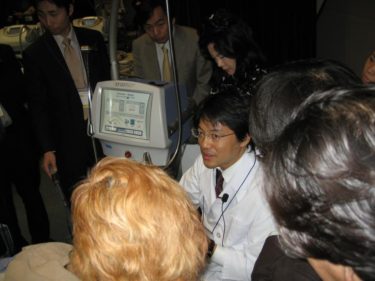
  

僕は痩せてる。笑。


8年前 ソルタメディカル社のマーケティングトップのブラッド

8年前 日本美容外科学会のために来日したソルタメディカル社のカルフォルニア本社フラクセルのマーケティングトップのブラッドと銀座の日本料理店で昼食のミーティング。
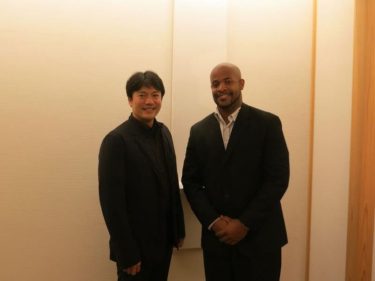
フラクセル3DUALやサーマクールCPT、リポソニックスの次世代機について、2時間近く、医学的/工学的観点から熱く語り合いました。

彼とは気が合います。

https://takahirofujimoto.com/blog/guest/post_10373/


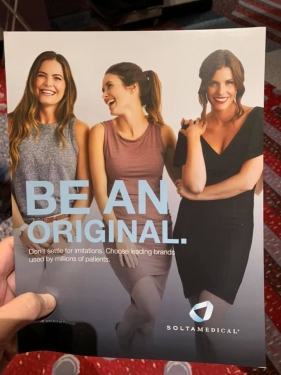
Be an Original

自然のままでいてください(オリジナル製品を買ってください)。

1

サーマクールFLXやフラクセルを販売しているソルタメディカル社のカタログに凄く同意します。

手術やヒアルロン酸で若い顔を作る事と、レーザーやRFなどのエネルギー技術を使って自らの遺伝子から若返る事は、実はベクトルが正反対だと思っていますが、医療機器も同様です。

工学博士を持っている身としては、機器のリバースエンジニアリング、いわゆる新たなコンセプトの製品をバラして同等のものを安く作り上げる模造品は、心情的には許せないです。

クリニックFではたとえ高額でもオリジナルの技術を作った会社から機器を買うようにしています。

技術者がものすごい努力をして作り上げた新たな製品が、あっという間にコピー商品を作られて安価に売られて苦しむ。

どこかの朝の連続ドラマでも同じシーンがありましたよね。笑。


直観

僕自身、2000年から機器による美容医療に関わり、全てのレーザー企業の本社に自分の足で訪れ、開発者と直接話し、医療機器を100台以上購入したことになりますが、レーザー(またはEBMD)により肌質を改善する分野で、脱毛レーザー以降、まったく新たなマーケットを作ることができたオリジナル技術(機種)は以下の通りですかね。

➀ IPL(フォトフェイシャル)

⓶ elos(オーロラ)

⓷ モノポーラーRF(サーマクール)

⓸ フラクショナルレーザー(フラクセル)

➄ HIFU(ウルセラ)

⓺ ロングパルスエルビウムヤグ(スマイルリフト4D)

➆ HIFEM (エムスカルプト)

初代フォトフェイシャルとウルセラ以外は、僕が日本初上陸機器の一台を購入しました。

レーザーの目利きとしては初期の直感がほぼ当たっていたことになりますね。


カテゴリー