












低気圧と高圧酸素室の話
台風前の低気圧は、身体にとって、いわば“ゆるい高山病”のようなものだと思っています。
もちろん実際には、標高の高い山に登った時ほど酸素が薄くなるわけではありません。しかし、気圧が下がり、湿度が上がり、気温が揺れ、空の重さが変わる。すると、人間の身体もまた、その外界の変化に静かに反応します。
内耳が揺さぶられ、三叉神経が反応し、自律神経が乱れ、血管の収縮と拡張のバランスが微妙に変わる。
「なんとなく頭が重い」
「眠い」
「古傷が痛む」
「やる気が出ない」
こうした感覚は、単なる気分の問題ではなく、気圧という見えない環境変化に対する、身体からの小さなサインなのかもしれません。
昨日は、ゴルフ医科学研究所のゴルフコンペで、館山カントリークラブへ。その後、会員制サーキットのマガリガワクラブへと移動しました。
館山の海沿いの空は、台風前とは思えないほど、どうにか持ちこたえてくれました。そして館山といえばビワですよね。ちょうど今が収穫時です。プレー中も雨はほとんど降らず、まるで天気の方がこちらに少しだけ猶予をくれたようでした。
ところが本日午前中に、20名で開催予定だったマガリガワクラブでの走行会と異業種交流会は、台風直撃のため8月に延期となりました。
いろいろ準備してきただけに、正直なところ残念です。
車の手配、参加者の調整、当日の流れ、交流会の段取り。イベントというものは、表に見える時間よりも、見えない準備の時間の方がずっと長いものです。
ただ、自然だけはどうにもなりません。
ゴルフも、サーキットも、人生も同じで、こちらがいくら計画を立てても、風向きひとつ、雨雲ひとつで予定は変わります。
こういう時は、無理に抗わず、「台風により、天与のお休みをいただいた」と思うのが一番良いのかもしれません。
そして、こんな低気圧の日にこそ、身体を少し整えたくなります。
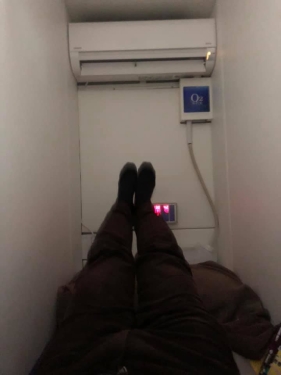
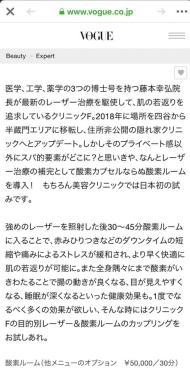
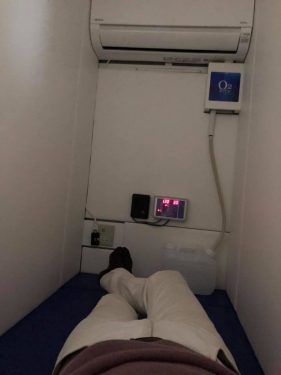
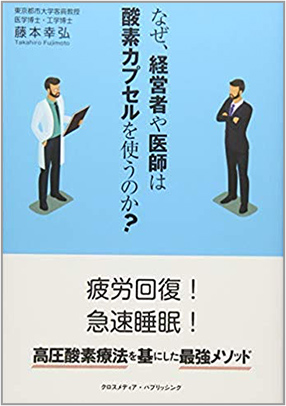
高圧酸素室は、単に「酸素を吸う装置」ではありません。
加圧環境により酸素分圧を上げ、血液中、とくに血漿中に溶け込む酸素を増やすという考え方が基本にあります。医療用の高圧酸素療法では、創傷治癒、一酸化炭素中毒、減圧症、放射線障害などで臨床応用されてきました。JAMA, 1990;263:2216-2220 {2181162}。
もちろん、一般施設に置かれている軽度高圧酸素室と、医療機関で行う本格的な高圧酸素療法は同じではありません。
ここは混同してはいけません。
しかし、低気圧で身体が重くなる日に、少し圧を戻し、酸素分圧を上げてあげると、主観的には、
「頭が軽くなる」
「眠りやすくなる」
「だるさが抜ける」
「呼吸が深くなる」
と感じる方がいます。
気圧変化と片頭痛の関係については、日本からも興味深い報告があります。気圧低下が片頭痛発作の誘因となる可能性が示されており、特に小さな気圧低下でも症状が誘発されることがあるとされています。Intern Med, 2011;50:1923-1928 {21921370}、Springerplus, 2015;4:790 {26702379}。
台風の日、私たちは空を見上げて天気を読む。
しかし本当は、身体の中にも小さな気圧計があるのだと思います。
耳の奥に。
血管の壁に。
自律神経の揺らぎに。
そして、なんとなく重くなる頭の奥に。
後ほど、ゴルフ医科学研究所の高圧酸素室に入り、少しだけ身体の圧を戻してこようと思います。
台風に逆らうのではなく、台風の日の身体に合わせる。
予定が流れた日を、損失ではなく、調整の時間に変える。
そう考えると、今日の延期もまた、悪くない一日なのかもしれません。


https://www.facebook.com/1486146253/videos/pcb.10243674735552357/2220698642017813
A Typhoon’s Unexpected Gift: A Heaven-Sent Pause
On Low Atmospheric Pressure and Hyperbaric Oxygen Chambers
I often think of the low-pressure conditions that precede a typhoon as a kind of “mild altitude sickness” for the body.
Of course, the air does not become nearly as thin as it does on a high mountain. Yet atmospheric pressure drops, humidity rises, temperatures fluctuate, and even the weight of the sky seems to change. In response, the human body quietly adjusts to these shifts in the environment.
The inner ear is affected. The trigeminal nerve reacts. The autonomic nervous system becomes unsettled. The delicate balance between vascular constriction and dilation begins to shift.
“My head feels heavy somehow.”
“I’m sleepy.”
“Old injuries are aching again.”
“I just can’t get motivated.”
These sensations may not simply be matters of mood. They may be subtle signals from the body responding to the invisible environmental change we call atmospheric pressure.
Yesterday, I attended a golf tournament organized by the Institute of Golf Medical Science at Tateyama Country Club. Afterwards, I traveled to the members-only Magarigawa Club circuit.
The skies along the coast of Tateyama held up remarkably well despite the approaching typhoon. And Tateyama, of course, is famous for its loquats—right now is harvest season. During our round, there was very little rain, almost as if the weather itself had granted us a brief reprieve.
Unfortunately, the driving event and business networking gathering scheduled for this morning at Magarigawa Club, with twenty participants expected, had to be postponed until August due to the direct impact of the typhoon.
To be honest, it was disappointing.
Arranging vehicles, coordinating participants, planning the schedule, organizing the networking session—events always require far more preparation behind the scenes than the public ever sees.
Yet nature is one thing we cannot control.
Golf, motorsports, and life itself share this truth. No matter how carefully we plan, a shift in the wind or a single rain cloud can alter everything.
At times like these, perhaps the best approach is not to resist, but to think of it as a heaven-sent day of rest granted by the typhoon.
And on a low-pressure day like this, I find myself wanting to restore a little balance to the body.
A hyperbaric oxygen chamber is not simply a device for breathing oxygen.
The fundamental concept is to increase ambient pressure, thereby raising the partial pressure of oxygen and increasing the amount of oxygen dissolved in the blood—particularly within the plasma. Medical hyperbaric oxygen therapy has long been used clinically for conditions such as wound healing, carbon monoxide poisoning, decompression sickness, and radiation injury.
Of course, the mild hyperbaric oxygen chambers found in wellness facilities are not the same as the full-scale hyperbaric oxygen therapy administered in medical institutions.
That distinction is important and should not be overlooked.
Nevertheless, on days when low atmospheric pressure leaves the body feeling sluggish, some people subjectively report that restoring a bit of pressure and increasing oxygen availability helps them feel:
• mentally clearer,
• more ready for sleep,
• less fatigued,
• and able to breathe more deeply.
There have also been intriguing reports from Japan regarding the relationship between barometric pressure changes and migraine attacks. Studies suggest that decreases in atmospheric pressure may trigger migraines in susceptible individuals, and that even relatively small pressure changes can provoke symptoms.
On a typhoon day, we look up at the sky and read the weather.
But perhaps there is also a small barometer within each of us.
Deep inside the ear.
Along the walls of our blood vessels.
Within the fluctuations of the autonomic nervous system.
And somewhere behind that vague sensation of heaviness in the head.
Later today, I plan to spend some time in the hyperbaric oxygen chamber at the Institute of Golf Medical Science and restore a little pressure to my body.
Not to fight against the typhoon, but to adapt to the body that exists within a typhoon.
To transform a day of canceled plans from a loss into a day of recalibration.
Seen that way, perhaps today’s postponement is not such a bad thing after all.