













TakahiroFujimoto.com

HOME MAIL
HOME PROFILE BOOKS MUSIC PAPERS CONFERENCES BLOG MAIL CLOSE

BLOG 藤本幸弘オフィシャルブログ

カテゴリー:EBMNEvidence Based Medical Devices・レーザー/光/RF/プラズマ他が適応する疾患・治療法など

常温プラズマという静かな革新

― 常温プラズマという静かな革新、その臨床と“中身”の違い ―

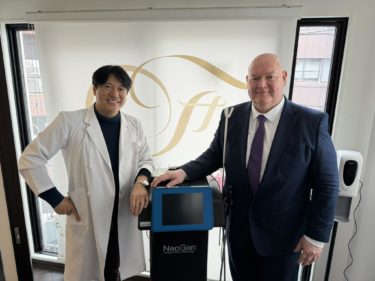
ちょうど9年前に英国はウェールズにあるNEOGENという窒素プラズマの企業を訪れたのですが、本日、そこから訪問者がありました。

コマーシャルディレクターのSimon Jonesです。この機器は長く日本のディストリビューターが販売していましたが、新機種が出るタイミングで、販売形式を変えたいとの事でした。

美容医療にはBefore afterを重視する派手な技術と、静かに浸透していく技術があると感じます。前者はすぐに話題になりますが、後者は気づいたときには標準になっていることが多いです。

常温常圧プラズマ(Cold Atmospheric Plasma:CAP)は、まさにその後者に属する技術だと思います。

特に窒素系コールドプラズマが作り出すNO(一酸化窒素)の生態作用には僕も興味があり、英文論文も3報書いています。

ちょっと専門性が高くなりますが、まとめてみました。

■ 第一章 ― 美容医療における常温プラズマ治療 ―

常温プラズマは「焼かないエネルギー」と言えます。レーザーやRFのように熱で組織を変性させるのではなく、細胞に対してシグナルを与える治療です。

その作用の中心にあるのは、活性酸素種(ROS)、活性窒素種(RNS)、そして微弱電場であり、これらが組み合わさることで非熱的に細胞機能を調整します。

臨床的に最も分かりやすい適応はニキビです。

Cutibacterium acnesを抑制しながら炎症性サイトカインを低下させるため、抗生剤に依存しない治療として非常に合理的です。

また、肌質改善の領域では、軽度の酸化刺激を介して線維芽細胞が活性化され、コラーゲン産生が促進されます。

これは強い破壊を伴うものではなく、穏やかなリモデリングと表現するのが適切です。

さらにもともと創傷治療から発展した技術であるため、上皮化促進、血流改善、感染制御が同時に起こります。

その結果、レーザーやRFなどの治療後に併用すると、ダウンタイムを短縮しながら仕上がりの質を高めることができます。

実際に使ってみると、劇的な変化ではないものの、確実に肌の質感が整っていく印象があります。言い換えれば、常温プラズマは結果の“完成度”を引き上げる治療です。

ここで興味深いのは、レーザーとの併用です。

レーザーは熱エネルギーによって組織に変化を起こす、いわば「構造を変える治療」です。一方で常温プラズマは「細胞環境を整える治療」であり、この二つは競合するのではなく補完関係にあります。

例えばレーザー照射前にプラズマを用いることで、皮膚の常在菌環境や角層の状態が整い、レーザーへの反応性が向上する可能性があります。

また照射後に用いることで、炎症反応の制御や上皮化の促進が起こり、ダウンタイムの短縮や色素沈着リスクの低減が期待できます。

さらに慢性的な肌質改善という観点では、レーザーで構造を変えた後にプラズマで細胞機能を整えることで、仕上がりの滑らかさや透明感が一段階引き上がる印象があります。

■ 第二章 ― プラズマの“中身”によって何が変わるのか ―

ここからがより本質的な話になります。常温プラズマは一つの治療ではなく、使用するガスによって性格が大きく変わります。

まず「酸素系」、いわゆるROS優位のプラズマでは、強い抗菌作用と軽度のダメージを介した再生誘導が起こります。ニキビや皮脂トラブルに対して非常に有効で、いわば“攻めのプラズマ”と言えます。

一方で「窒素系」、RNS優位のプラズマでは、NOを中心としたシグナルにより血流が改善し、抗炎症作用や創傷治癒促進が主な作用となります。ネオジェンはこちらに含まれます。

刺激を抑えながら整えていく、“整えるプラズマ”という位置づけになります。

この違いはそのまま臨床での使い分けに直結します。ニキビや脂性肌では空気プラズマ、つまりROSが多い条件が適しており、殺菌と炎症制御を同時に狙います。

一方で赤みや敏感肌、あるいはレーザー後などの状態では、窒素系プラズマを用いて炎症を抑えつつ血流を改善するほうが理にかなっています。

このように見ていくと、常温プラズマの本質は単なるエネルギーデバイスではなく、「どのような化学シグナルを細胞に与えるか」を設計できる点にあると分かります。

■ 結び
美容医療はこれまで、どれだけ強いエネルギーを与えるかという方向で進化してきました。

しかしこれからは、どのような情報を細胞に与えるかという設計の時代に入っていくのではないでしょうか。

常温プラズマは、その入り口にある技術だと感じています。

派手さはありませんが、気づいたときには欠かせない存在になっている、そんな予感を持たせる領域です。
— Cold Atmospheric Plasma: A Subtle Innovation and the Clinical Significance of Its Underlying Composition —

Approximately nine years ago, I visited a nitrogen plasma company, NEOGEN, located in Wales, United Kingdom. Today, I had the opportunity to welcome a representative from the company, Mr. Simon Jones, its Commercial Director. While this device has long been distributed in Japan through a local distributor, the company is currently considering a modification of its commercialization strategy in conjunction with the release of a new model.

Within the field of aesthetic medicine, technologies may broadly be categorized into those that produce immediate and visually striking “before-and-after” outcomes, and those that achieve gradual integration into clinical practice. Whereas the former rapidly attract attention, the latter often become standard of care without widespread recognition. Cold Atmospheric Plasma (CAP) is best understood as belonging to the latter category. In particular, I have a research interest in the biological effects of nitric oxide (NO) generated by nitrogen-based cold plasma and have authored three English-language publications on this topic. Although the following discussion is somewhat specialized, I provide a concise overview below.

Chapter 1 — Cold Atmospheric Plasma in Aesthetic Medicine

Cold atmospheric plasma may be conceptualized as a form of “non-thermal energy.” In contrast to laser or radiofrequency (RF) modalities, which induce tissue alteration via thermal mechanisms, CAP exerts its effects primarily through cellular signaling. The principal mediators of this process include reactive oxygen species (ROS), reactive nitrogen species (RNS), and low-intensity electric fields, which act synergistically to modulate cellular function without inducing thermal damage.

From a clinical standpoint, one of the most well-established indications is acne vulgaris. CAP suppresses Cutibacterium acnes while concurrently reducing pro-inflammatory cytokines, thereby offering a rational therapeutic approach that minimizes reliance on systemic or topical antibiotics. In the context of skin rejuvenation, mild oxidative stimulation leads to fibroblast activation and subsequent upregulation of collagen synthesis. This process is not characterized by overt tissue injury, but rather by gradual and controlled remodeling.

Moreover, CAP technology has its origins in wound healing applications, where it has been shown to promote epithelialization, enhance microcirculation, and exert antimicrobial effects. Consequently, when used adjunctively with laser or RF treatments, CAP has the potential to reduce post-procedural downtime while improving overall treatment outcomes. Clinically, although the effects may not be immediately dramatic, a consistent improvement in skin texture and quality is observed. In this regard, CAP may be regarded as a modality that enhances the overall “quality of the final result.”

The combinatory use of CAP with laser therapy is of particular interest.

Laser-based treatments may be characterized as modalities that induce structural alterations through thermal energy deposition. In contrast, CAP optimizes the cellular microenvironment, rendering these approaches complementary rather than competitive. Pre-treatment with CAP may improve the cutaneous microbiome and stratum corneum integrity, potentially enhancing responsiveness to subsequent laser irradiation. Post-treatment application, on the other hand, may facilitate regulation of the inflammatory response and accelerate epithelial recovery, thereby reducing downtime and mitigating the risk of post-inflammatory hyperpigmentation. Furthermore, in the context of long-term skin quality enhancement, structural modification via laser followed by cellular optimization through CAP may result in superior improvements in smoothness and translucency.

Chapter 2 — The Impact of Plasma Composition on Biological Effects

A critical consideration is that CAP is not a homogeneous modality; rather, its biological effects vary significantly depending on the gas composition employed.

Oxygen-dominant (ROS-rich) plasma is characterized by potent antimicrobial activity and the induction of regenerative processes through mild oxidative stress. This modality is particularly effective for acne and sebaceous disorders and may be conceptualized as a more “intervention-oriented” approach.

In contrast, nitrogen-dominant (RNS-rich) plasma exerts its effects primarily via nitric oxide (NO)-mediated signaling pathways, leading to improved microcirculation, anti-inflammatory effects, and enhanced wound healing. NEOGEN devices fall within this category. Such plasma may be described as a “regulatory” modality, promoting tissue normalization while minimizing irritation.

These differences have direct clinical implications. For acne and oily skin conditions, ROS-rich plasma (e.g., air plasma) is preferable, as it simultaneously targets microbial load and inflammation. Conversely, in cases involving erythema, sensitive skin, or post-laser treatment, nitrogen-based plasma is more appropriate, as it suppresses inflammation while enhancing blood flow.

From this perspective, the fundamental value of CAP lies not merely in its classification as an energy-based device, but in its capacity to modulate and “design” the biochemical signals delivered to cells.

Conclusion

Historically, the evolution of aesthetic medicine has been driven by the pursuit of increasingly potent energy-based interventions. However, the field may now be transitioning toward an era defined by the precise modulation of cellular signaling. Cold atmospheric plasma represents an important entry point into this emerging paradigm. While it lacks the immediacy and visibility of more aggressive technologies, it holds the potential to become an indispensable modality—one whose significance becomes apparent only after it has been fully integrated into routine clinical practice.


白斑治療という「失われた色」を追う旅

今日は患者さんのお嬢さんの白斑の相談がありました。病態的には問題になるレベルではなかったので、様子見で考えましたが、エキシマレーザーが現在日本でほぼ唯一の効果的な治療だけあって、僕もよく相談を受けます。

色素斑の治療は、ある意味で引き算の医療です。増えすぎたメラニンを減らす、あるいは壊す。理論としては比較的単純です。しかし白斑はまったく違います。ゼロになった色を、もう一度つくり出せるのかという問いに向き合う、別次元の挑戦です。

かつて色素斑治療の中心にあったハイドロキノンは、長年美白外用剤として使用されてきましたが、外因性白斑の報告が相次ぎ、米国ではOTCとしての流通が停止されました。色を抜く行為は常にメラノサイト毒性と隣り合わせであるという事実を、改めて突きつけられた出来事でした。

白斑が色素斑よりもはるかに治療抵抗性である理由は明確です。色素斑はメラニン産生の過剰が本態であり、ターゲットはメラニン顆粒そのものです。

しかし白斑ではメラノサイト自体が消失しています。特に尋常性白斑では自己免疫機序が中心にあり、CD8陽性T細胞によるメラノサイト破壊やIFN-γシグナルの持続が病勢を維持します。
つまり白斑治療とは、

①免疫を鎮め、②メラノサイトを再生あるいは誘導し、③色素を安定させる

という三段階を同時に解く必要があるということです。破壊ではなく再建。ここに本質的な難しさがあります。

現在の標準治療はナローバンドUVBであり、局所病変では308nmエキシマも有効です。顔面や体幹では反応が良好ですが、末梢部は依然として難治です。

さらに近年、JAK阻害という概念が白斑治療を大きく変えつつあります。IFN-γシグナルを遮断することで自己免疫ループを断ち、臨床的に再色素化が得られる時代に入りました。これは単なる炎症抑制ではなく、分子レベルの病態理解が直接治療につながった象徴的な出来事だと僕は感じています。米国では使用可能ですが、高額でもあるので日本に入るのは少し後になりそうですね。

また、安定期白斑に対する自家表皮細胞移植や非培養細胞懸濁液移植も確立され、再建医療としての完成度は年々高まっています。ただし活動期には適応がなく、やはり炎症制御が前提条件になります。

ハイドロキノンの教訓は非常に重いものがあります。色素を抑えることと、色素を失わせることは紙一重です。色素斑治療の「攻め」が、不可逆的な白斑を生む可能性を常に孕んでいる以上、僕たちはリスクバランスを慎重に見極めなければなりません。色素斑は治せても、白斑は簡単には戻らない。この現実を臨床で何度も経験してきました。

それでも、未来は明るいと僕は感じています。免疫制御、再生医療、レーザーアシストドラッグデリバリー、マイクロニードリング併用療法、そしてバイオマーカーによる病勢予測。分子免疫学と光学医療の融合は、確実に次の段階へ進んでいます。白斑は確かに難治です。しかし難治であるがゆえに研究は加速します。

国際学会を巡るたびに、「白斑はこの10年で大きく変わる」という確信が強くなっています。かつて色を抜く医療が主役だった時代から、色を取り戻す医療へ。その転換点に、僕たちは立っているのだと思います。

The Journey of Vitiligo Treatment — Pursuing “Lost Color”

Today, I consulted with a patient about her daughter’s vitiligo. Clinically, it was not at a level requiring immediate intervention, so we decided on careful observation for now. Still, because the 308-nm excimer laser is currently one of the very few effective treatments available in Japan, I am often asked about it.

Treatment of hyperpigmented lesions is, in a sense, “subtractive medicine.” We reduce or destroy excess melanin. The theory is relatively straightforward. Vitiligo, however, is entirely different. It confronts a far more fundamental question: can we recreate color once it has fallen to zero? It is a challenge on a different dimension.

Hydroquinone, once central to the treatment of hyperpigmentation, had long been used as a topical whitening agent. However, after accumulating reports of exogenous ochronosis and depigmentation, its over-the-counter distribution was halted in the United States. This was a sobering reminder that removing pigment is always adjacent to melanocyte toxicity.

The reason vitiligo is far more treatment-resistant than hyperpigmentation is clear. In hyperpigmentation, the pathology is excess melanin production; the target is the melanin granule itself.

In vitiligo, by contrast, melanocytes themselves are lost. In particular, in nonsegmental vitiligo, autoimmune mechanisms play a central role. CD8-positive T cells destroy melanocytes, and persistent IFN-γ signaling sustains disease activity. Thus, treating vitiligo requires simultaneously addressing three steps:

  1. suppressing the immune response,
  2. regenerating or recruiting melanocytes, and
  3. stabilizing pigmentation.

This is reconstruction, not destruction. That is the essential difficulty.

The current standard therapy is narrowband UVB, and for localized lesions, 308-nm excimer light is effective. Responses are generally favorable on the face and trunk, but distal extremities remain challenging.

In recent years, the concept of JAK inhibition has begun to transform vitiligo treatment. By blocking IFN-γ signaling and interrupting the autoimmune loop, clinical repigmentation has become achievable. To me, this represents a symbolic milestone—where molecular-level understanding of pathophysiology directly translates into therapy, rather than merely suppressing inflammation. While these agents are available in the United States, their high cost may delay widespread adoption in Japan.

For stable vitiligo, autologous epidermal grafting and non-cultured melanocyte–keratinocyte suspension transplantation have also become established, with increasing refinement each year as reconstructive therapies. However, they are not indicated during active disease; inflammation control remains a prerequisite.

The lessons of hydroquinone are profound. Suppressing pigmentation and causing depigmentation are separated by only a thin line. As long as aggressive treatment of hyperpigmentation carries the inherent risk of inducing irreversible vitiligo, we must weigh risk–benefit balance with great care. Hyperpigmentation may be treatable; vitiligo does not easily reverse. I have encountered this reality many times in clinical practice.
Even so, I remain optimistic about the future. Immune modulation, regenerative medicine, laser-assisted drug delivery, combination therapies with microneedling, and biomarker-based prediction of disease activity—these advances reflect a true convergence of molecular immunology and photomedicine. Vitiligo is indeed difficult to treat. Yet precisely because it is difficult, research is accelerating.

With each international congress I attend, my conviction grows stronger: vitiligo will change dramatically over the next decade. We are standing at a turning point—shifting from an era when medicine focused on removing color to one dedicated to restoring it.


美しさは、年齢とともに概念が変わる

最近本業の話を書いていないので、美についての話を書きますね。

若い頃、僕たちは「美しさ」をきわめて単純に定義します。整っていること。シミがないこと。輪郭がシャープであること。

けれども、年齢を重ねるにつれて、その定義は静かに変化していきます。

美しい「肌」とは何か

美しい肌とは、単に白いことでも、シワがないことでもありません。

ハリがあり、透明感があり、光をきれいに反射する肌。

皮膚科学的にいえば、真皮のコラーゲン密度、エラスチンの弾性、そして角層の水分保持機能が整っている状態です。

コラーゲンの減少が老化に直結することは、すでに古典的な報告があります(Shuster S. Br J Dermatol. 1975;93:639–643)。

また、紫外線による光老化が真皮構造を破壊することは(Kligman LH. J Invest Dermatol. 1989;92:213S–216S)でも示されています。

つまり、ハリと透明感は、偶然ではなく構造の問題です。

だからこそ、医療には「手段」があります。

美しい「顔」とは何か

若い時は、外面的な「整い」を目指せばいい。それはそれで、努力のしがいがあります。

しかし40歳を超えたあたりから、美しさの本質は静かに移行します。

顔立ちよりも、表情。

怒りや焦燥は皮膚緊張を上げ、慢性的ストレスはコルチゾールを介して皮膚バリアを弱めます(Choi EH et al. J Invest Dermatol. 2005;124:587–595)。

逆に、穏やかな表情は筋緊張を整え、顔貌の印象そのものを変えます。

年齢を重ねると、その人が「何を考えてきたか」「どう生きてきたか」が、顔の筋肉の使い方に刻まれていきます。

40代以降の美しさとは、造形よりも“在り方”です。

では、どうすればいいのか

肌のハリは、再設計できる。透明感も、再構築できる。

そして表情もまた、整えることができる。

エネルギーデバイス、再生医療、筋機能へのアプローチ。

方法論は確立されつつあります。

外見の若さを追う時代から、構造と表情を整える時代へ。

美しさは、年齢とともに進化します。

若い頃は「きれい」を目指せばいい。

40を超えたら、「美しい表情」を目指せばいい。

さらに、美しい表情を作るためには内面の美しさが必要。

内面の美しさは、
「何を持っているか」よりも、
「何に支配されていないか」で決まる気がします。

恐れ。
焦り。
承認欲求。
比較。

それらが静まったとき、人は自然に美しくなる。

教養や性格は表層です。本質は、在り方の構造。

だからこそ、40を過ぎると顔に出る。

外科的に変えられない部分こそ、本当の美しさなのかもしれませんね。

The Concept of Beauty Changes with Age

I haven’t written about my main profession recently, so today I’ll write about beauty.

When we are young, we define “beauty” in remarkably simple terms: symmetry, absence of blemishes, sharp contours.

But as we age, that definition quietly shifts.

What Is Beautiful Skin?

Beautiful skin is not merely whiteness, nor the absence of wrinkles.

It is skin with firmness, translucency, and the ability to reflect light gracefully.

From a dermatological perspective, it is a state in which dermal collagen density, elastin elasticity, and the water-retention function of the stratum corneum are well maintained.

The link between collagen reduction and aging has long been documented (Shuster S. Br J Dermatol. 1975;93:639–643).
Likewise, the destruction of dermal structure through photoaging caused by ultraviolet exposure has been demonstrated (Kligman LH. J Invest Dermatol. 1989;92:213S–216S).

In other words, firmness and translucency are not accidental—they are structural.

And that is precisely why medicine has its means.

What Is a Beautiful Face?

When we are young, pursuing external “symmetry” is enough. That in itself is worth striving for.

But somewhere past the age of forty, the essence of beauty gradually shifts.

Beyond facial features—expression.

Anger and agitation increase cutaneous tension. Chronic stress, via cortisol, weakens the skin barrier (Choi EH et al. J Invest Dermatol. 2005;124:587–595).

Conversely, a calm expression regulates muscular tension and changes the very impression of the face.

As we age, what we have thought and how we have lived become etched into the way we use our facial muscles.

Beauty after forty is less about form and more about presence.

So What Should We Do?

Skin firmness can be redesigned.
Translucency can be reconstructed.
Expression, too, can be refined.

Energy-based devices. Regenerative medicine. Approaches targeting muscular function.

The methodologies are steadily becoming established.

We are moving from an era of chasing youthful appearance to an era of restoring structure and refining expression.

Beauty evolves with age.

When young, it is enough to aim to be “pretty.”
After forty, one should aim for a “beautiful expression.”

And to cultivate a beautiful expression requires inner beauty.

Inner beauty, I believe, is determined less by what one possesses than by what does not possess them:

Fear.
Impatience.
The need for validation.
Comparison.

When these subside, a person naturally becomes beautiful.

Education and personality are surface layers. The essence lies in the structure of one’s being.

That is why, after forty, it shows in the face.

Perhaps the aspects that cannot be altered surgically are, in the end, the truest form of beauty.


「肌は、育つのか。」

「肌は、育つのか。」

最近SNSでよく耳にする言葉がある。

“肌育”。

しかし医学の立場から考えるなら、その言葉はもう少し厳密であるべきだ。

本当に皮膚は「育つ」のか。皮膚は静的な膜ではない。

真皮では線維芽細胞が絶えずコラーゲンを産生し、表皮ではケラチノサイトがターンオーバーを繰り返している。生涯にわたりリモデリングを続ける臓器である。

加齢で何が起きるのか。I型コラーゲンは減少し、MMP(分解酵素)が増加し、エラスチンは断片化する。紫外線曝露による真皮コラーゲン減少は明確に証明されている(Fisher GJ et al. N Engl J Med. 1997;337:1419–1428)。

つまり老化とは「分解優位」の状態である。

ならば肌育とは何か。

答えは単純で、産生優位に戻すことだ。

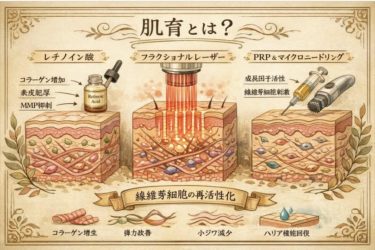
大きく分けると三つのパターンがあると思う。

①レチノイン酸という古典

外用トレチノインは真皮コラーゲン増加を組織学的に示している(Kang S et al. N Engl J Med. 1995;332:123–129)。

MMP抑制
TGF-β経路回復
表皮肥厚

6ヶ月で真皮構造が改善する。

これは「育つ」に最も近いエビデンスだ。

②エネルギーで再構築する

フラクショナルレーザーはマイクロサーマルゾーンを作り、創傷治癒機転を誘導する。熱ショックタンパク発現、TGF-β上昇、新規コラーゲン形成。

この理論はMansteinらにより提示された(Manstein D et al. Lasers Surg Med. 2004;34:426–438)。

これは「若い創傷環境を人工的に作る」戦略である。

3〜6ヶ月かけて真皮は再構築される。

③成長因子という内因性ドーピング

マイクロニードリングやPRPは成長因子(PDGF, VEGFなど)を局所に集中させる。コラーゲン密度上昇が報告されている(Aust MC et al. Plast Reconstr Surg. 2008;121:1421–1429)。これは再生というより「再活性化」だ。

では、どこまで戻るのか

20代の皮膚に完全に戻ることはない。

しかし、

1)真皮密度増加
2)弾性改善
3)小皺減少
4)バリア機能回復

は客観的データで示されている。

医学的に言うなら、「肌育」とは、線維芽細胞を再活性化し、構造蛋白を増加させ、機能改善が持続する状態を作ること。

それ以上でも、それ以下でもない。

老化は止められない。だが、速度は調整できる。肌は時間そのものではない。だが、時間に抗う構造物ではある。

“Does Skin Grow?”

There is a phrase frequently heard on social media these days: “skin training” or “skin nurturing” (“hada-iku”).
However, from a medical standpoint, the term deserves greater precision.
Does the skin truly “grow”?
The skin is not a static membrane.
In the dermis, fibroblasts continuously produce collagen.
In the epidermis, keratinocytes undergo constant turnover.
The skin is an organ that remodels itself throughout life.
What happens with aging?
Type I collagen decreases. Matrix metalloproteinases (MMPs), the enzymes responsible for degradation, increase. Elastin becomes fragmented. Dermal collagen reduction caused by ultraviolet exposure has been clearly demonstrated (Fisher GJ et al. N Engl J Med. 1997;337:1419–1428).
In other words, aging represents a state in which degradation predominates.
So what, then, is “skin nurturing”?
The answer is simple: restoring a state in which production predominates.
Broadly speaking, there are three major approaches.

1) Retinoic Acid — The Classic
Topical tretinoin has histologically demonstrated increased dermal collagen (Kang S et al. N Engl J Med. 1995;332:123–129).
Suppression of MMPs
Restoration of the TGF-β pathway
Epidermal thickening
Within six months, dermal structure improves.
This is perhaps the closest evidence we have to the idea of skin that truly “grows.”

2) Reconstruction Through Energy
Fractional lasers create microthermal zones, inducing a wound-healing response: heat shock protein expression, upregulation of TGF-β, and new collagen formation.
This theory was presented by Manstein et al. (Manstein D et al. Lasers Surg Med. 2004;34:426–438).
This strategy artificially creates a “younger wound environment.”
Over three to six months, the dermis undergoes remodeling.

3) Endogenous Doping with Growth Factors
Microneedling and PRP concentrate growth factors (such as PDGF and VEGF) locally. Increased collagen density has been reported (Aust MC et al. Plast Reconstr Surg. 2008;121:1421–1429).
This is less regeneration than reactivation.

How Far Can It Return?
Skin will never fully revert to that of one’s twenties.
However, objective data demonstrate:
1.Increased dermal density
2.Improved elasticity
3.Reduction of fine wrinkles
4.Restoration of barrier function
Medically speaking, “skin nurturing” means reactivating fibroblasts, increasing structural proteins, and creating a sustained improvement in function.
Nothing more. Nothing less.
Aging cannot be stopped.
But its speed can be adjusted.
Skin is not time itself.
Yet it is a structure that resists time.


米国レーザー医学会(ASLMS)のFellow更新

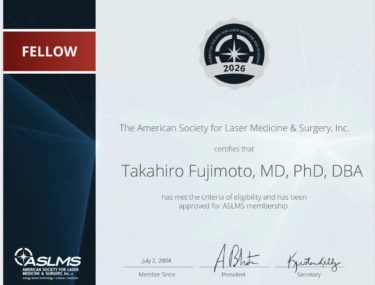
米国レーザー医学会(American Society for Laser Medicine & Surgery:ASLMS)のFellow(専門医)資格が本年も更新されたとの連絡が届きました。

クリニックFでは、レーザー治療を「流行の技術」としてではなく、物理・工学的背景と生体反応を踏まえた専門医療として提供しているつもりです。

この分野は日進月歩で進化する一方、近年はリバースエンジニアリングによるコピー機器も少なくありません。見た目やスペック表は似ていても、「誰が」「どこで」「どの臨床課題を解決するために」開発した技術なのかという文脈が欠落していることも多いのが現実です。

だからこそ、一次情報に直接アクセスできる学会活動の価値は、年々高まっていると感じます。

論文の裏側にある議論、開発者自身の思想、臨床での失敗例まで含めて理解してはじめて、機器は「安全に使える医療技術」になります。

Fellow資格の更新は称号そのものよりも、最前線に居続ける責任を再確認する機会。

日々の診療と同時に、世界標準の知見を正確に取り込み続けること——それが、僕が大切にしている姿勢です。

I am pleased to inform you that you have maintained Fellow status in the American Society for Laser Medicine & Surgery, Inc. (ASLMS). Your Fellow membership certificate is attached. You will receive a new digital, printable certificate each year.

Please display your membership certificate proudly. As a Fellow in ASLMS, you are an important part of the world’s preeminent resource for biomedical laser and other energy-based technologies, research, education, and clinical knowledge. I’m sure you’ll want to remain active in Society as we pursue our mission to promote excellence in patient care. I offer my sincere congratulations on your Fellow status in ASLMS. Thank you for your continued support; it is greatly appreciated.

Sincerely,
Kristen M. Kelly, MD.
ASLMS Secretary

Screenshot

I have received notification that my Fellow (board-certified specialist) status with the American Society for Laser Medicine & Surgery (ASLMS) has been renewed again this year.

At Clinic F, we strive to provide laser treatments not as a “trendy technology,” but as a form of specialized medical care grounded in physics, engineering principles, and an in-depth understanding of biological responses.

While this field continues to evolve at a remarkable pace, recent years have also seen an increase in copycat devices created through reverse engineering. Although these devices may appear similar in design or specifications, they often lack critical context—such as who developed the technology, where, and for which specific clinical problems it was originally intended.

This is precisely why I feel the value of academic society involvement—where one can directly access primary information—has been increasing year by year.

Only by understanding not just the published papers, but also the discussions behind them, the philosophies of the developers themselves, and even the clinical failures, can medical devices truly become “safe and reliable medical technologies.”

For me, the renewal of Fellow status is less about the title itself and more about reaffirming the responsibility to remain at the forefront of the field.

Alongside daily clinical practice, continuing to accurately absorb and apply global standards of knowledge—this is the professional stance I hold most dear.


カテゴリー