― サハラに残ったのはなぜキリスト教ではなくイスラームだったのか ―
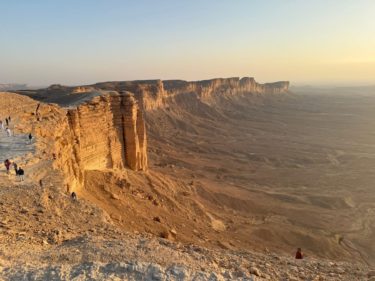
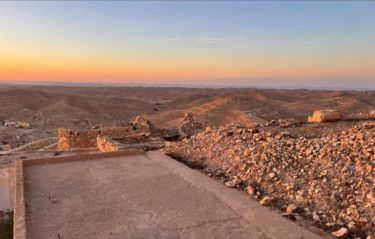
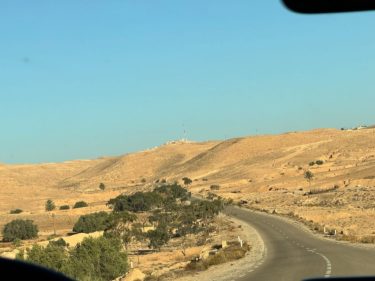
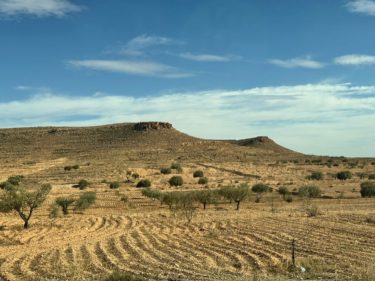
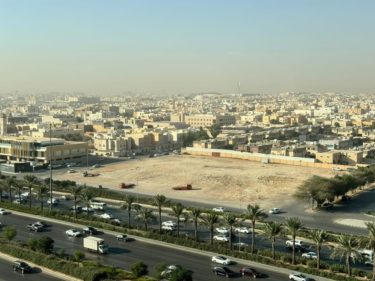
サハラやサウジを歩くと、かつてキリスト教の支配を受けたこの地域が変容し、イスラム教が砂漠の民に受け入れられたのかわかる。
それは“信仰”というよりも、生きるための知恵だったからだ。
砂漠には、余計なものがない。
大河も森も、豊かな作物もない。
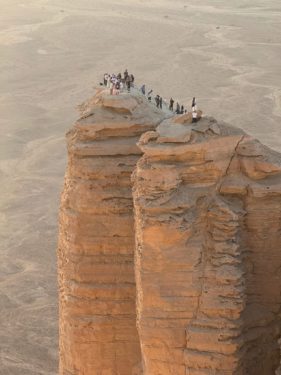
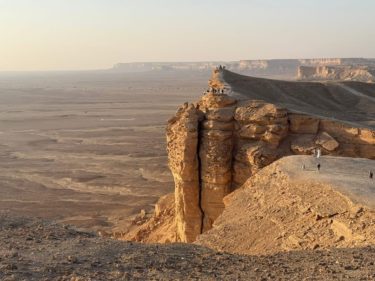
あるのは、風と乾いた大地、そして遠くまで続く地平線だけだ。
そこで生きるために必要なのは、強さや支配ではない。
助け合いと信頼である。
砂漠が教える「人は一人では生きられない」という事実
砂漠では、たったひとつの判断ミスで命が途切れる。
水を見失う。方向を誤る。仲間と離れる。
それだけで終わってしまう。
だからこそ、砂漠で最も大切なものは
互いに支え合う関係だった。
しかし、部族社会には限界がある。
部族は誇りでありながら、争いの原因にもなる。
そこでムハンマドは、こう語った。
「私たちは血によってではなく、唯一の神の前に立つ者として結ばれる。」
これは、砂漠の民にとって「理想」ではなく、必要だった。
礼拝は「建物に宿らず、身体に宿る」
イスラム教の礼拝は、モスクがなくてもできる。
方向さえわかればいい。
砂の上でも、岩陰でも、天幕の下でも、旅の途中でもいい。
砂漠は建物を許さない。
だから祈りは「場所」に縛られず、「身体」に宿るように設計された。
これは、移動し続ける民にとっての完璧な宗教形態である。
サハラに残ったのは、布教ではなく「交易としてのイスラーム」
ラクダに荷を積み、砂漠を渡る商人たち。
彼らは金と塩、皮革と香料とともに、祈りと言葉を運んだ。
宣教師ではない。
ただ、夕暮れに、星の下で、静かに祈っただけだ。
それを見た砂漠の民は思った。
「この祈りは、砂漠の中で消えない。」
キリスト教は「教会という建物」を必要とした。
だが砂漠には、建物は残らない。
残るのは、声と記憶と、風に揺れる習慣だけだ。
そしてイスラームは、ちょうどその形をしていた。
コーランの文字は「音」であり「道」である
この地域にいると、一日5回、ミナレットから流れてくる アザーン(礼拝の呼びかけ) の声が聞こえる。
コーランは「読むもの」ではなく
“響きとして流れているもの”だと気づく。
コーランは、声として降りた。
夜の砂漠を渡る風のように、息と音で広がっていった。
アラビア語は、ただの言語ではなく、声の形を持つ言葉だ。
喉の奥で弾ける音。
風のように抜ける息。
砂丘のうねりに似たリズム。
やがてその声は文字になり、カリグラフィー(書)となる。
その曲線と伸びは、砂丘と地平線の形そのものだ。
アラビアの文字とは、砂漠の風景を記憶するための造形である。
Ⅰ. 移動の宗教としてのイスラーム
キリスト教は都市と農耕の宗教だ。
信徒は教会に集まり、司祭が共同体をまとめる。
一方、イスラームは隊商社会の宗教である。
• 礼拝はどこでもできる
• 聖職者がいなくても成立する
• 宗教法は商取引に対応している
つまりイスラームは、移動する社会そのものに適応した宗教だった。
Ⅱ. 交易ネットワークが「信仰の道」だった
サハラは壁ではなく、交易路である。
マグリブと西アフリカを結んだ金と塩のルートを担ったのは、
ベルベル人・トゥアレグのムスリム商人だった。
宗教は「布教」ではなく、
商いと共に自然に広がったのである。
Ⅲ. イスラームは「文字」を広げた
コーランを唱えるためには、言葉を覚える必要がある。
こうしてサハラは、識字と記録のある文化圏となった。
その結晶が、学問都市トンブクトゥだった。
Ⅳ. 再分配の思想は、砂漠に向いていた
砂漠は常に不足の世界。
だから、富を分け合う倫理は社会を安定させた。
食べ物は分けるもの。
旅人は助けるもの。
貧しい者は守るもの。
これは、生存のための合意だった。
砂漠の民にとって、イスラームとは何だったのか
宗教ではなく、
祈りでもなく、
伝統でもなく、
生き延びるための合理的なモデルであり、
共同体をつなぐ呼吸のリズムであり、
身体に刻まれた地図だった。
だから今も、砂漠の風に乗って、
コーランの声は響いている。
静寂の高さのままに。
Why Was It Islam, Not Christianity, That Remained in the Sahara?
Walking through the Sahara or across Arabia, one can sense why this land—once under Christian influence—transformed, and why Islam was embraced by the desert people.
It was less a matter of faith than of wisdom for survival.
The desert holds nothing superfluous.
No great rivers, no forests, no fertile fields.
Only wind, dry earth, and a horizon that stretches endlessly.
To live there, one does not need strength or domination.
One needs mutual aid and trust.
The Desert Teaches: “No One Lives Alone”
In the desert, a single mistake can end a life.
Losing sight of water.
Taking the wrong direction.
Being separated from your companions.
That alone can mean death.
Thus, the most precious thing in the desert is the bond of mutual support.
Yet tribal society has its limits.
Tribes bring pride—but also conflict.
And so Muhammad said:
“We are not united by blood, but by standing together before the One God.”
For the desert people, this was not an ideal.
It was a necessity.
Prayer Dwells Not in Buildings, But in the Body
Islamic prayer requires no mosque.
Only direction.
You may pray on sand, under rock shade, beneath a tent, or in the midst of travel.
The desert does not permit buildings.
So prayer was designed not to dwell in place, but in the body itself.
It was the perfect form of religion for a people who were always moving.
What Remained in the Sahara Was Not Missionary Work, but “Islam as Trade”
Merchants loaded camels and crossed the desert.
Along with gold, salt, leather, and spices, they carried prayer and words.
They were not missionaries.
They simply prayed—quietly—under the evening stars.
And those who saw them thought:
“This prayer will not vanish in the desert.”
Christianity required church buildings.
But buildings do not endure in the desert.
What remains are voices, memories, and habits swaying in the wind.
And Islam had exactly that shape.
The Qur’an Is Both “Sound” and “Path”
In this land, five times a day, the adhan—the call to prayer—flows from the minaret.
You realize that the Qur’an is not something to read,
but something that flows as sound.
The Qur’an descended as voice—
spreading with breath and sound,
like wind crossing the desert night.
Arabic is not merely a language.
It is a form of sound itself—
a voice shaped by the throat,
a breath like wind,
a rhythm like the dunes.
In time, that voice became letters—calligraphy—
its curves and lines mirroring the dunes and the horizon.
Arabic script is a sculpture of the desert’s memory.
I. Islam as a Religion of Movement
Christianity is the religion of cities and agriculture.
Believers gather in churches, priests bind the community.
Islam, on the other hand, is the religion of caravan societies.
Islam, therefore, was a faith perfectly adapted to a mobile society.
II. Trade Networks Were the “Paths of Faith”
The Sahara was not a wall—it was a route of exchange.
Muslim Berber and Tuareg merchants carried gold and salt between the Maghreb and West Africa.
Religion did not spread through mission,
but naturally, through commerce.
III. Islam Spread Literacy
To recite the Qur’an, one must learn the words.
Thus the Sahara became a region of literacy and record.
Its jewel was the scholarly city of Timbuktu.
IV. The Ethic of Redistribution Suited the Desert
The desert is a world of scarcity.
Sharing wealth brought stability to society.
Food was to be shared.
Travelers were to be helped.
The poor were to be protected.
This was a social contract for survival.
What Was Islam to the Desert People?
Not a religion.
Not merely prayer.
Not tradition.
It was a rational model for survival,
a rhythm of breath connecting communities,
a map engraved in the body.
And so even now, carried by the desert wind,
the voice of the Qur’an resounds—
as high and still as the silence itself.