














小保方事件が教えてくれたこと
三連休最終日。僕はある専門外の論文を仕上げるために、1人山荘に籠ってスタインウェイのピアノを弾き、執筆中には自動演奏を聴いています。
思考を集中させるのにとても良い空間です。
思えば僕も大学受験の時には、15分だけピアノを弾き、その後勉強に入ることを習慣にしていました。近所の人には藤本君は音大を受けるんですか?と親が聞かれていたほど。笑
ピアノを弾くことは左右脳均等に血の巡りも良くなるし、集中力も上がり、良いことばかりでしたので、おすすめします。考えてみれば、僕の身の回りの東大や医学部を卒業した友人の中では、ピアノが上手い人が多いですね。
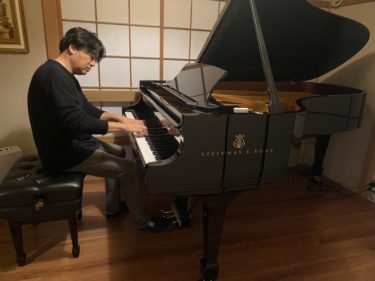
幼少期のピアノ練習は、確かにエビデンスを持って脳に良い。
ただし、ここで言う「良い」は、情緒的な比喩ではなく、神経科学的に説明可能なレベルでの話です。
ピアノという楽器は、脳にとって非常に贅沢な課題を同時に要求します。
・両手を別々に動かす
・譜面を視覚的に読み取る
・音を聴きながら即座に修正する
・テンポと拍を維持する
・長時間、集中を持続する
これらはすべて、単一の脳領域では処理できません。
運動野、感覚野、聴覚野、視覚野、前頭前野、小脳――
ピアノ演奏は、脳全体をネットワークとして使う行為です。
実際、幼少期から楽器訓練を受けた子どもでは、脳梁(左右の脳をつなぐ神経線維束)が有意に太いことが報告されています。
左右の脳を頻繁に同調させる経験が、構造そのものを変えるわけです。
閑話休題
SNS時代になって、根拠不明な動画が散見されますが、この連休に10年前の小保方さん事件を擁護する声が上がっていましたので、僕の意見を述べます。
2014年、STAP細胞をめぐる一連の騒動は、日本の科学界に深い爪痕を残しました。
問題の論文は、世界最高峰の科学誌である Nature に掲載されました。だからこそ、期待も、失望も、国際的な規模で拡散したのです。
後に明らかになったのは、改ざんと切り貼りだらけの画像、第三者が再現できない実験結果、そして、研究ノートとは到底呼べないメモ書きの束。
再生医療という分野は、世界中の研究者が国家予算と人生を賭けて競い合う、極めてシビアな戦場です。
その世界に提出された論文が、率直に言えば「デッサン未満の設計図」だった。
それが、この事件の本質でした。
しばしば語られる反論に、「理論自体は正しかったのではないか」というものがあります。
確かに、細胞の初期化や可塑性という概念そのものは、その後も世界中で研究が続き、結果として米国が関連特許を押さえた分野も存在します。
しかし――
理論が魅力的であることと、論文として成立していることは、まったく別物です。
科学において重要なのは、
・誰がやっても再現できること
・過程が透明であること
・疑義に耐える記録が残っていること
この三点が欠けた時点で、それは「未完成の仮説」ですらなく、根拠の無い「物語」に堕ちます。
他の専門家をいかに納得させて、査読に通過するかの手段が科学においては必要なのです。さらにその執筆責任は生涯に渡って続く。
一般社会からは、
「若い研究者が叩かれすぎた」
「メディアの魔女狩りだ」
という擁護の声も上がりました。
しかし、科学者の目から見れば、問題は個人の資質や年齢ではありません。
共同著者の自死という、決して取り返しのつかない結果を招き、日本の科学全体の信用を国際社会で大きく損なった。
それが、この事件の重さです。
注目を浴びること自体は、研究者にとって悪ではありません。
ただし、思考の構造が整っていないままの注目は、時に人を守るどころか、破壊する。だからこそ、博士号という制度があります。
それは肩書きでも、称号でもない。
思いつきや勢いが、暴走しないための「最後の壁」です。
問いを立て、
仮説を構築し、
検証し、
反証に耐え、
それでも残ったものだけを、世界に差し出す。
その訓練を終えた者だけが、研究者として名乗る資格を持つ。
STAP細胞事件は、その当たり前の事実を、あまりにも高い代償で思い出させる出来事だったと、僕は考えています。
What the Obokata Scandal Taught Us
On the final day of a three-day weekend, I’ve shut myself away alone in a mountain lodge to finish a paper outside my own field of expertise. I play a Steinway piano, and while writing, I let it run on automatic playback.
It’s an exceptionally good environment for focused thinking.
Come to think of it, back when I was preparing for university entrance exams, I had a habit of playing the piano for exactly fifteen minutes before sitting down to study. Neighbors even asked my parents, “Is Fujimoto going to apply to a music conservatory?” (laughs)
Playing the piano improves blood flow evenly across both hemispheres of the brain, sharpens concentration, and comes with nothing but benefits—I highly recommend it. In fact, among my friends who graduated from the University of Tokyo or medical school, many are excellent pianists.
Early childhood piano training is demonstrably good for the brain.
And by “good,” I don’t mean this as an emotional metaphor—I mean it at a level that can be explained neuroscientifically.
The piano is an extraordinarily demanding instrument for the brain. It simultaneously requires:
Independent movement of both hands
Visual reading of musical notation
Continuous auditory feedback and instant correction
Maintenance of tempo and meter
Sustained concentration over long periods
None of these can be processed by a single brain region alone.
The motor cortex, sensory cortex, auditory cortex, visual cortex, prefrontal cortex, cerebellum—
playing the piano is an act that engages the entire brain as a network.
Indeed, studies have reported that children who receive instrumental training from an early age have a significantly thicker corpus callosum—the bundle of nerve fibers connecting the left and right hemispheres. Frequent synchronization between the two sides of the brain literally alters its structure.
A Brief Digression
In the age of social media, we’re inundated with videos of dubious credibility. This past holiday, I noticed renewed voices defending the Obokata affair from ten years ago, so I’d like to offer my own perspective.
In 2014, the controversy surrounding so-called STAP cells left deep scars on Japan’s scientific community.
The paper at the center of the storm was published in Nature, one of the world’s most prestigious scientific journals. Precisely because of that, both the expectations and the disappointment spread globally.
What later came to light were images riddled with manipulation and cut-and-paste edits, experimental results that no third party could reproduce, and a pile of notes that could hardly be called a proper research notebook.
Regenerative medicine is a brutally competitive battlefield, where researchers around the world stake national budgets and their entire careers.
And into that arena was submitted a paper that, frankly speaking, amounted to a blueprint not even worthy of a preliminary sketch.
That was the essence of this incident.
A commonly heard counterargument is: “Wasn’t the theory itself correct?”
It’s true that concepts such as cellular reprogramming and plasticity have continued to be studied worldwide, and that some related fields eventually resulted in key patents being secured by the United States.
However—
The attractiveness of a theory and its validity as a scientific paper are two entirely different things.
In science, what matters is:
That results can be reproduced by anyone
That the process is transparent
That records exist which can withstand scrutiny
The moment these conditions are absent, the work ceases to be even an “unfinished hypothesis” and collapses into a baseless story.
In science, one must persuade other experts and pass peer review—that is an essential part of the process. And the responsibility for what one writes lasts a lifetime.
From the general public, voices arose saying:
“A young researcher was attacked too harshly.”
“This was a media witch hunt.”
But from a scientist’s perspective, the issue was never about age or personal character. The affair resulted in an irreversible tragedy—the suicide of a co-author—and severely damaged the international credibility of Japanese science as a whole. That is the true weight of this 사건.
Public attention itself is not an evil for researchers. But attention received before one’s thinking has been properly structured can, at times, destroy rather than protect. That is precisely why the PhD system exists.
It is neither a title nor an honorific.
It is the final barrier preventing ideas and momentum from spiraling out of control.
One must formulate questions,
build hypotheses,
test them,
withstand refutation,
and only then offer to the world what remains.
Only those who have completed that training earn the right to call themselves researchers.
The STAP cell affair, I believe, reminded us of this obvious truth—at an unbearably high cost.