













TakahiroFujimoto.com

HOME MAIL
HOME PROFILE BOOKS MUSIC PAPERS CONFERENCES BLOG MAIL CLOSE

BLOG 藤本幸弘オフィシャルブログ

BLOG|ブログ

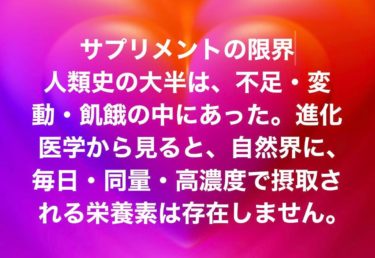
サプリメントの限界

サプリメントは食品であって、薬ではない――それでも健康を壊してしまう理由

国際学会の展示会場を歩いていると、いつも同じ違和感を覚える。

白衣の研究者たちが議論しているのは、「炎症」「酸化」「損傷」「修復」という精密な時間設計なのに、
数メートル先のブースでは、「抗酸化」「免疫ブースト」「デトックス」という言葉が無邪気に並んでいる。
この落差こそが、サプリメント問題の本質だ。

また、国際学会の帰路。
長距離フライトの機内誌をめくっていると、必ずと言っていいほど健康サプリの広告に出会う。
そしてその隅に、決まって小さく書かれている一文がある。
This product is not intended to diagnose, treat, cure, or prevent any disease.
――この製品は、病気の診断・治療・予防を目的としたものではありません。

当たり前のことだが、私たちはこの一文をほとんど読まない。いや、読んでいないふりをしているのかもしれない。

★サプリは制度上、あくまで「食品」
まず大前提として、サプリメントは医薬品ではない。
日本でも米国でも、サプリは「食品」に分類される。
つまり、

治療効果を証明する義務はない
臨床試験を通過する必要もない
病態別に設計されているわけでもない

求められているのは「効くこと」ではなく、
最低限の安全性だ。
この制度的前提を忘れた瞬間から、
サプリは「薬の代用品」という誤解を背負わされる。

★進化医学から見た「サプリの不自然さ」

自然界に、
毎日
同量
高濃度
で摂取される栄養素は存在しない。

人類史の大半は、
不足と変動の中で設計されてきた。
サプリは、その「変動」を消してしまう人工物だ。
そして多くの人が誤解しているが、サプリの問題は有害成分そのものではない。

★「免疫を上げる」という危うい言葉

僕は免疫で医学博士号(東京大学)を取得した。

自然免疫にアクセルはない。免疫を下げない努力はできるけど、上げることはできない。

免疫はブレーキと一体で設計された、極めて精密な制御系だ。
βグルカンや高用量プロバイオティクスが、
自己免疫疾患
慢性炎症
を悪化させる可能性が示されている。
免疫は「強く」するものではない。
静かに保つものだ。

★「健康に良さそう」が一番危ない相互作用

グレープフルーツ系・ハーブ系サプリは、
CYP3A4 の阻害/誘導
薬物血中濃度の異常変動
を引き起こす。
スタチン、睡眠薬、免疫抑制剤、抗不整脈薬などで、
臨床的問題が多発している。
「自然由来」は、
薬理的に中立という意味ではない。

★ミネラルは「不足している人」にしか効かない

亜鉛・鉄・セレン。
亜鉛過剰 → 銅欠乏 → 神経障害
鉄過剰 → 酸化ストレス増大
セレン過剰 → 糖尿病リスク上昇
ミネラルは、
足りない人には薬、足りている人には毒だ。

★サプリが意味を持つ、ただ一つの条件

では、サプリは不要なのか。
答えはノーだ。
欠乏が確認されている場合
ビタミンD、鉄、ビタミンB12、必須脂肪酸など、
不足している人への補充には明確な意味がある。
それ以外の多くは、
健康のためというより、
「何かしている」という安心を得るための足し算だ。

★問題の本質は「割り込み」にある

サプリメントの本質的な問題は、
生体が発しているシグナルに横から割り込むことだ。

人間の身体は、
酸化
炎症
代謝ストレス
を「異常」ではなく、次の反応を起動させるための情報として使っている。

抗酸化物質は「体に良い」と単純化されがちですが、高用量では生理的ROSシグナリングを阻害し、かえって運動適応や免疫応答を低下させることが報告されている。

活性酸素(ROS)は全てが悪者ではない。
ミトコンドリア新生やDNA修復を始動させるスタートボタンだ。酸化は「老化」ではなく、「合図」なのである。ところが高用量の抗酸化サプリは、この合図を消してしまう。結果として、

運動後の適応
ミトコンドリア増加
が起こらなくなる。

抗酸化サプリは、
老化を止めるのではない。適応を止める。

身体には「時間順」がある

身体の回復は、
炎症
修復
再構築
という順序で進む。

抗炎症・抗酸化サプリは、この流れに早すぎる介入を行ってしまう。

治療と衝突する食品

抗がん治療、放射線治療、レーザー治療は、制御された酸化を起点に回復を引き出す医療だ。そこに抗酸化サプリを重ねると、治療のロジックそのものを相殺することがある。

サプリが悪いのではない。
食品が、治療と衝突しているだけだ。

身体は「ダメージ」を合図に強くなる。

サプリは、その合図を消してしまうことがある。
問題は一つ。
良かれと思った介入が、身体の会話を遮ってしまうこと
これが、サプリが静かに健康を削ぐ理由だ。

ここで重要なのが「中庸」という言葉で、これは単なる控えめという意味ではなく、個体差・タイミング・文脈を踏まえた最適点を見極めること
に他なりません。

だからこそ、
効果がある治療ほど

誰に
いつ
どの程度
何と組み合わせて

行うかを設計できるプロの采配が不可欠になる。

「効くものを最大限使えばいい」というのは、医学では最も危険な素人発想で、本当に難しいのは「効かせすぎない勇気」なのだと思う。

★結論

サプリは「足し算の安心装置」である
サプリは食品であって、薬ではない。
身体の仕事を代行するものでもない。

サプリが問題になるのは、
毒だからではない
詐欺だからでもない
身体が今やろうとしている仕事を、静かに邪魔するからだ。

最後に一行だけ。

これは身体の助演か、それとも主演交代か
健康とは、足すことで得るものではなく、邪魔しないことで守られるもの。それが、
サプリと最も知的に付き合う方法だ。
 

Supplements Are Foods, Not Medicines — Yet They Can Still Undermine Health

When I walk through the exhibition halls of international medical conferences, I always feel the same sense of dissonance.

Inside the lecture rooms, researchers in white coats debate the precise temporal orchestration of inflammation, oxidation, injury, and repair.
Yet just a few meters away, exhibition booths casually line up words like “antioxidant,” “immune boost,” and “detox.”
This gap captures the essence of the supplement problem.

On the return trip from such conferences, flipping through the in-flight magazine on a long-haul flight, I almost inevitably encounter advertisements for health supplements.
And tucked away in small print is always the same sentence:

This product is not intended to diagnose, treat, cure, or prevent any disease.

It is obvious — yet we rarely read it.
Or perhaps we pretend not to.


★ Supplements Are, by Definition, “Foods”

First and foremost, supplements are not medicines.
In both Japan and the United States, they are legally classified as foods.

That means:

  • There is no obligation to prove therapeutic efficacy

  • No requirement to pass clinical trials

  • No obligation to be designed for specific disease states

What is required is not effectiveness, but only minimal safety.

The moment we forget this regulatory premise, supplements are burdened with the false expectation of being substitutes for drugs.


★ The “Unnaturalness” of Supplements from an Evolutionary Medicine Perspective

In nature, there are no nutrients that are consumed:

  • Every day

  • In the same amount

  • At high concentration

For most of human history, our biology evolved under conditions of scarcity and fluctuation.
Supplements are artificial constructs that erase this variability.

And contrary to common belief, the problem with supplements is not necessarily toxic ingredients.


★ The Dangerous Phrase: “Boosting Immunity”

I earned my PhD in immunology at the University of Tokyo.

There is no accelerator for innate immunity.
You can work to avoid suppressing it, but you cannot simply increase it.

The immune system is an exquisitely fine-tuned control system, designed together with its brakes.
β-glucans and high-dose probiotics have been shown to potentially worsen:

  • Autoimmune diseases

  • Chronic inflammation

Immunity is not something to be made “strong.”
It is something to be kept quiet and balanced.


★ “Sounds Healthy” — The Most Dangerous Interactions

Grapefruit-derived and herbal supplements can cause:

  • Inhibition or induction of CYP3A4

  • Abnormal fluctuations in drug blood concentrations

Clinical problems have been reported with statins, sleeping pills, immunosuppressants, and antiarrhythmic drugs.

“Natural” does not mean pharmacologically neutral.


★ Minerals Only Help Those Who Are Deficient

Zinc, iron, selenium.

  • Excess zinc → copper deficiency → neurological damage

  • Excess iron → increased oxidative stress

  • Excess selenium → increased diabetes risk

For minerals:
They are medicine for those who lack them — and poison for those who do not.


★ The One Condition Under Which Supplements Truly Matter

So, are supplements unnecessary?
The answer is no.

When deficiency is confirmed —
such as vitamin D, iron, vitamin B12, or essential fatty acids —
supplementation has clear value.

Most other uses are not about health,
but about the reassurance of “doing something.”


★ The Core Problem Is “Interruption”

The fundamental issue with supplements is that they interrupt biological signals.

The human body uses:

  • Oxidation

  • Inflammation

  • Metabolic stress

not as abnormalities, but as information to trigger the next response.

Antioxidants are often simplistically labeled as “good for the body,” yet at high doses they have been reported to inhibit physiological ROS signaling, thereby impairing exercise adaptation and immune responses.

Reactive oxygen species (ROS) are not universally harmful.
They serve as the start button for mitochondrial biogenesis and DNA repair.

Oxidation is not “aging.”
It is a signal.

High-dose antioxidant supplements erase this signal.
As a result:

  • Post-exercise adaptation

  • Mitochondrial expansion

fail to occur.

Antioxidant supplements do not stop aging.
They stop adaptation.


★ The Body Has a Timeline

Recovery follows a sequence:

  1. Inflammation

  2. Repair

  3. Reconstruction

Anti-inflammatory and antioxidant supplements intervene too early, disrupting this natural order.


★ When Foods Collide with Medical Treatment

Cancer therapies, radiation therapy, and laser treatments rely on controlled oxidation to initiate recovery.
Overlaying antioxidant supplements can negate the very logic of these treatments.

Supplements are not inherently bad.
It is simply that foods can collide with treatment.

The body becomes stronger in response to damage as a signal.
Supplements can erase that signal.

The problem is simple:

Well-intentioned interventions can silence the body’s internal conversation.

That is how supplements quietly erode health.


★ The Importance of “Moderation”

Here, the key concept is moderation.
This does not mean mere restraint, but identifying the optimal point that accounts for individual differences, timing, and context.

That is why the more powerful a treatment is, the more essential professional judgment becomes in deciding:

  • For whom

  • When

  • To what extent

  • In combination with what

The idea that “if it works, more is better” is one of the most dangerous amateur assumptions in medicine.

What is truly difficult is having the courage not to overdo what works.


★ Conclusion

Supplements are devices for additive reassurance.
They are foods, not medicines.
They do not perform the body’s work on its behalf.

Supplements become problematic not because they are toxic,
nor because they are fraudulent,
but because they quietly interfere with what the body is trying to do at that moment.

One final line:

Is this a supporting actor — or a replacement for the lead?

Health is not something gained by adding more.
It is something protected by not interfering.

That is the most intelligent way to engage with supplements.


自己実現と自己承認

ー自己実現と自己承認は違うものー

「認められたい」という欲求こそが、すべての起点だった。

僕がコロナ後に辞めたもの。

会費高額なクレジットカードの維持、航空マイル修行、日本の無駄な専門医維持。

マイル修行も、クレジットカードのステータスも、専門医維持も、名門ゴルフクラブの会員になるのも、御免状ビジネスも——

突き詰めれば、土台にあるのは一つだけ。

「自分を認めてもらいたい」

という、脳科学的にも、ごく人間的な欲求です。

でもそれは自己実現という言葉の、もう一つ下の階層

一般に「自己実現」というと、
何かを成し遂げること、
理想の自分になることを想像しがちです。

けれど実際には、
その一段下に、もっと素朴な欲求がある。
• 自分は間違っていない
• 自分は役に立っている
• 自分はこの場にいていい

この確認が欲しい。

ステータス型ビジネスは、
自己実現を売っているようで、
実は自己承認を量産している。

「承認」は即効性がある

本当の自己実現は、時間がかかる。
成果が出る保証もない。

だが承認は違う。

• 条件を満たせば
• 更新すれば
• 支払えば

即座に手に入る。

カードの色、
認定証、
ランク表示。

それらは、
「あなたはOKです」という
分かりやすいスタンプだ。

脳はこれを、
努力の成果と錯覚する。

承認が外部化された瞬間に、依存が始まる

問題は、
承認の供給源が
完全に外側に移ったときだ。
• 更新されているから安心
• 失効していないから大丈夫
• 上位にいるから価値がある

こうして、
自分を認める権限を
システムに明け渡してしまう。

これは弱さではない。
社会で真面目に生きてきた人ほど、起こりやすい。

受験期に頑張って良い大学に入る。
ピアノのコンペティションに勝って賞をもらう。
研究を頑張って、国際雑誌に論文を載せる。

こうした努力の上に立つ自己実現は人間を成長させる。

でも、上記の様なお金で買える自己実現は、見栄を張るための自己承認作業に過ぎない。言ってみれば、美容整形もそうかもしれない。

これらを卒業できる人は、自己承認を内側に戻した人

この構造から降りられる人は、「承認はいらなくなった人」ではない。

承認の出どころを変えた人だ。

• 今日の判断は妥当だった
• この選択に後悔はない
• 自分は自分の基準で動けている

こうした内的承認が育つと、
外部ステータスは
ただの道具に戻る。

必要なときだけ使い、不要になったら手放せる。

ステータスを求めた過去は、否定しなくていい

重要なのは、
このビジネスに惹かれた過去を
恥じないことだ。

それは、
自分を支えるために
必要だったフェーズだった。

マイル修行も、
カードランクも、
専門医維持も、
自信が揺れる時期の松葉杖だった。

松葉杖は、一生使うものではない。
だが、使った事実は無駄ではない。

結論

自己実現の前に、
人はまず自己承認を欲しがる。

この欲求を
最も手軽に、最も安全に満たしてくれるのが、ステータス型ビジネスだ。

だから強い。
だから長く続く。

そして、
一定のところまで行った人は、静かにそれを卒業する。

国際学会の帰り道、ホテルの部屋で一人、ふとこう思う。

もう、誰かに
「認めてほしい」と
急かされなくてもいい。

自分が今日をどう生きたかを、自分がちゃんと認めていれば、それで十分なのだから。


Self-Actualization and Self-Validation Are Not the Same —

The desire to be recognized was where everything began.

Things I gave up after COVID:

Maintaining high–annual-fee credit cards,
chasing airline miles,
keeping unnecessary specialist certifications in Japan.

Mileage runs, credit card status, maintaining specialist titles, joining prestigious golf clubs, credential-based businesses—
when you strip them down to their core, they all rest on one thing:

“I want to be acknowledged.”

This is a deeply human desire, one that neuroscience also recognizes.

But it sits one level below what we usually call self-actualization.

When people hear “self-actualization,”
they often imagine achieving something,
or becoming their ideal self.

Yet in reality, beneath that lies a more primitive need:

  • I am not wrong

  • I am useful

  • I am allowed to be here

We want confirmation of these things.

Status-driven businesses appear to sell self-actualization,
but in truth, they mass-produce self-validation.

Validation works instantly

True self-actualization takes time.
There is no guarantee of results.

Validation is different.

  • Meet the conditions

  • Renew

  • Pay

And you receive it immediately.

The color of a card,
a certificate,
a rank display—

They are clear stamps saying,
“You’re OK.”

The brain mistakes this for the result of genuine effort.

When validation is externalized, dependency begins

The real problem arises when the source of validation moves entirely outside oneself.

  • It’s renewed, so I’m safe

  • It hasn’t expired, so I’m fine

  • I’m ranked higher, so I have value

In this way,
we hand over the authority to validate ourselves
to a system.

This is not weakness.

In fact, it happens more easily to people who have lived earnestly within society.

Studying hard to enter a good university.
Winning awards in piano competitions.
Working tirelessly to publish papers in international journals.

Self-actualization built on such efforts genuinely helps people grow.

But the kind of “self-actualization” that can be bought with money, like those mentioned earlier, is no more than self-validation work for the sake of appearances.
In a sense, cosmetic surgery may fall into the same category.

Those who graduate from this have brought validation back inside

People who step away from this structure are not those who “no longer need validation.”

They are those who have changed its source.

  • Today’s judgment was reasonable

  • I have no regrets about this choice

  • I am acting according to my own standards

As this internal validation grows,
external status returns to being just a tool.

Used only when necessary,
and let go when it’s no longer needed.

You don’t need to deny your past pursuit of status

What matters is not feeling ashamed
of the past that was drawn to these systems.

That phase was necessary
to support yourself at the time.

Mileage runs,
card ranks,
specialist certifications—
they were crutches during periods of shaken confidence.

Crutches are not meant to be used for life.
But using them was not meaningless.

Conclusion

Before self-actualization,
people first crave self-validation.

The easiest and safest way to satisfy this desire
is through status-based businesses.

That’s why they are powerful.
That’s why they endure.

And those who reach a certain point
quietly graduate from them.

On the way back from an international conference,
alone in a hotel room,
a thought suddenly arises:

I no longer need
to be rushed by
someone else’s approval.

As long as I can truly acknowledge
how I lived today,
that is enough.


10分類

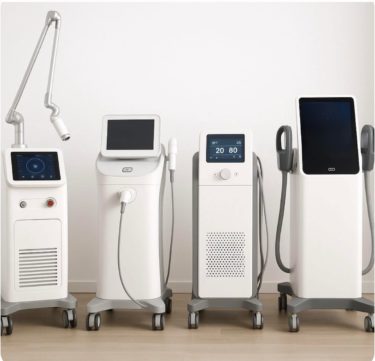
エネルギーベースの美容医療機器の10分類

専門医資格を取得しながらも、保険診療の構造そのものに違和感を覚え、僕がレーザー医療の世界に足を踏み入れたのは、ちょうど世紀が切り替わる25年ほど前のことだった。

当時、「エネルギーベースの医療機器」と言えば、ほぼイコールでレーザーを指していた時代である。

しかし四半世紀という時間は、この分野の地形を完全に塗り替えた。

光だけだった世界に、電気、音、磁場、冷却といった異なる物理学が次々と加わり、美容医療機器はもはや単一の技術では語れない“群島”のような存在になった。

国際学会の展示ホールを歩くたびに、その変化を実感する。

同じ「若返り」を掲げながら、アプローチも思想もまったく異なる装置たちが、静かに並んでいるのだ。

この文章では、そうしたエネルギーベースの美容医療機器を、物理原理と臨床的役割の視点から10に分類し、現在地を整理してみたい。

これは機器の優劣を論じるための一覧ではない。

どこを、何で、どう変えるのか──その設計図を描くための地図である。

① アブレイティブ・レーザー

― 皮膚を一度、白紙に戻すという選択 ―
アブレイティブ・レーザーは、美容医療の中で最も「覚悟」を要する技術だと思っています。

皮膚を削る、蒸散させる、つまり一度壊す。この潔さは、他の機器にはありません。

表皮が消失し、真皮が露出することで、皮膚は強制的に再生モードへ入ります。

コラーゲンは作り直され、瘢痕や深い皺は確実に変わる。

その代わり、ダウンタイムとリスクも等価交換で背負う。
これは「若返り」ではなく、再構築です。

設計を間違えれば破綻するし、決まれば圧倒的。
今でもこのカテゴリーが消えない理由は、結果が最も分かりやすいからです。

② ノンアブレイティブ/フラクショナルレーザー

― 壊さずに、内部から立て直す ―

アブレイティブの対極にあるのが、このカテゴリーです。
皮膚は守りながら、真皮だけに熱刺激を与える。

点状、あるいは面状に与えられた熱は、線維芽細胞を「もう一度働け」と静かに起こします。
変化は劇的ではないけれど、積み重ねるほど裏切らない。
毛穴が整い、肌理が揃い、触ったときの質感が変わる。
患者さんが「何か違う」と言うのは、たいていこの領域です。
派手さはない。
でも日常診療の中心に据えるなら、最も信頼できる存在です。

③ ピコ秒・ナノ秒レーザー

― 熱ではなく、衝撃で世界を変えた技術 ―
狙っているのは熱ではなく、一瞬の衝撃。
色素を焼くのではなく、砕く。
真皮に空間を作り、再構築のスイッチを入れる。
シミが軽くなる、くすみが抜ける、肌が“薄く”感じられる。それはリフトでもタイトニングでもない、質量感の変化です。
ただし、構造は動かない。

ピコレーザーは、あくまで「表情を明るくする装置」。
骨格や下垂を任せる相手ではありません。

④ IPL・LED

― 派手さはないが、肌を整える名脇役 ―
IPLやLEDは、主役になろうとしません。
広く、浅く、優しく。
だからこそ、調子を整える力がある。
赤み、色むら、炎症。
どれも単独では大きな問題ではないけれど、
積み重なると「老けて見える原因」になる。
このカテゴリーは、劇的な変化よりも、土台を平らにする役割を担っています。

派手な機器の前後に入ると、治療全体が安定する。
地味だけれど、外すと困る。
そんな存在です。

⑤ RF(高周波)

― 皮膚を温め、縮めるという直感的な治療 ―
RFは、理屈がとても分かりやすい。
電気を流し、抵抗で熱を生む。
温まったコラーゲンは縮み、やがて作り直される。
即時的な引き締まりと、数ヶ月後の再構築。
この二段構えが、RFの美点です。
ただし、動かせるのは真皮まで。
SMASには届かない。
だからこそ、初期たるみや質感改善に向いている。
HIFUほど強くなく、レーザーほど繊細でもない。
その中間にある、扱いやすい熱源です。

⑥ HIFU(焦点式超音波)

― 非侵襲で「位置」を変えにいく唯一の技術 ―
HIFUが特別なのは、美容医療で初めて構造そのものを扱った点です。
焦点にだけエネルギーを集めSMASや脂肪隔壁に点状の凝固を作る。
これにより、皮膚ではなく“支点”が動く。フェイスラインが上がる理由は、皮膚が引き締まったからではありません。吊っている場所が変わったからです。
ただし、肌質は変わらない。

HIFU単独で若返ると思うと、必ず限界にぶつかる。
これは「骨組み担当」です。

⑦ 平行式超音波(Sofwave)

― 真皮だけを、均一に張り直す ―
Sofwaveは、HIFUと同じ超音波でも、思想が真逆です。
焦点を作らず、真皮中層を帯状に加熱する。

結果として起きるのは、均一なコラーゲン刺激。
ハリ、弾力、触感。
リフトではない。
でも「疲れて見える顔」を戻す力がある。
ダウンタイムを嫌う層にとって、このカテゴリーは非常に相性が良い。
構造を触らず、皮膚だけをきれいにする。
割り切りの美学です。

⑧ 冷却・脂肪破壊系

― 脂肪は、寒さに弱い ―
このカテゴリーは、生理学の勝利です。
脂肪細胞は冷えに弱い。

その弱点を、静かに突く。
脂肪は数ヶ月かけて減っていく。
派手な変化はないが、確実に体積が減る。
ただし、皮膚は別問題。

脂肪が減れば、たるみが目立つこともある。
だからこれは、単独で完結する治療ではない。
設計図の一部として使うと、非常に強力です。

⑨ プラズマ・複合エネルギー

― 境界領域にこそ、進化が起きる ―

この領域は、まだ定義が固まっていません。
だからこそ面白い。
単一の物理原理では足りない。
レーザーだけ、RFだけでは限界がある。
その発想から生まれたのが、このカテゴリーです。
表層と深部を同時に。
異なるエネルギーを重ねる。
設計思想は、メーカーごとにまったく違う。
理解せずに使うと迷走する。
でも理解できると、一気に視界が開ける。
実験場であり、未来の原型です。

⑩ 電磁・電気刺激系(HIFEM HIFES)

― 初めて「筋肉」を直接扱った美容医療 ―
HIFEMが登場したとき、
美容医療は一段階、次元が変わったと思いました。
皮膚でも脂肪でもない。
筋肉そのものをターゲットにする。
超極大収縮によって、筋肉は鍛えられ、緊張が変わり、支持力が変わる。
顔でも体でも、「形を支える力」が変化する。
ただし、皮膚は変わらない。

HIFEMは土台。
仕上げは別の機器が必要です。

総括
この10分類は、
美容医療を「層」で考えるための言語です。
表層
真皮
構造
体積
支持力
どこを、どの順で触るか。
それを考えるための地図です。

Ten Categories of Energy-Based Aesthetic Medical Devices

Although I had obtained board certification as a specialist, I felt a growing sense of discomfort with the very structure of insurance-based medicine. It was around the turn of the century—about 25 years ago—that I stepped into the world of laser medicine.

At that time, the term “energy-based medical devices” was almost synonymous with lasers.

However, a quarter of a century has completely redrawn the landscape of this field.

What was once a world defined solely by light has expanded to include electricity, sound, magnetic fields, and cooling—diverse branches of physics layered one upon another. Aesthetic medical devices are no longer a single technology, but rather an archipelago of distinct approaches.

Each time I walk through the exhibition halls of an international congress, I am reminded of this transformation.

Devices that all claim “rejuvenation,” yet differ entirely in philosophy and approach, stand quietly side by side.

In this essay, I would like to organize energy-based aesthetic devices into ten categories, based on their physical principles and clinical roles, in order to clarify where we currently stand.

This is not a list meant to rank superiority or inferiority.

It is a map—one meant to help design a blueprint:
where to change, with what, and how.


① Ablative Lasers

— The choice to return the skin to a blank slate —

Among aesthetic technologies, ablative lasers demand the greatest degree of resolve.

They remove tissue. They vaporize. In other words, they deliberately destroy.
This decisiveness is unmatched by any other modality.

When the epidermis is eliminated and the dermis exposed, the skin is forcibly pushed into regeneration mode.

Collagen is rebuilt. Scars and deep wrinkles change definitively.

In exchange, downtime and risk must be accepted at equal value.
This is not “rejuvenation.” It is reconstruction.

If the design is wrong, it fails catastrophically.
If it is right, the results are overwhelming.

This category has never disappeared, because its outcomes are the most immediately apparent.


② Non-Ablative / Fractional Lasers

— Rebuilding from within, without destroying —

At the opposite pole of ablative lasers lies this category.

The epidermis is preserved while thermal stimulation is delivered only to the dermis.

Heat applied in dots or planes quietly tells fibroblasts, “Get back to work.”

The changes are not dramatic, but they are dependable when accumulated.
Pores refine. Skin texture aligns. The tactile quality changes.

When patients say, “Something feels different,” it is often this domain at work.

Not flashy.
But as a foundation of daily practice, it is the most reliable tool.


③ Picosecond / Nanosecond Lasers

— A technology that changed the world through impact, not heat —

The target here is not heat, but instantaneous shock.

Pigment is not burned—it is shattered.
Microcavities are created within the dermis, triggering reconstruction.

Spots lighten. Dullness clears. The skin feels “thinner.”
This is not lifting or tightening, but a change in mass perception.

However, structure does not move.

Picosecond lasers are devices that brighten expression.
They are not meant to address skeletal support or sagging.


④ IPL / LED

— Unspectacular, yet indispensable supporting players —

IPL and LED do not seek the spotlight.

Broad, shallow, gentle.
And precisely because of that, they stabilize the skin.

Redness, color irregularity, inflammation—
none dramatic on their own, yet cumulatively responsible for an aged appearance.

This category flattens the ground rather than reshaping it.

Inserted before or after more aggressive treatments, it stabilizes the entire plan.
Subtle, but sorely missed when absent.


⑤ RF (Radiofrequency)

— An intuitive treatment: warming and contracting the skin —

RF is easy to understand.

Electric current flows, resistance generates heat.
Heated collagen contracts, then gradually rebuilds.

Immediate tightening followed by delayed reconstruction—
this two-step effect is RF’s strength.

However, its reach is limited to the dermis.
It does not extend to the SMAS.

Thus, it is ideal for early laxity and texture improvement.
Less aggressive than HIFU, less delicate than lasers.

A practical and versatile heat source that sits squarely in between.


⑥ HIFU (High-Intensity Focused Ultrasound)

— The only non-invasive technology that changes “position” —

What makes HIFU unique is that it was the first aesthetic modality to address structure itself.

Energy is focused precisely, creating point coagulation in the SMAS or fibrous septa.

As a result, it is not the skin but the supporting anchor that moves.
The face lifts not because the skin tightens, but because the suspension point shifts.

That said, skin quality does not change.

Expecting rejuvenation from HIFU alone inevitably leads to disappointment.
This modality is responsible for the framework.


⑦ Parallel Ultrasound (Sofwave)

— Uniformly re-tensioning the dermis alone —

Though it uses ultrasound like HIFU, Sofwave’s philosophy is the opposite.

Rather than creating focal points, it heats the mid-dermis evenly in bands.

The result is uniform collagen stimulation.
Firmness, elasticity, tactile improvement.

This is not a lift.
But it restores a face that looks “tired.”

For patients who dislike downtime, this category is an excellent fit.
No structural manipulation—only skin refinement.

Aesthetic minimalism, by design.


⑧ Cooling / Fat Reduction Technologies

— Fat is vulnerable to cold —

This category represents a triumph of physiology.

Fat cells are sensitive to cold.
That weakness is quietly exploited.

Over several months, fat volume decreases.
The change is subtle but reliable.

However, skin is a separate issue.

As fat diminishes, laxity may become more noticeable.
Thus, this treatment rarely stands alone.

When used as part of a broader design, it becomes extremely powerful.


⑨ Plasma / Combined Energy Devices

— Evolution happens at the boundaries —

This domain is still undefined—and that is precisely why it is compelling.

A single physical principle is no longer enough.
Lasers alone, RF alone—each has limits.

From that realization, this category was born.

Surface and depth treated simultaneously.
Multiple energies layered together.

Design philosophies differ radically between manufacturers.

Used without understanding, these devices lead to confusion.
Understood properly, they expand one’s perspective dramatically.

This is an experimental field—and a prototype of the future.


⑩ Electromagnetic / Electrical Stimulation (HIFEM, HIFES)

— The first aesthetic technology to directly target muscle —

When HIFEM emerged, I felt aesthetic medicine shift to a new dimension.

Not skin. Not fat.
But muscle itself.

Through supramaximal contractions, muscles are strengthened, tone changes, and support improves.

In both face and body, the power that maintains form is altered.

However, the skin does not change.

HIFEM builds the foundation.
Finishing requires other devices.


Conclusion

These ten categories form a language for thinking about aesthetic medicine in layers:

  • Surface

  • Dermis

  • Structure

  • Volume

  • Support

Where to intervene—and in what sequence.

This framework is a map for answering those questions.


表情

来週の月曜日に、海外のレーザーメーカーの社内講演を頼まれています。週末に作り込みをしますが、自分としては、スライドの最後にこの文章を持ってきたいと思っています。

最後に ― レーザー医療が担う「時間」との対話

レーザーで肌をきれいにすることは、とても大切です。
それは時間に抗うためではなく、
時間と調和するための医療だからです。

一方で、
ボトックス、フィラー、スレッドによって
「若い顔」を作りすぎることには、慎重であるべきです。
若さを固定しようとした瞬間、表情は止まり、時間との対話が途切れてしまう。

——時間は、顔に刻まれる。

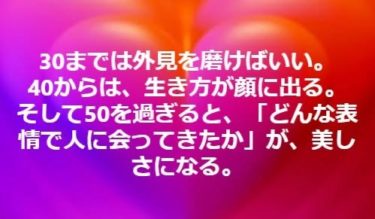
30までは、外見を磨けばいい。
肌の張りも、輪郭も、まだ「与えられた時間」の余白がある。

40を過ぎると、生き方が顔に出始める。
何を恐れ、何を選び、
何から逃げ、何に向き合ってきたか。
その軌跡が、目元と口元に静かに滲む。

そして50を越えると、
美しさを決めるのは、
「どんな表情で人に会ってきたか」になる。

怒りを纏ってきたのか。
赦しを携えてきたのか。
敬意をもって世界を見てきたのか。

美しさとは、若さの問題ではない。
それは、
時間とどう向き合ってきたかの履歴なのだ。

——時間は誰にでも平等に流れる。

だが、その時間を
どんな表情で生きたかは、
驚くほど不平等に、顔に刻まれる。

In Closing — Laser Medicine as a Dialogue with Time

Making the skin beautiful with lasers is truly important.
Not to fight against time,
but to stay in harmony with it.

At the same time,
we should be cautious about over-creating a “young face”
with Botox, fillers, or threads.
The moment we try to freeze youth,
facial expression stops —
and the dialogue with time is lost.

— Time is engraved on the face.

Until our 30s,
polishing appearance is enough.
Skin firmness and facial contours
still carry a margin of “time that has been given.”

After 40,
the way one lives begins to appear on the face.
What we feared, what we chose,
what we avoided, and what we confronted —
these traces quietly emerge
around the eyes and the mouth.

And beyond 50,
what defines beauty is no longer youth,
but the expressions with which we have met others.

Did we live wrapped in anger?
Did we carry forgiveness?
Did we look at the world with respect?

Beauty is not a matter of youth.
It is the record of how we have faced time.

— Time flows equally for everyone.
But how we live within that time,
and with what expressions,
is engraved on the face with striking inequality.


カテゴリー