













TakahiroFujimoto.com

HOME MAIL
HOME PROFILE BOOKS MUSIC PAPERS CONFERENCES BLOG MAIL CLOSE

BLOG 藤本幸弘オフィシャルブログ

BLOG|ブログ

医療における常識が


——医療における「常識」は、最も静かに人を傷つける——
医療の現場にいると、ときどき強い既視感を覚える瞬間がある。

それは、患者さんの言葉でも検査データでもなく、“医療の常識”という名の空気が、思考の流れを止めてしまう瞬間だ。

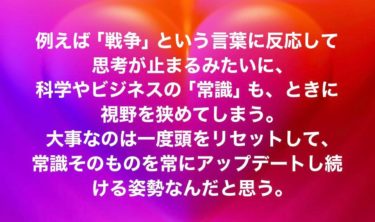
例えば「戦争」という言葉に触れた途端、人が条件反射のように思考を閉ざすことがある。

同じことが、私たち医療者の世界でも起きている。

“この治療は昔からこうだ”
“ガイドラインがこう言っている”
“エビデンスがないからやるべきではない”

この一言で議論は凍りつく。

常識には確かに価値がある。

だが、同時に新しい治療の芽を摘む力にもなりうる。

医療は、本来“個別性”を出発点にした営みだ。
それにもかかわらず、私たちはしばしば「常識」に思考を委ね、結果として患者さんの未来の選択肢を狭めてしまう。

レーザー医療でも、再生医療でも、栄養医学でも同じだ。

昨日まで非常識だったことが、今日の標準治療になることもある。

その逆もまた然りである。

だからこそ——

医療者は常識をアップデートし続ける必要がある。

ただし、ここが大切だ。

“新しい治療法だから”といって飛びつくことは決してしてはならない。

医学の歴史は、新技術がもたらした恩恵と同じ数だけ、その影で生まれた副作用や失敗の記録でもある。

僕自身が、医学・工学・薬学という三つの分野で博士研究を重ねてきたのは、まさにこの“飛びつかないための知性”を育てるためだった。

新しい治療を受け入れるか、退けるか。

その判断には、華やかなマーケティングよりも、基礎科学の積み上げと、臨床の現場で得られる手触りが欠かせない。

一度、頭の中にある常識をそっとリセットし、“なぜそう考えているのか?”を静かに問い直してみる。

そこに初めて、次の治療が芽吹く余地が生まれる。

常識は、医療を支える柱であると同時に、最も静かに人を傷つける刃にもなりうる。

だから医療者の責務は、常識を否定することではなく、正しい速度でアップデートし続ける姿勢を保つことに尽きる。

その柔軟性こそが、未来の医療をつくり、患者さんの人生に寄り添う医療の強度になる。

今日も診療の合間に小さく深呼吸し、自分の思考をリセットする時間をつくっておきたい。医療とは、絶えず変化しつづける生命の物語なのだから。


In medicine, “common sense” is the quietest way to wound someone.

There are moments in clinical practice when a powerful sense of déjà vu arises.

It is not triggered by a patient’s words or by laboratory data, but by the invisible air known as “medical common sense,” which abruptly halts the flow of thought.

For example, when the word “war” is mentioned, people sometimes shut down their thinking almost reflexively.

The same phenomenon occurs in the world of healthcare professionals.

“This treatment has always been done this way.”
“The guidelines say so.”
“There’s no evidence, so we shouldn’t do it.”

With these single phrases, discussions freeze.

Common sense certainly has value.

Yet at the same time, it can also become a force that deprives new treatments of the chance to grow.

Medicine, at its core, is an endeavor that begins with individuality.
Despite this, we often hand over our thinking to “common sense,” narrowing the future options available to our patients.

This happens in laser medicine, regenerative medicine, and nutritional medicine alike.

What was considered unconventional yesterday may become standard therapy today.

And the opposite can also be true.

That is precisely why—
Healthcare professionals must continue updating their common sense.

But here is the crucial point:

We must never jump onto a new treatment just because it is new.

The history of medicine contains as many records of side effects and failures born in the shadows of new technologies as it does of the benefits they brought.

I myself have pursued doctoral research in three fields—medicine, engineering, and pharmaceutical sciences—specifically to cultivate the intellect that resists jumping to conclusions.

Whether to accept a new treatment or to reject it—
This judgment requires not flashy marketing, but the accumulation of fundamental science and the tactile sense gained only through real clinical practice.

Gently resetting the “common sense” in our minds and quietly asking ourselves,
“Why do I think this way?”

Only then does space appear for the next therapy to take root.

Common sense is both a pillar that supports medicine and a blade that can wound people in the quietest way.

Thus, the responsibility of healthcare professionals is not to deny common sense, but to maintain a posture of updating it at the right pace.

That flexibility shapes the medicine of the future and strengthens healthcare that truly stands beside patients and their lives.

Today as well, I hope to take a small, deep breath between consultations and create a moment to reset my thoughts.
Medicine is, after all, the ever-changing story of life itself.



紙一重の境界線

——最新の幹細胞医療と腫瘍リスク、その「紙一重の境界線」を旅する——

アンチエイジング医療、とりわけ 幹細胞系の治療 は、まさに“光と影が背中合わせ”の領域です。

ここ数年、私自身も世界の学会を巡る中で、どの国でも必ず議論の中心に据えられていたのが 「再生誘導」と「腫瘍化」の境界線」 でした。

結論から言えば——

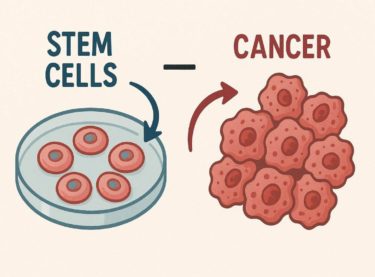
幹細胞治療は癌と表裏一体である。

この認識は、国際的にも共通しています。

◆ 幹細胞の「若返り」と「腫瘍化」が隣り合う理由
幹細胞は以下の2つの性質を併せ持ちます。

自己複製能(self-renewal)
多分化能(multipotency)

この「分裂し続けられる能力(=自己複製能)」そのものが、腫瘍細胞の特徴でもあるため、医学的には常にリスク評価が求められます。

● 代表的なエビデンス
iPS由来細胞の腫瘍形成リスク
MSC(間葉系幹細胞)の腫瘍促進メカニズム
幹細胞治療施設での腫瘍発生例(国際症例)
これらはいずれも実在し、国際学会でも繰り返し引用される代表的研究です。

◆ 国際学会で共有されている “危険なパターン”
世界中の学会で耳にしてきた話を総合すると、腫瘍化が起こりやすい状況はほぼ共通しています。

▶ 1. 分化誘導が不十分な細胞を使用
未分化な細胞が混ざるほど腫瘍化率は上がる。

▶ 2. 投与細胞数を追い求める施設
「量」ではなく「質」の問題。
過量投与は制御不能のリスクを高める。

▶ 3. “培養条件の質”が保証されていないケース
これは私も海外でよく聞く。
培地、酸素濃度、初代細胞の状態一つで性質が豹変する。

▶ 4. 血管新生を促す細胞の混入
腫瘍の餌となる血管系を刺激してしまう。

◆ さらに重要なのは「患者側の地形」

最新の老化研究では
老化細胞の蓄積(senescence)と炎症環境(inflammaging)が腫瘍化の下地になることが分かってきています。

つまり、幹細胞治療そのものだけでなく、
患者が持つ老化環境 = 地形要因
が腫瘍化を後押しする場合がある。

◆ 私自身の臨床と研究の経験から

世界のクリニックを回って常に実感するのは、
“本当に安全を理解している施設は、むしろ慎重で、施術の幅も狭い”ということです。

逆に、
「何にでも効く」「若返り放題」
と謳う施設ほど、細胞制御の本質を理解していない。

アンチエイジング医療は自由診療なので、安全性の評価がまさに“医師の哲学”に委ねられてしまう。

これはレーザー医療の黎明期にも似ていて、私はいつもそこに職人の倫理を感じます。

結語:若返りは“攻めの医療”、だからこそ慎重に

幹細胞治療は、古典的な意味での「再生医療」ではなく、老化と癌のメカニズムを正面から扱う最先端アンチエイジング領域 です。

若返りは「攻め」であり、
癌制御は「守り」。

この両者を同時に理解して初めて、
安全な臨床は成立するのだと思います。


Exploring the Fine Line Between Cutting-Edge Stem Cell Medicine and Tumor Risk —

Anti-aging medicine—especially stem cell–based therapies—is a field where light and shadow sit back-to-back.

Over the past several years, as I’ve traveled to medical conferences around the world, the topic that consistently took center stage in every country was the “boundary between regenerative induction and tumorigenesis.”

To state the conclusion first—

Stem cell therapy and cancer are two sides of the same coin.

This recognition is shared internationally.


◆ Why “Rejuvenation” and “Tumorigenesis” Sit Side by Side in Stem Cells

Stem cells possess two key properties:

  • Self-renewal

  • Multipotency

It is this very “ability to continue dividing”—self-renewal—that is also a hallmark of tumor cells.
Therefore, a rigorous risk assessment is always required in medical practice.

● Representative Evidence

  • Tumor-forming risk of iPS-derived cells

  • Tumor-promoting mechanisms of mesenchymal stem cells (MSCs)

  • International case reports of tumor formation in stem-cell treatment facilities

These are all real, repeatedly cited studies at major international conferences.


◆ “High-Risk Patterns” Shared at Global Conferences

From the many discussions I’ve heard around the world, situations that favor tumorigenesis are strikingly similar:

▶ 1. Use of cells with insufficient differentiation

The more undifferentiated cells are present, the higher the tumor risk.

▶ 2. Facilities that pursue sheer quantity of administered cells

The issue is not “how much,” but the quality of the cells.
Excessive dosing increases the risk of losing control.

▶ 3. Poorly controlled culture conditions

This is something I hear often overseas:
culture medium, oxygen concentration, and the condition of the primary cells can completely alter cellular behavior.

▶ 4. Contamination with cells that promote angiogenesis

These may stimulate vascular growth that feeds tumors.


◆ Equally Important: the “Terrain” of the Patient

Recent aging research shows that:

  • Accumulation of senescent cells, and

  • Chronic inflammatory milieu (inflammaging)

create a foundation that encourages tumorigenesis.

In other words, it is not only the stem cell therapy itself—
the patient’s aging environment = biological terrain
may also push the process toward tumor formation.


◆ From My Own Clinical and Research Experience

As I visit clinics around the world, I’m always reminded that:

The facilities that truly understand safety are actually conservative and operate with narrow therapeutic ranges.

Conversely,

Those that claim
“Works for everything” or “Unlimited rejuvenation”
are precisely the ones that fail to grasp the essence of cellular control.

Anti-aging medicine is largely an out-of-pocket field, and safety assessment often ends up depending on the physician’s philosophy.

It reminds me of the early days of laser medicine—
there is a kind of artisan’s ethics required.


Conclusion: Rejuvenation Is an ‘Offensive’ Medicine—Therefore It Demands Caution

Stem cell therapy is not “regenerative medicine” in the classical sense.
It is a cutting-edge anti-aging field that directly engages with the mechanisms of aging and cancer.

Rejuvenation is offense,
Cancer control is defense.

Only by understanding both simultaneously
can we achieve truly safe clinical practice.


茨城ゴルフクラブ

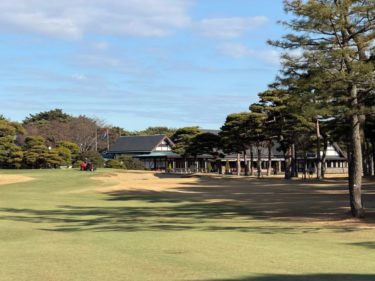
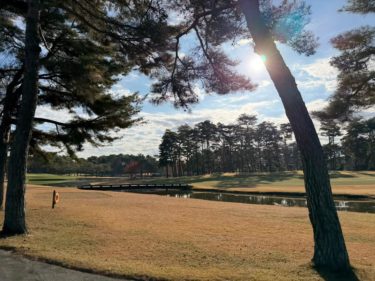
今日は友人が会員になった名門茨城ゴルフ倶楽部へ呼んでいただきました。


女子のサロンパス杯が開催されるコースです。


コース難易度と戦略性の高さは素晴らしく、なかなかパーさえも取らせてもらえませんでしたが、素晴らしい日和と最高のゴルフ仲間で楽しめました。

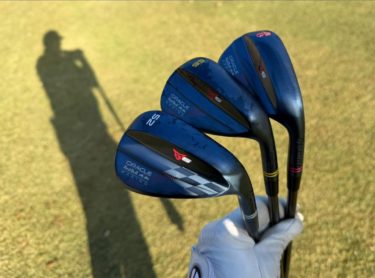
今回新たに入れ替えたテーラメイド&レッドブルレーシングのウェッジ。52 56 60度です。


昨年のモデルはなぜか56 60の2本のラインナップで、ピッチングとの間を埋める色違いのウェッジを入れていたのですが、ようやくアイアンの色が綺麗に濃紺に纏まりました。


Today, I was invited by a friend to the prestigious Ibaraki Golf Club, where she recently became a member. It’s the course that hosts the women’s Salonpas Cup. The difficulty and strategic nature of the course were truly impressive, and I could hardly manage to make even a par—but with the beautiful weather and the best golfing companions, it turned out to be a wonderful day.

I also brought my newly updated TaylorMade & Red Bull Racing wedges: 52°, 56°, and 60°. Last year’s model oddly came only in 56° and 60°, so I had been filling the gap from my pitching wedge with another wedge in a different color. But at long last, all of my irons now have a unified, elegant deep-navy finish.


ハートのマークが消えると

——フェアウェイにて。「愛とは儚きものなり」——

先ほどのショットのボールを拾い上げると、思わず笑ってしまいました。

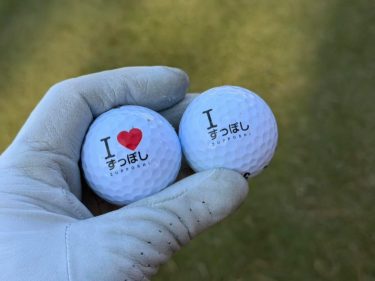
友人がプレゼントしてくれた “I ❤️ ずっぽし(ZUPPOSHI)” の特製ゴルフボール。その片方の ❤️ がきれいさっぱり消えている のです。


グローブ越しにそっと並べてみると、左は情熱の赤、右はすでに悟りの境地。

たった数ホールでここまで違う表情を見せるとは——まるで小さな人生劇場です。

ふと、孔子の言葉が頭をよぎります。

「子曰く、愛とは儚きものなり」

……とは『論語』には書いていませんが(笑)、ゴルフ場の風に吹かれていると、そんな一文があっても良かったのではと思わせるほどのしみじみさ。

とはいえ、ロストしていないだけまだ幸運です。

愛は色を失っても、ボールは僕の手元に戻ってきた。

そう考えると、今日のラウンドはなかなか味わい深い午後になりそうです。

次は、この「悟りバージョン」のボールでパーを取りにいきましょうか。

愛が消えてもスコアは残る——そんな禅的ゴルフ。

On the Fairway: “Love Is a Fleeting Thing” —

When I picked up the ball from my previous shot, I couldn’t help but laugh.

It was a custom golf ball my friend had given me—the one that says “I ❤️ ZUPPOSHI.”
But one of the hearts had completely vanished.

Placing the two sides gently together in my gloved hand, I saw that the left remained a passionate red, while the right had already reached a state of enlightenment.

Who knew a ball could show such different expressions after just a few holes?
It felt like a tiny theater of life.

Then, the words of Confucius drifted through my mind:

“The Master said, Love is but a fleeting thing.”

…Of course, this line doesn’t actually appear in The Analects (laugh), but with the breeze on the course, it felt like it could have been written there.

Still, I should consider myself lucky—I didn’t lose the ball.

Even if love has faded, the ball has found its way back to my hand.

Thinking that way, this round is starting to feel like a rather flavorful afternoon.

Shall I aim for par next with this “Enlightened Version” of the ball?

Even if love disappears, the score remains—
such is the Zen of golf.


エリクサー、人によって歳とる速度は何故違うのか

人によって“歳をとる速度”はなぜ違うのか


そして、私たちが手にできる「エリクサー」について

世界を巡る旅先で、いつも心に浮かぶ問いがあります。
なぜ、人によって「年をとる速度」はこんなにも違うのだろう。

同じ年齢でも、驚くほど若々しい人がいる一方で、時間が少し早く流れてしまっているかのような人もいます。

これは単なる外見の差ではなく、身体の奥に流れている“時間の気配”そのものの違いです。

老化は「暦の問題」ではなく「生き方の設計」

クリニックFにいらっしゃる患者さんの肌や体調を拝見していて、年齢という数字がいかに多様であるかを実感します。

ストレスの多い働き方、睡眠の質、運動の習慣、食事のバランス、そして人とのつながり方。

こうした生活のリズムが、ゆっくりと細胞の時間を動かしている――

これは臨床現場に立つ者が最も感じるところです。

世界を歩いていても、その「個体差」は驚くほど大きい。

人は皆、自分だけの“内なる時計”を持っているように思えます。

老化を進める回路・整える回路

生物学的に1年間歳をとるのは人によって4倍の速度の開きがあるのだそうです。同じ1年間でも2歳も歳をとる人や0.5歳しか歳を取らない人が存在するのです。

日々の中には、老化を早めてしまう要因があります。

睡眠不足、慢性的な緊張、糖質過多の食生活、腸の不調。

逆に、

・良質な睡眠
・適度な運動
・栄養の調和
・人との関係性
・感情の安定

これらは身体の時間をゆっくりと整えていきます。

表面的な“若返り”ではなく、こうした深い回路に優しく働きかけることを目指しています。

そして思い出す「エリクサー」という概念

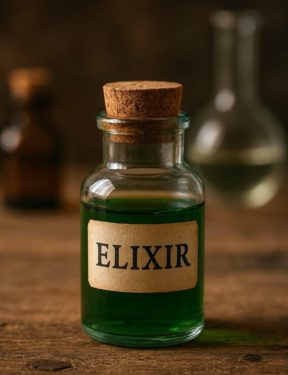
人の老化速度が違う理由を考えるたび、僕の頭には“エリクサー(Elixir)”という言葉が浮かびます。

かつて錬金術の時代に語られた「不老の霊薬」。

けれど、世界中の医師や研究者と対話していると、僕は次第にこう感じるようになりました。

エリクサーとは液体ではなく、人が自分の時間を整えるための“態度そのもの”である。

ロンドンの学会で静かな呼吸を保つ医師、
リヤドで一日の終わりに必ず家族と過ごす研究者、
チュニジアの市場で長年の薬草の知恵を語る商人。

彼らは等しく「独自の時間」の中で生きていて、その姿勢がそのまま若さの源泉になっていました。

現代医学が提供できる“エリクサー”

医学の世界にも、たしかに「現代のエリクサー」と呼べるものがあります。

NMN、レスベラトロール、腸内環境の調整、エクソソーム、光治療、幹細胞治療、メトホルミンなどなど。

いずれも科学的根拠を持つアプローチであり、クリニックでも最新の知見を取り入れています。

しかし、旅と臨床の両方で強く感じるのは、最終的に時間の流れを決めるのは、その人がどんなテンポを選ぶかということです。

結論:私たちは皆、自分だけの「エリクサー」を手にできる

年齢の“見え方”の違いは、生き方のリズム、心の温度、日々の小さな選択の積み重ねによって生まれます。

若さとは、数字ではなく“態度”の問題。
そしてその態度こそが、一人ひとりが持ちうる「エリクサー」なのです。

医学的な治療とともに、患者さんが自分のエリクサーを見つけ、育てていくお手伝いをしたい。

その思いを、2026年も大切にしていきたいと思います。


Why Do People Age at Different Speeds, and the “Elixir” We Can All Attain 

Whenever I travel around the world, a question always arises in my mind:
Why do people age at such different speeds?

Even among people of the same chronological age, some look remarkably youthful, while others seem to be living as though time flows a little faster for them.

This difference is not merely about appearance—
it is the subtle “presence of time” flowing deep within the body.

Aging Is Not a Matter of the Calendar, but of Life Design

When I observe the skin and overall condition of patients who visit Clinic F, I am reminded of just how diverse the meaning of “age” truly is.

Stressful work styles, sleep quality, exercise habits, nutritional balance, and the way one connects with others—
these rhythms of daily life quietly influence the tempo of our cells.

Those of us in clinical practice feel this more strongly than anyone.

And as I walk through the world, I am continually surprised by how great this “individual variability” is.

It almost seems as though each person carries an inner clock of their own.

Circuits That Accelerate Aging, and Circuits That Restore It

Biologically, the speed at which people age can differ by as much as a factor of four.
In the span of a single year, some people effectively age two years, while others only half a year.

Certain factors in daily life accelerate aging:

  • Lack of sleep

  • Chronic tension

  • Excessive sugar intake

  • Poor gut health

Conversely:

  • Quality sleep

  • Moderate exercise

  • Balanced nutrition

  • Healthy relationships

  • Emotional stability

These gently reorganize the body’s sense of time.

What we aim for is not a superficial “rejuvenation,”
but to work tenderly on these deeper circuits.

And Then Comes to Mind the Concept of the “Elixir”

Whenever I think about why aging speeds differ among people, the word “Elixir” inevitably comes to mind.

The legendary potion of immortality spoken of in the age of alchemy.

Yet, through countless conversations with physicians and researchers around the world, I’ve come to realize something:

The Elixir is not a liquid.
It is a stance, a way of being through which one regulates one’s own time.

A doctor in London who maintains calm, steady breathing at a conference.
A researcher in Riyadh who always ends the day with family.
A merchant in a Tunisian market who speaks of herbal wisdom passed down through generations.

Each lives within a rhythm entirely their own,
and that very posture becomes the source of their youthfulness.

The “Modern Elixirs” That Medicine Can Offer

Medicine, too, has its own set of “modern elixirs”:

NMN, resveratrol, gut microbiome optimization, exosomes, phototherapy, stem cell treatments, metformin, and more.

All supported by scientific evidence—
and all approaches we incorporate at the clinic using the latest research.

But what I feel most strongly, through both travel and clinical work, is this:
Ultimately, the flow of time is shaped by the tempo a person chooses to live by.

Conclusion: We All Have Access to Our Own “Elixir”

Differences in how age appears arise from the rhythms of a person’s life, the warmth of their heart, and the accumulation of small daily choices.

Youthfulness is not a number—
it is an attitude.
And that attitude itself is the Elixir each of us can hold.

Alongside medical treatments, I hope to help patients discover and cultivate their own Elixir.

This is a commitment I intend to cherish in 2026 as well.


カテゴリー