













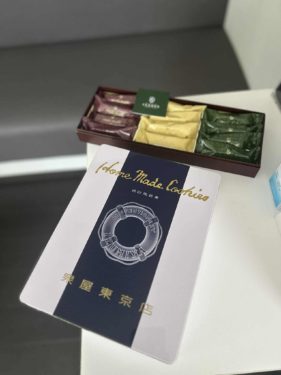
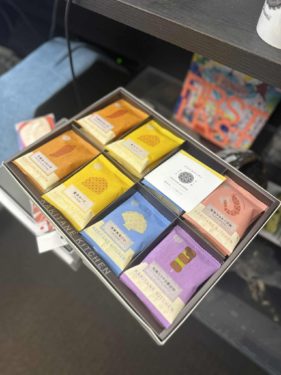
季節の贈り物をいただきました。ありがとうございます!

 藤本幸弘オフィシャルブログ
季節の贈り物をいただきました。ありがとうございます!
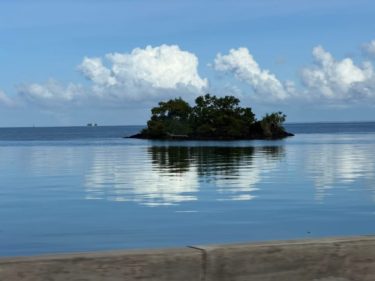
パラオ諸島は約340の島々からなる群島国家。
海洋生物多様性は世界トップクラス。
もの凄く綺麗です。
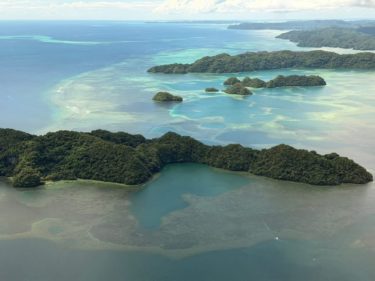
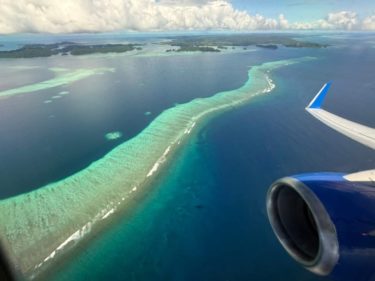
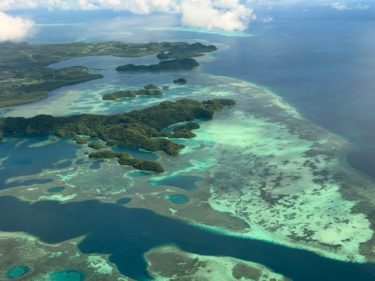
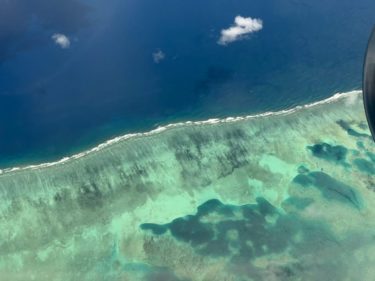
今回ダイビングができたら良かったんですけれどね。
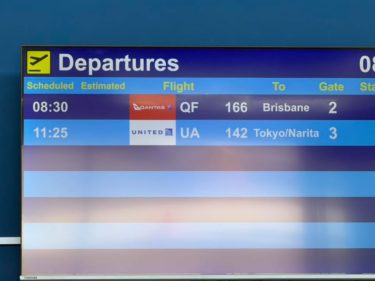
4時間あまりのフライトで成田へ。
夕日に映える富士山にホッとする日本人でした。
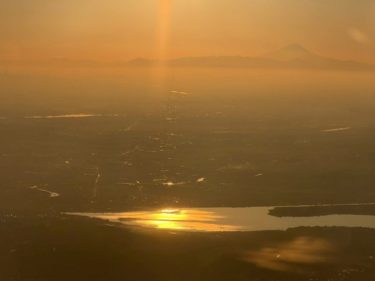
The Palau Islands are an archipelagic nation made up of about 340 islands, boasting some of the world’s highest levels of marine biodiversity. The scenery is incredibly beautiful. I wish I could have gone diving this time. After a little over a four-hour flight, I arrived back at Narita. Seeing Mt. Fuji glowing in the evening sun was a comforting sight for a Japanese traveler.
——史料を読むということは、時代の地層に手を触れる行為である——
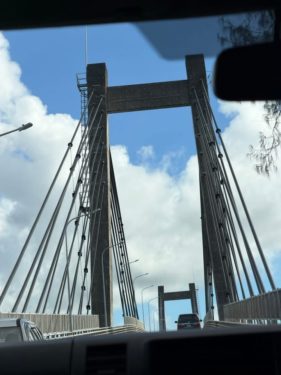
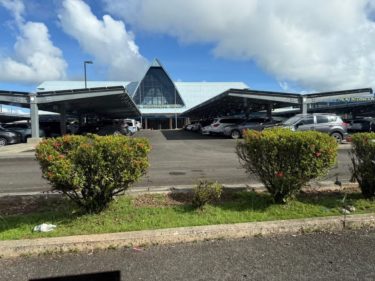
パラオへの弾丸渡航でしたが、2025年の課題として掲げてきた「昭和100年史を学び直す旅」の最終地点は、やはりこの地しかないように思えました。帰国前、空港へ向かう車の窓から、「日本パラオ友好の橋」を静かに渡りながら、そんな確信がふと胸をよぎったのです。
思えば僕自身、小学生の頃から毎年のように“戦争は良くない”という作文を書かされ、どこか「戦争=悲惨な映像」という刷り込みに囚われていました。日の丸を素直に見られない——そんなことを社会科の授業で学んだ影響もあり、当時、新聞へ投稿した記憶すら残っています。今思えば、あれもひとつの洗脳だったのでしょう。
戦争という言葉に“思考停止”が組み込まれていた時代でした。
「当時の国家戦略としては仕方がなかった」。
戦後の教育では、日本は軍部が暴走して無謀な戦略戦争を仕掛け、結果として完敗した——そう教わります。
そして僕も昨年までは、同じ視座で「戦前日本は、国力の制約から追い詰められ、時代の潮流に押し流されていった」と考えていました。
しかし、史資料を読み進めるほどに、必ずしも指導層全体が同じ方向を向いていたわけではなく、“ごく一部の動き”が国家の進路を揺らし得る構造が存在していたことが浮かび上がってきます。
つまり、日本は「国の総意として戦争に向かった」のではなく、むしろ戦争を望む国内外の集団によって
“戦争に向かうように動かされていった”
痕跡のほうが強く見えてくるのです。
昨年までの僕は、「当時の国家戦略としてやむを得なかった」という理解の中にいました。しかし、100年史を丁寧に辿るほど、事はもっと複雑で、もっと静かで、もっと深い。
あの時代、日本人は今ほど平和ボケしていなかった。むしろ現代よりも鋭く現実を見抜いていたはずです。
だからこそ、「おかしいものはおかしい」と感じた人たちもいた。その声がどこかで捻じ曲げられた可能性は、もはや否定できません。
歴史は感情ではなく、構造で動く。
誰がその構造に手を加え、どこが歪み、どこで道が閉じられたのか。
そこまで降りて初めて、昭和という巨大な時代の輪郭が見えてきます。
その象徴が真珠湾です。
■ 真珠湾という「空白」
攻める必要も無かったハワイ。
開戦通告文の遅延という謎。
あの「空白の数時間」は、今も多くの研究者が首をかしげるほど説明がつかず、日米のコミュニケーションは不自然なほどすれ違っていた。
日本が“奇襲した”という単純な図式ではなく、日米双方の間に、不自然な沈黙と断絶があった。
その“断絶”の形こそ、戦争の発火点に影を落としている。
しかし史料をたどるほどに、一枚の地図の裏に、さらにもう一枚の地図が貼られていたような感覚を覚えるのです。
太平洋戦争開戦——あの「ハワイ真珠湾」をめぐる不可解さ。
攻める必要のなかった地点を、なぜ日本海軍は唐突に叩いたのか。
そして何より、アメリカ太平洋艦隊の心臓部である石油備蓄タンク群を一切攻撃しなかったこと。これについては、米海軍の公式戦史でも“戦略的に最も脆弱で、破壊されれば米艦隊は半年以上稼働不能になっていた”と書かれています。
山本五十六の作戦構想は綿密だったはずなのに——あの一点だけが不自然に空白のまま残る。
この“最重要目標が除外された謎”については、アメリカ側資料も含め、多くの研究者が「政治的判断の介入」を指摘しています。さらに内部工作。
戦前の軍中枢にまで影響を及ぼした対外情報網の存在を示す文書が、戦後に相次いで公開されています。例えば、アメリカ海軍情報部が日本の海軍省内に「直接接触可能なインフォーマント」を持っていたとする記録。
あるいは、近衛内閣をめぐる外交文書の“誘導の痕跡”。
もちろん、これらは陰謀論ではなく、一次資料に残る「当時の情報環境」の断片です。
そして最後に、パール判事。
東京裁判で「日本の指導者を裁く法的根拠は存在しない」と明言し、全員無罪を主張した彼の判決文は、国際法学における重要資料として今も扱われています。
パール判事が強調したのは、感情論ではなく、法の原理そのものでした。
結局のところ、歴史の解釈とは「どの資料を知っているか」で大きく見え方が変わります。
現代の日本こそ、感情ではなく、一次資料を軸に史実を積み上げ直すフェーズに入っているのだと、旅と読書のなかで強く感じるようになりました。
――歴史を学ぶとは、現地に行き、自分の感性で感じ、時代の地層に手を触れること。その温度を確かめる作業なのだと思います。
To read historical sources is to place one’s hand upon the strata of an era—
It was a whirlwind trip to Palau, but for the “Journey to Relearn the 100 Years of the Shōwa Era” I had set as my 2025 goal, I felt there was no place more fitting as the final destination. Just before returning home, while quietly crossing the “Japan–Palau Friendship Bridge” on the way to the airport, a sudden conviction washed over me.
Thinking back, ever since elementary school I had been made to write essays every year about how “war is bad,” and somewhere along the way I became trapped in the imprinting of “war = horrific images.” I even remember writing a piece for a newspaper because social studies classes taught us to look at the rising sun flag with unease. In hindsight, that too was a kind of indoctrination.
It was a time when the word “war” itself induced a kind of mental shutdown.
“We had no choice—it was the national strategy of that era.”
Postwar education teaches that Japan’s military ran amok, launched an irrational war of strategy, and was consequently defeated in total. Until last year, I too viewed prewar Japan from the same standpoint: that the nation had been cornered by its limited national power and swept away by the tides of its time.
However, the more I read original documents, the more it becomes clear that not all leaders were facing in the same direction—and that the structure allowed movements by a very small minority to sway the nation’s course.
In other words, Japan did not head into war as the product of a unified national will. Rather, the evidence increasingly suggests that both domestic and foreign groups who desired war
“set things in motion so that Japan would be driven toward war.”
Until last year, I accepted the explanation that “it was unavoidable as the national strategy of the time.” But in tracing these 100 years more carefully, the picture becomes far more complex, far quieter, and far deeper.
People in that era were not as complacent about peace as we are today. If anything, they saw reality more keenly.
Precisely because of that, there were people who sensed, “Something is wrong.” And the possibility that those voices were distorted somewhere along the way can no longer be dismissed.
History moves not by emotion but by structure.
Who altered that structure? Where did the distortions arise? At what point did the paths close?
Only by descending to that depth does the true outline of the immense Shōwa era emerge.
The symbol of that complexity is Pearl Harbor.
Hawaii—an objective Japan had no need to attack.
The mystery of the delayed declaration of war.
Those “hours of silence” remain so difficult to explain that researchers even today shake their heads. The communication between Japan and the United States was marked by an almost unnatural level of misalignment.
Rather than a simple picture of Japan “launching a surprise attack,” there existed an unnatural silence and rupture between both sides. It is that rupture that casts a shadow over the ignition point of the war.
The deeper one follows the documents, the more it feels as though behind one map, yet another map had been pasted.
The strangeness surrounding the outbreak of the Pacific War—especially the attack on Pearl Harbor.
Why did the Imperial Navy suddenly strike a location it had no strategic need to attack?
And above all, why did Japan completely avoid attacking the massive petroleum storage tanks—the heart of the U.S. Pacific Fleet? According to official U.S. Naval histories, these tanks were “strategically the most vulnerable target, and had they been destroyed, the fleet would have been unable to operate for more than six months.”
Yamamoto Isoroku’s operational planning was supposed to have been meticulous—yet this one point remains an odd blank.
Regarding this “mystery of the most important target being omitted,” numerous researchers—drawing on American sources as well—have pointed to the possibility of political intervention. And further, internal maneuvering.
Documents released after the war indicate the existence of foreign intelligence networks that had penetrated even the prewar Japanese military establishment. For example, records that suggest the U.S. Office of Naval Intelligence had “a direct informant inside the Japanese Naval Ministry.”
There are also diplomatic documents from the Konoe Cabinet that hint at “patterns of deliberate steering.”
These are not conspiracy theories but fragments of the information environment of the time, preserved in primary sources.
And finally, Judge Radhabinod Pal.
At the Tokyo Trials, he declared that there existed “no legal basis to convict Japan’s leaders,” arguing for the acquittal of all defendants. His dissenting opinion is still regarded as an important document in the field of international law.
In the end, the interpretation of history depends profoundly on which sources one is aware of.
Through travel and reading, I have come to feel strongly that modern Japan has arrived at a phase where history must be reconstructed not by emotion but by carefully reassembling facts from primary sources.
—To study history is to go to the places themselves, to feel with one’s own senses, and to touch the strata of time. It is the act of confirming their temperature.
パラオが日本語を公用語として残した理由
昭和100年史とアジア独立の核心に触れる旅
グアムから飛行機で2時間弱。10月からは週2回の直行便も飛んでいるパラオ🇵🇼。
人口1万9千人の、光と海の密度が異様に濃いこの島々に降り立つと、いつもの学会渡航とはまったく違う“時代の気配”が肌に触れてくる。
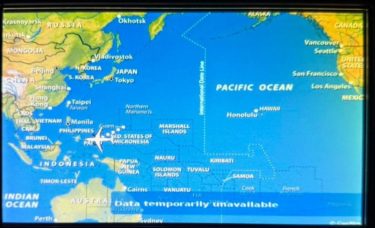
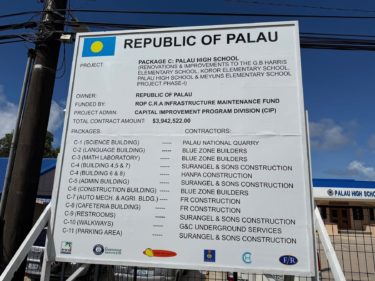
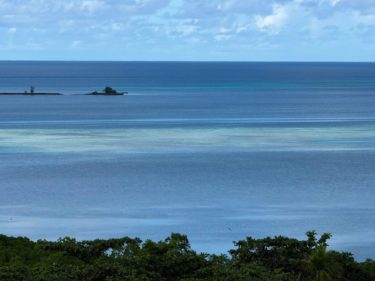
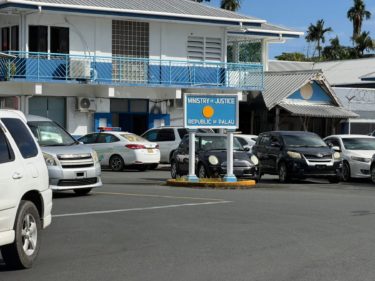



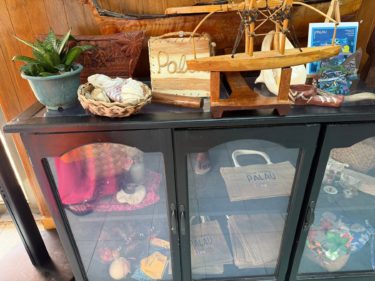

 先住民の時代から始まり、1885年のスペイン植民地化、1899年のドイツ領有を経て、第一次世界大戦後に日本の委任統治領(1919-1945)。戦前まで約30年間、日本が統治したこの土地は太平洋戦争の激戦地の一つにもなった。
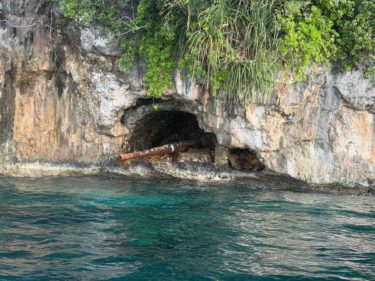
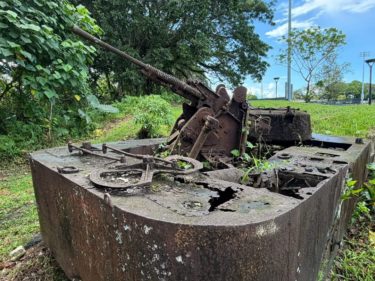
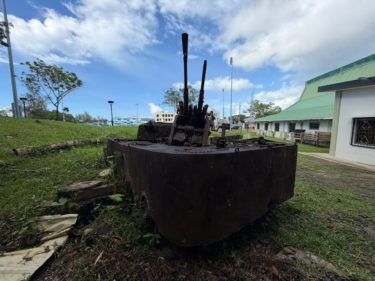
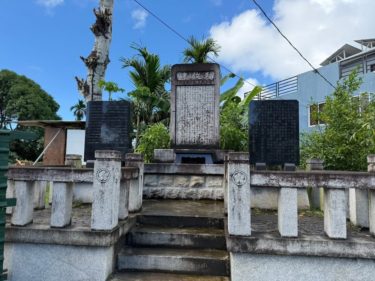
ミッドェイ海戦の後は、米国が日本本土を攻めたわけですが、この地は日本の統治にあり、いわば自国防衛の前哨戦。多くの大砲や戦車が用意されました。実際には首都のあるコロール島では無く、ペリリュー島へ米国が上陸したため、戦地は今回は滞在出来なかったペリリュー島となった。
その痛みは土地に刻まれながら、しかし同時に、ここには日本への奇妙なほどの“親愛”が残っている。
「親日的な国」と簡単に括ることもできる。
だが、その言葉だけではあまりに薄い。
パラオとの関係には、昭和100年史の中心に流れている
アジア独立の潮流が静かに息づいている。
2025年に始めた昭和100年史の勉強会。
その第一回で講演いただいた、友人の加賀社長が語っていた。
「パラオの国旗は、日の丸を敬意をもって、夜空に浮かぶ“月”を描いたものです。そして、パラオの公用語の一つには日本語がある。」なるほど、と思った。
日本の学校教育では
「大東亜戦争=日本の侵略戦争」と習う。
しかし現地を歩くと、全く違う風景が立ち上がる。
大東亜戦争は、欧米列強によって植民地化されていたアジア諸国が “自分たちのアイデンティティを取り戻す契機” となり、独立の連鎖の触媒として働いた側面が確かにある。
その話を聞いて、パラオに行きたいと思った。パラオというと僕にはダイビングのイメージが強いけれど、僕は1989年にPADIのライセンスを取って以来、世界の海を潜って来たけれど、この10年以上は危険もあるのでスキューバダイビングは辞めてきた。
実際にパラオに来ると、海は綺麗だけれど、本当に素朴で田舎の島。旧日本軍の戦車や大砲や、日本風のお墓が街中に残っている。お店に入ると物価は思ったより高い。缶ビールが一本500円以上する。流通の事情なのか。
パラオの公用語は、国家レベルではパラオ語と英語である。
だが一つだけ、歴史の光が差しこむような例外がある。
南部の小さな島、アンガウル州。
この島の州憲法には、こう記されている。
「パラオ語、英語、そして日本語を公用語とする」
つまり日本語は、いまもこの島の“正式な言語”なのだ。
これは、かつて島の生活全体に日本語が自然に流れていた証拠でもある。
漁、農耕、家屋づくり、子どもの遊び──
生活のすべての場面で日本語が技術とともに伝わり、
いまでも年配の人々は柔らかい響きの日本語を話す。
日本語は、ただの借り物の言語ではなかった。
生活を支える“身体の言語”として染み込んでいた。
だからこそ、戦後も消えなかった。
“日本は敵ではなかった”という現地の記憶
パラオを歩くと、「日本は良い国だった」と語る老人たちに出会う。彼らは、日本統治期を“生活の基盤が整った時代”として記憶している。道路、学校、病院、港湾。読み書き、算数、職業技術。それらを日本人が一緒につくっていった時間が、年老いた彼らの日常の深い層に残っている。
だからこそ、太平洋戦争の激戦地でありながら、パラオには“怨念”がなく、むしろ日本に対する不思議な敬意が息づいている。
昭和100年史の核心:アジアが自ら立ち上がった“潮目”としてのパラオ昭和は日本にとって敗戦の時代だった。
しかしアジア全体で見ると、欧米の植民地支配が崩れ、各国が独立していった世紀でもある。
パラオの日本語公用語という一見小さな事実は、その地層の中に生まれたひとつの灯だ。
それは、「支配する者・される者」という単純な構造ではなく、生活、文化、技術が交わり、互いの歴史を形づけていった時間」の証明である。
首都コラールで、静かな海風を浴びながら、僕はふと、昭和100年史を学び始めた動機を思い出した。
歴史とは、“過去の出来事”ではなく、いまの私たちの立ち位置を照らす光なのだと。
わずか1日ちょっとの滞在だったけれど、パラオの島々に立つと、その光が驚くほど鮮明になった。
Why Palau Preserved Japanese as an Official Language
A Journey into the Heart of the Showa Centennial and Asia’s Road to Independence
It’s less than a two-hour flight from Guam, with direct flights running twice a week since October. Palau 🇵🇼—a chain of islands with a population of just 19,000—has an almost unreal density of light and sea.
The moment you step off the plane, you feel something in the air—a “presence of another era” entirely different from my usual academic trips.
Beginning with its indigenous era, Palau was colonized by Spain in 1885, transferred to German rule in 1899, and after World War I became a Japanese Mandate (1919–1945). For roughly thirty years before the Pacific War, Japan governed this land, which later became one of the fiercest battlefields of the conflict.
After the Battle of Midway, when the United States moved to attack mainland Japan, Palau—under Japanese administration—functioned as a forward line of national defense. Heavy artillery and tanks were set up throughout the islands.
Although the U.S. ultimately landed not on Koror Island, where the capital is located, but on Peleliu, it was Peleliu—where I couldn’t visit this time—that became the main battleground.
The scars remain carved into the land. And yet, strangely, Palau still holds an unexpected sense of warmth—even affection—toward Japan.
You could simply call it a “pro-Japan country.”
But that phrase is far too shallow.
In Palau, the current of Asia’s movement toward independence—one of the central themes running through the Showa 100-Year History—quietly breathes beneath the surface.
In 2025, I launched the Showa Centennial Study Series.
At the first session, my friend and lecturer, President Kaga, shared something that stayed with me:
“Palau’s national flag depicts the moon floating in the night sky, but it was designed out of respect for the Japanese Hinomaru. And one of Palau’s official languages is Japanese.”
I remember thinking, So that’s why…
In Japanese schools, we learn that
“the Greater East Asia War = Japan’s war of aggression.”
But when you walk these islands, a completely different landscape rises before you.
For many Asian countries that had been colonized by Western powers, the Greater East Asia War became a turning point—a catalyst—for reclaiming their identity and triggering a chain of independence movements.
Hearing that, I knew I wanted to visit Palau.
To me, Palau had always been synonymous with diving. Ever since earning my PADI license in 1989, I’ve dived in oceans all over the world, though I stopped more than a decade ago for safety reasons.
Once actually here, I discovered that beyond the beautiful ocean lies a humble, rural island world.
Old Japanese tanks and cannons, Japanese-style graves—remnants of prewar life—still stand in the middle of town. Prices, however, are higher than I expected: a single can of beer costs over 500 yen, perhaps due to the logistics.
The official national languages of Palau are Palauan and English.
But there is one remarkable exception—an exception that feels like a ray of light from history.
On the small southern island of Angaur, the state constitution declares:
“Palauan, English, and Japanese shall be official languages.”
In other words, Japanese remains a formal, legal language of the island.
This is evidence that Japanese once flowed naturally through every aspect of daily life here.
Fishing, farming, house building, children’s games—
Japanese was passed down not just as vocabulary, but together with technique.
Even today, many elders speak Japanese with a gentle, melodic tone.
Japanese was not a borrowed language.
It had become a language of the body—a means of living.
That is why it did not disappear after the war.
Walking through Palau, you meet elderly people who tell you, “Japan was a good country.” They remember the Japanese era as a time when the foundations of daily life were built: roads, schools, hospitals, ports; literacy, arithmetic, vocational skills.
Japanese and Palauans built these things together, and those memories remain deep within their everyday lives.
Perhaps that is why, despite being a major battlefield of the Pacific War, Palau carries no sense of resentment—only a curious sense of respect toward Japan.
Palau as the Turning Tide of Asia’s Rise**
The Showa era was a time of defeat for Japan.
But across Asia, it was a century when Western colonial rule crumbled and nations emerged independent.
The fact that Japanese remains an official language in Angaur may seem small.
But it is a flame born from that historical stratum—a testament not to a simple framework of “ruler and ruled,” but to an era in which life, culture, and skills intertwined to shape one another’s history.
In Koror, as I stood in the quiet sea breeze, I suddenly remembered why I began studying the Showa 100-Year History in the first place:
History is not “events of the past.”
It is the light that illuminates where we stand today.
My stay in Palau lasted barely a day and a half.
But standing on these islands, that light became astonishingly clear.
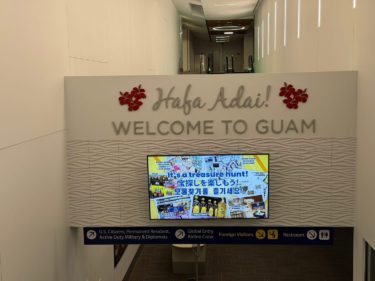
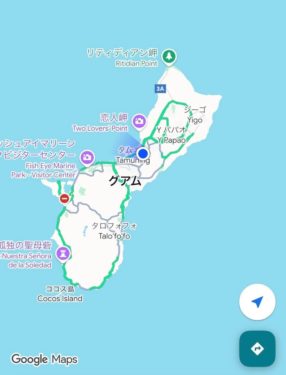
日本に一番近いアメリカ合衆国はハワイではありません。まずはグアムへ。
米国内からしかできない手続きや銀行マターもあります。
その後に2025年開催した昭和100年史の勉強会の総決算として、滞在したかったパラオへ。
グラムからパラオはわずか2時間弱のフライトなのです。
それについては次のブログへ。
The U.S. territory closest to Japan isn’t Hawaii—it’s Guam. So I’ll start by heading there. There are certain procedures and banking matters that can only be handled within the United States.
After that, as the grand finale of the Showa 100-Year History study sessions I held in 2025, I’ll finally visit Palau, a place I’ve long wanted to stay. It’s less than a two-hour flight from Guam to Palau.
More about that in my next blog post.