













本年最後の海外出張です。九十九里上空からの富士山が絶景です。



This is my last overseas business trip of the year.
The view of Mt. Fuji from above Kujukuri is absolutely stunning.

 藤本幸弘オフィシャルブログ
本年最後の海外出張です。九十九里上空からの富士山が絶景です。
This is my last overseas business trip of the year.
The view of Mt. Fuji from above Kujukuri is absolutely stunning.
リアルに知り合った方が、FB友達になれないというトラブルが発生して、自分の名前や写真を検索したら、偽物が出てくる出てくる。この中でどれが本物でしょうか?





A person I met in real life had trouble adding me as a friend on Facebook, so when I searched for my name and photos, a bunch of fake accounts showed up.
Which one of these is the real me?
会食の前に六本木ヒルズを通過した。
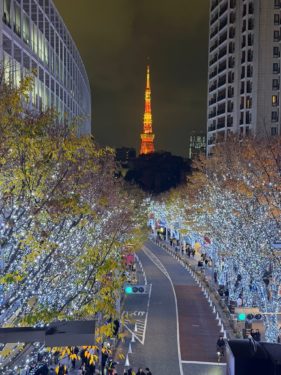
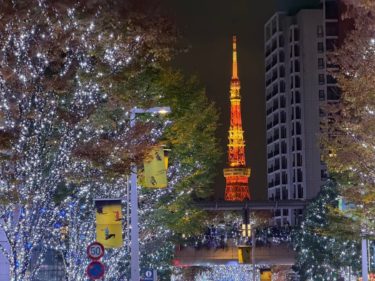
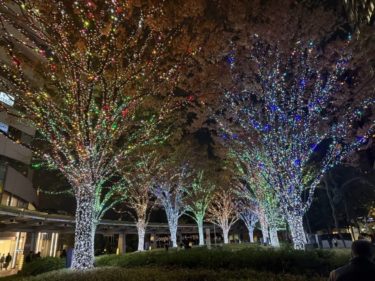
クリスマスマーケットが綺麗ですね。

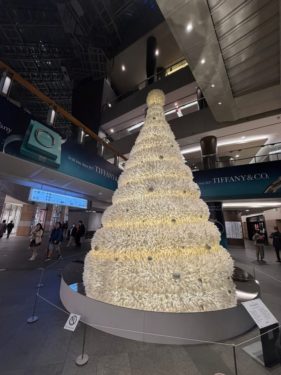
2004年までは六本木に自分のクリニックがあったのでこの場所もよく使ったのですが、ずいぶんと変わってしまったのであまり懐かしさは感じないです
もう20年も前の話なんですね。
passed through Roppongi Hills before the dinner. The Christmas market looked so beautiful. I used to come here often because I had my own clinic in Roppongi until 2004, but the area has changed so much that I don’t really feel much nostalgia anymore. Hard to believe it was already twenty years ago.
——生命はなぜ老いるのか、なぜ生き延びるのか
女性の長寿、老化しない生物、老化細胞の除去、そして寿命という“設計”の本質へ
人間の寿命をめぐる議論には、しばしば「限界」「老化」「延命」といった言葉が並びます。
しかし、生命を横断的に眺めていくと、寿命とは単なる“年数”ではなく、
「どう設計され、どう修復され、どう時間を使うか」という思想の集積であることが浮かび上がってきます。
その視点に立つと、
女性が男性より長生きする理由、
老化しない生き物たちの存在、
そして老化細胞を取り除く技術の登場は
ばらばらの話ではなく、ひとつの大きな“生命理論”へ自然と統合されていきます。
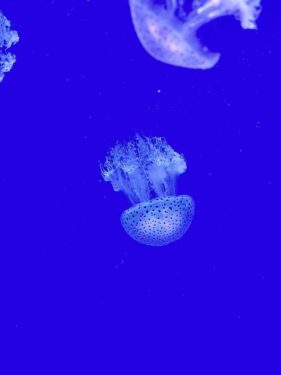
女性が長生きする理由は決してひとつではありません。
生物学的な“二重底”の構造、血管や免疫を守るホルモン、代謝の安定性。
そしてもうひとつ重要なのは、不調を言葉にし、助けを求め、医療や社会の支えを早く取り込む文化的行動です。
この三層構造が“寿命の余裕”をつくり出している。
一方で、自然界にはこの“余裕”とは別のアプローチで寿命を扱う生き物たちがいます。
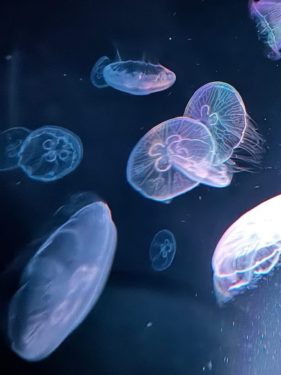
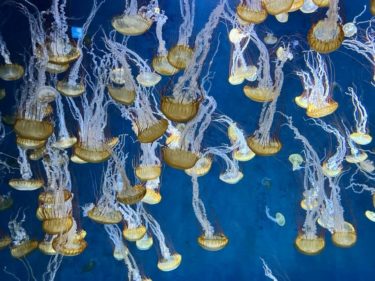
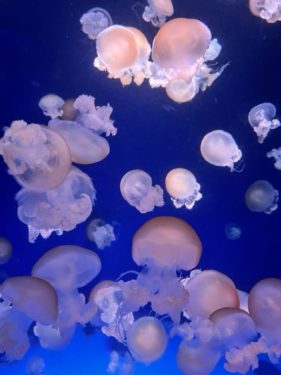
クラゲは成体から幼体へと戻り、老化そのものを回避する。
ハダカデバネズミは年齢と死亡率が結びつかず、老いから滑らかに逃れている。
深海のサメは数百年かけて時間をゆっくりと希釈し、老化の速度を極限まで落とす。
そしてタコは、老化ではなく生殖の役割が終わると自ら生命を閉じる構造を持っている。
ここにあるのは
「寿命とは、生命ごとに異なる“時間の使い方”の選択である」
という事実です。
人間は、クラゲのように巻き戻りもせず、タコのように潔く身を引くわけでもない。
しかしその代わりに、人間には修復する力を持ち続けるという第三の道があります。
老化細胞(senescent cell)の問題に向き合うと、
寿命は“設計された時間”と“日々の修復力”のせめぎ合いで成り立っていることが分かります。
老化細胞は増えず、死なず、ただ炎症を撒き散らし、周囲の細胞の時間を奪っていく存在です。
この細胞をどう扱うかは、寿命をどう設計し直すかに直結します。
そこで登場したのが、老化細胞だけを静かに消し去るという発想(セノリティクス)です。
GLS1という代謝的な弱点を突いて老化細胞だけを落とす方法。
生存シグナルを断つ薬剤。
免疫に老化細胞の除去を任せる技術。
そして、運動による“自然のセノリティクス”。
いずれも、老化は避けられないという古い前提を崩し、「老化は編集できる」という新しい考えをもたらしている。
ここまで来ると、寿命はもはや“何歳まで生きられるか”ではなく、「時間をどれだけ思い通りにデザインできるか」という概念に近づいていきます。
このデザインには、さらにいくつもの“層”が重なります。
テロメアは、細胞が何回修復に耐えられるかという“構造の耐久性”。
幹細胞は、組織の若さを支える“時間の職人”。
mTORは、生きる速度を決める“時間のアクセル”。
腸内細菌は、内なる生態系として寿命の土台を整える“第2の遺伝子”。
NAD代謝は、細胞修復の燃料として時間の質を決める“生命のエネルギー管理”。
こうした要素を束ねていくと、
寿命とは、ただ時計が進むことではなく、「生命が時間をどのように取り扱うか」という総合的な意志の表現だと見えてくる。
女性は多層的に守り
クラゲは流動的に変化し
タコは役割に合わせて自ら幕を下ろし
深海のサメは時間を薄めて使い
そして人間は——
ついに“時間そのものを編集する力”を得つつある。
寿命は、生物が時間という素材をどう料理するかのレシピのようなものです。
人間は今、古いレシピを捨てる段階にあります。
老化を遅らせるだけでなく
老化細胞を選んで取り除き
代謝を調整し
時間の流速をコントロールし
細胞内の燃料を補い
腸内の生態系と共に生きる。
これは単なるアンチエイジングの話ではありません。
人間が初めて、自分の寿命の文法を理解し、自ら書き換え始めた瞬間なのです。
寿命は、もはや決められた長さではなく、
どう使うか
どう修復するか
どう設計し直すか
という“生命のデザインの問題”になっていく。
そしてそのデザインはまだ途中であり
未来にはさらにしなやかな寿命観が広がっていくはずです。
Discussions about human lifespan often revolve around words such as “limits,” “aging,” and “life extension.”
But when we look across the spectrum of life, it becomes clear that lifespan is not merely a matter of years lived.
It is an accumulation of ideas about how life is designed, how it repairs itself, and how it chooses to use time.
From that perspective,
the reasons women outlive men,
the existence of organisms that do not age,
and the emergence of technologies that remove senescent cells
are not isolated stories.
They become naturally integrated into a single, broader “theory of life.”
The longevity of women has no single explanation.
It arises from a biological “double-bottom” structure,
hormones that protect blood vessels and immunity,
and stable metabolic patterns.
Equally important is a cultural behavior:
the tendency to verbalize discomfort, seek help, and access medical and social support early.
Together, these three layers generate a kind of “buffer of lifespan.”
Meanwhile, nature hosts creatures that manage lifespan through entirely different strategies.
Jellyfish revert from adulthood to youth, escaping aging altogether.
Naked mole-rats show no link between age and mortality, slipping smoothly away from the grip of aging.
Deep-sea sharks spend centuries diluting time itself, pushing the speed of aging to its extreme minimum.
And octopuses end their lives not through aging, but by closing the curtain once their reproductive role is complete.
All of these reveal a single truth:
“Lifespan is each organism’s chosen way of using time.”
Humans do not rewind like jellyfish, nor do we exit with the clarity of octopuses.
But in exchange, humans possess a third path—the ability to maintain the power of repair.
When we confront the problem of senescent cells,
we see that lifespan is a tension between “the time we are designed with” and “our daily capacity for repair.”
Senescent cells neither divide nor die;
they simply spread inflammation and steal time from surrounding cells.
How we handle these cells is directly tied to how we redesign lifespan itself.
This is where the idea of senolytics emerges—quietly eliminating only senescent cells.
A method that targets the metabolic weakness of GLS1 to remove them.
Drugs that cut off survival signals.
Techniques that enlist the immune system in their clearance.
And exercise, the “natural senolytic.”
All of these dismantle the old assumption that aging is unavoidable,
replacing it with a new idea: aging can be edited.
At this point, lifespan is no longer about “how old we can become,”
but about how intentionally we can design our time.
This design itself has multiple layers:
Telomeres define the structural endurance of cellular repair.
Stem cells are the “craftsmen of time” that preserve tissue youth.
mTOR is the “accelerator of time,” setting the pace of life.
The gut microbiome, an inner ecosystem, is our “second genome” shaping the foundation of lifespan.
NAD metabolism, as the fuel for cellular repair, is life’s “energy management.”
When these elements are woven together,
we see that lifespan is not simply the ticking of a clock,
but the expression of life’s collective will in how it chooses to handle time.
Women protect themselves through multiple layers.
Jellyfish shift fluidly between forms.
Octopuses step offstage according to their role.
Deep-sea sharks dilute time as they live.
And humans—
are finally gaining the ability to edit time itself.
Lifespan is like a recipe: how each organism cooks with the ingredient of time.
Humanity is now at the stage of discarding its old recipe.
Not only slowing aging,
but selectively removing senescent cells,
modulating metabolism,
controlling the flow of time,
replenishing cellular fuel,
and living in partnership with the ecosystem within.
This is not merely the story of anti-aging.
It is the moment humanity first understands the grammar of its own lifespan—
and begins to rewrite it.
Lifespan is no longer a predetermined length,
but a “design problem of life”:
how we use time, repair it, and redesign it.
And that design is still in progress.
The future will hold an even more flexible, more fluid vision of what lifespan can be.
2026年3月末、デンバーで開催される米国皮膚科学会(AAD)から、提出していた演題がオーラルで採択されたという知らせが届いた。
気づけば、今回の滞在でこの街を訪れるのは五度目になる。
標高およそ1,600m——“マイル・ハイ・シティ”と呼ばれるデンバーの空はいつ来ても驚くほど澄んでいて、その乾いた空気が旅の気配を一層際立たせる。
都市にもかかわらずどこか山の麓にいるような透明感があるのが、この街の不思議な魅力だ。
そして、デンバーの背後にはロッキー山脈が横たわっている。
前回の学会では一日だけスケジュールを抜け、レンタカーでスキーリゾートのヴェイル(Vail)まで走った。
雄大な山々に抱かれたあの白銀の斜面はまさに北米の冬の象徴で、滑るというより山と対話するような時間だった。
デンバーという街は、学問と自然が隣り合って存在している。
白衣の緊張感と、山の静けさ。
学会場の議論と、雪面を切る風の音。
その対比が、僕にとってここを何度訪れても飽きない理由なのだと思う。
五度目のデンバー——。
旅の成熟と、新しい発見への予感が、また静かに胸の内に灯り始めている。

標高およそ1,600m——“マイル・ハイ・シティ”と呼ばれるデンバーの空はいつ来ても驚くほど澄んでいて、その乾いた空気が旅の気配を一層際立たせる。
都市にもかかわらずどこか山の麓にいるような透明感があるのが、この街の不思議な魅力だ。
そして、デンバーの背後にはロッキー山脈が横たわっている。
前回の学会では一日だけスケジュールを抜け、レンタカーでスキーリゾートのヴェイル(Vail)まで走った。
雄大な山々に抱かれたあの白銀の斜面はまさに北米の冬の象徴で、滑るというより山と対話するような時間だった。
デンバーという街は、学問と自然が隣り合って存在している。
白衣の緊張感と、山の静けさ。
学会場の議論と、雪面を切る風の音。
その対比が、僕にとってここを何度訪れても飽きない理由なのだと思う。
五度目のデンバー——。
旅の成熟と、新しい発見への予感が、また静かに胸の内に灯り始めている。
In late March 2026, I received the news that the abstract I had submitted to the American Academy of Dermatology (AAD), to be held in Denver, had been accepted for an oral presentation.
Before I realized it, this visit marked my fifth time coming to this city.
At roughly 1,600 meters above sea level—the “Mile-High City”—Denver’s sky is always astonishingly clear, and its dry air heightens the sense of being on a journey. Despite being a major city, it somehow has the crystalline atmosphere of a mountain foothill, which is one of its most intriguing charms.
And beyond Denver lies the Rocky Mountains.
During the previous conference, I managed to slip away for a day, rented a car, and drove out to the ski resort of Vail.
The vast, snow-covered slopes embraced by majestic peaks felt like the very symbol of winter in North America. It was less about skiing and more like having a quiet conversation with the mountains.
Denver is a place where scholarship and nature coexist side by side.
The tension of a white coat, and the stillness of the mountains.
The lively discussions at the conference venue, and the sound of wind slicing across the snow.
I think it’s this contrast that keeps me from ever growing tired of returning here.
My fifth time in Denver—
a quiet spark of both a seasoned traveler’s maturity and the anticipation of new discoveries is beginning to glow within me once again.