













久しぶりの香港。日の入り直後です。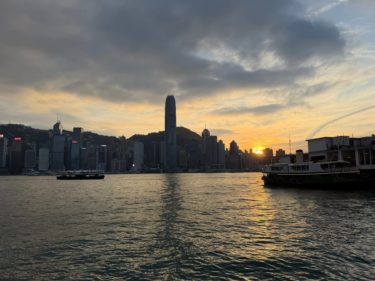

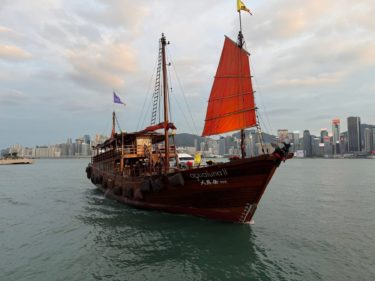
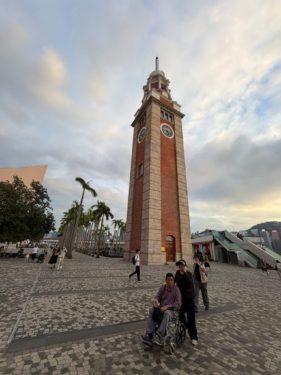
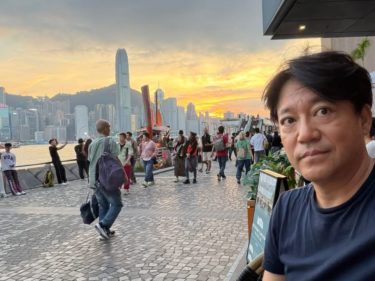
Hong Kong sunset

 藤本幸弘オフィシャルブログ
久しぶりの香港。日の入り直後です。
Hong Kong sunset
「チ。」――理性という名の火を継ぐ者たちへ
第26回手塚治虫文化賞マンガ大賞受賞をはじめ数々の賞を受賞し、2024年10月放送開始予定のアニメ化でも話題沸騰!『チ。-地球の運動について-』
Netflixでアニメを最後まで観ました。近年稀にみる素晴らしい作品ですね。日本のコンテンツは素晴らしい。
15世紀末、まだ「太陽は地球のまわりを回る」と信じられていた時代。
その常識を覆そうとした者たちは、異端として火刑に処された。
漫画『チ。―地球の運動について―』(魚豊)は、その「思考の罪」を描く物語。
■ 知を求める者の系譜
登場人物たちは、誰もが「正しさ」よりも「真実」を追う。
たとえそれが命を削る道であっても、
「地球が回っている」という確信を次の人へと渡す。
知のバトンは、血と涙で受け継がれていく。
そしてその行為こそが、科学史の起点であり、人類の祈りそのものなのだ。
■ 理不尽の中の理性
僕がこの作品に深く惹かれたのは、暴力に屈しない静かな理性の姿だ。
「考えること」を禁じられた世界で、それでも人は考える。
その光は、現代にも通じている。
SNSの炎上、空気の支配、同調圧力。
形は違えど、「思考の自由」を奪う力はいまも生きている。
『チ。』の登場人物たちは、
現代に生きる僕たち一人ひとりの良心の投影でもあるのだ。
■ 光と闇の絵画的対比
魚豊氏の描線は、まるでレンブラントの宗教画を思わせる。
光は人物の信念を照らし、闇は時代の圧政を包む。
沈黙の場面ほど雄弁で、
「知ることは、信じることを裏切る」というテーマを、痛いほど浮かび上がらせている。
■ 「チ。」とは何か
作中で「チ。」という音が象徴するのは、
血(chi)であり、知(chi)であり、地(chi)である。
命を賭けて継がれた小さな音節が、やがて地動説という革命を生んだ。
それは、人間が「考える存在」である証明だった。
科学も芸術も、宗教も哲学も、
すべてはこの「チ。」という一点から始まるのだ。
■ 沈黙の祈り
最後のページを閉じるとき、僕は静かに息をのむ。
それは悲しみではなく、ある種の祈りだった。
「考えることを恐れるな。
思索の炎は、世界のどこかで必ず誰かが受け継いでいる。」
『チ。』は、過去の物語ではない。
いまこの瞬間にも、誰かが「考える勇気」を奪われている。
だからこそ、この作品は未来への遺書であり、宣言でもあるのだ。
■ 「世界は回っている」という危険な思想
15世紀末のヨーロッパ。
宗教がすべての真理を独占していた時代に、たったひとつの疑問がすべてを揺るがした。
「本当に、太陽が地球のまわりを回っているのか?」
コペルニクスは『天球の回転について』(1543)で、地動説を理論化する。
その書は死の直前に刊行され、彼自身は異端審問を免れた。
だが、その後を継いだ者たちは命を賭けることになる。
■ ジョルダーノ・ブルーノ ― 知の殉教者
ブルーノ(1548–1600)は、宇宙を「無限」と唱えた。
それは神の絶対性を相対化する思想だった。
彼は「無限の神が、無限の世界を創らぬはずがない」と信じたがゆえに、教会は彼を異端と断じ、8年に及ぶ尋問の果てに火刑に処した。
燃え上がる炎の中で、ブルーノは沈黙したまま空を見上げたという。
その瞳が見ていたのは、恐らくまだ誰も知らぬ宇宙だった。
■ ガリレオ・ガリレイ ― 理性の沈黙
17世紀、望遠鏡を手にしたガリレオは、木星の衛星を発見し、天動説を崩す決定的証拠を得た。
しかし、彼の発見はローマ教会の怒りを買い、1633年に裁かれる。
伝説によれば、彼は退廷時にこう呟いたという。
「それでも地球は回っている(E pur si muove.)」
実際には記録に残っていない。
だが、その言葉は、理性が権力に屈してもなお回り続ける世界の象徴として、
永遠に語り継がれることになった。
■ ニュートン ― 数式で祈る者
やがて17世紀末、ニュートンは『プリンキピア』(1687)で運動の法則と万有引力を定式化した。
人類はついに「宇宙を神の奇跡ではなく、方程式で理解する」地点に到達する。
だがニュートン自身は、単なる科学者ではなかった。
神秘思想と錬金術に傾倒し、彼にとって数式は祈りであり、宇宙は「神の言語」だった。
理性と信仰は、ここで再び融合していたのである。
■ 炎から方程式へ、そして光へ
『チ。』の登場人物たちが命を賭けて守った「知る勇気」は、
ブルーノの炎を経て、ガリレオの沈黙を抜け、ニュートンの方程式へと続いた。
その道のりは、単なる科学革命ではなく、精神の革命でもあった。
思考すること。
疑うこと。
そして、信じること。
この三つが交わるところに、常に「光」がある。
■ 終章 ― その火は、今も回っている
21世紀の今、我々は再び「真理の編集」に直面している。
AIが情報を整え、政治が言葉を操作し、社会が空気を作る。
しかし、地球は回り続けている。
理性の炎は消えていない。
僕らが「考える」ことをやめない限り、ブルーノも、ガリレオも、そして『チ。』の若者たちも、この回転の輪の中で、静かに息づいているのだ。
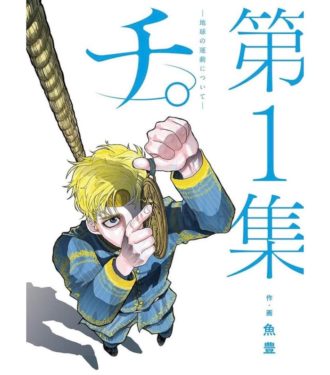
“Chi.” — To Those Who Inherit the Fire Called Reason
Winner of numerous awards, including the 26th Tezuka Osamu Cultural Prize Grand Award,
and soon to become a major Netflix anime in October 2024,
Chi: On the Movements of the Earth (Chi: Chikyū no Undō ni Tsuite) has captured hearts and minds across the world.
I watched the entire series on Netflix.
It is one of the most extraordinary works in recent years—
a reminder that Japanese storytelling is among the finest in the world.
At the end of the 15th century,
when people still believed that the sun revolved around the Earth,
those who dared to challenge that “truth”
were branded heretics and burned at the stake.
The manga Chi. by Uoto is a story about that “sin of thinking.”
Every character in Chi. chooses truth over rightness.
Even when the path costs them their lives,
they pass on the conviction that the Earth moves
to the next bearer of the flame.
The baton of knowledge is handed down
through blood and tears.
And that act itself is not merely history—
it is the beginning of science,
and the purest prayer of humankind.
What moved me most deeply about this work
was its portrayal of quiet reason that refuses to kneel before violence.
In a world where thinking itself is forbidden,
people still think.
That light shines even today—
in the age of social media outrage,
the tyranny of “the atmosphere,”
and the pressures of conformity.
The characters of Chi. are mirrors of our own consciences,
living here, now, in the modern world.
Uoto’s lines evoke the sacred chiaroscuro of Rembrandt’s religious paintings.
Light illuminates conviction.
Darkness wraps the oppression of an era.
The silences speak the loudest—
revealing, with painful clarity,
the theme that to know is to betray belief.
In the story, the sound “Chi” embodies three meanings:
blood, knowledge, and Earth—
chi, chi, and chi.
A single syllable, carried at the risk of life itself,
became the seed of the heliocentric revolution.
It was proof that human beings are thinking creatures.
Science, art, religion, and philosophy—
all begin from this single point,
this small sound: Chi.
When I closed the final page, I drew a silent breath.
It was not sadness I felt, but something closer to prayer.
“Do not fear to think.
Somewhere in the world,
someone is still carrying the flame of thought.”
Chi. is not a story of the past.
Even now, someone is being stripped of the courage to think.
That is why this work stands
as both a testament and a declaration—
a will addressed to the future.
Late 15th-century Europe—
a time when religion claimed a monopoly on truth.
One question shattered that order:
“Does the sun truly revolve around the Earth?”
In 1543, Copernicus published On the Revolutions of the Celestial Spheres,
formulating the heliocentric theory.
The book appeared on his deathbed,
and he escaped the Inquisition’s grasp.
But those who followed him would stake their lives on that truth.
Bruno (1548–1600) declared that the universe was infinite—
a thought that relativized the absoluteness of God.
He believed: An infinite God must have created infinite worlds.
For this, the Church condemned him as a heretic.
After eight years of interrogation,
he was burned at the stake.
As the flames rose, Bruno is said to have looked silently toward the sky.
Perhaps what he saw was a cosmos
that no one else had yet imagined.
In the 17th century, Galileo raised his telescope to the heavens,
discovering Jupiter’s moons—
proof that the heavens did not revolve around the Earth.
His findings enraged the Roman Church.
In 1633, he stood trial.
Legend has it that upon leaving the courtroom,
he whispered: “E pur si muove” — And yet, it moves.
No record confirms this,
but the words became eternal—
a symbol that even if reason is silenced by power,
the world continues to turn.
By the end of the 17th century, Newton published Principia (1687),
formulating the laws of motion and universal gravitation.
Humanity had finally reached the point
of understanding the cosmos not as divine miracle,
but as mathematical order.
And yet, Newton was not merely a scientist.
He was a mystic and an alchemist;
for him, equations were a form of prayer,
and the universe, the language of God.
Here, reason and faith were fused once more.
The courage to know, which the characters of Chi. protected with their lives,
passed through Bruno’s fire,
Galileo’s silence,
and Newton’s equations.
That journey was not only a scientific revolution—
it was a revolution of the human spirit.
To think.
To doubt.
And to believe.
Where these three intersect,
there is always light.
In the 21st century,
we once again face the editing of truth.
AI organizes information,
politics manipulates language,
and society manufactures consensus.
Yet the Earth keeps turning.
The flame of reason has not gone out.
As long as we do not stop thinking,
Bruno, Galileo, and the young seekers of Chi.
will continue to breathe quietly
within this great, revolving world.
境界が生む知 ― 混血と創造性の系譜
飛行機の窓から見える夜の地球。
僕はいつも思う。
文明の発火点は、いつの時代も「境界」にある。
混ざりあうことFusionで生まれる「知」
創造性とは、異なる要素が交わる場所で生まれる。
それは血の混合にとどまらず、文化、言語、思想の交差でもある。
異なる価値観が衝突し、調和を模索する過程で、新しい発想や表現が芽生える。
混血は、進化の装置であり、文明の触媒でもある。
アレクサンドリアからシリコンバレーへ
歴史を見れば、異文化の融合が文明を加速させてきた。
ギリシャ、エジプト、ユダヤ文化が出会ったアレクサンドリア、イスラムの学問とヨーロッパ思想が溶け合ったルネサンス期のイタリア、そして現代のアメリカ。
異なる血と記憶が交わるとき、そこに「新しい世界を想像する力」が生まれる。
日本 ― 海洋ハイブリッド文明の実験場
日本列島は、アジア大陸と太平洋の接点に浮かぶ「文化の実験場」だ。
縄文と弥生の混血、唐・新羅文化の受容、鎖国下の蘭学、
そして明治の和魂洋才――。
この国の歴史は、外来を拒むのではなく、取り込み、変換し、昇華する連続だった。
漱石の内省、湯川秀樹の理論、宮崎駿の幻想。
いずれも内に潜りながら、世界へ通じる知のかたちである。
ポーランド ― 分割と亡命が育てた知性
ポーランドもまた、東西ヨーロッパの境界に立つ国。
幾度もの分割と亡命を経ながら、
そのたびに文化を再構築してきた。
コペルニクスはドイツ語とラテン語の交わる地で地動説を唱え、ショパンはポーランドの哀しみとフランスのエレガンスを結んで旋律を紡いだ。マリー・キュリーは、国家を越え、科学そのものを祖国とした。
分断は悲劇ではなく、知を磨く試練だった。
境界の民が生む創造
日本とポーランド。
一見遠い二つの国は、どちらも「境界に生きる民」としての共通の感性を持っている。
同化でも排除でもなく、異なるものを受け入れ、対話させ、そこから新しい“中間の知”を生み出してきた。
それこそが、世界を動かす創造のエネルギーだ。
混血とは、身体の中で行われる対話であり、文化の中で繰り返される祈りでもある。
異なる魂、異なる記憶、異なるリズムが交わるとき、文明は呼吸を始める。
日本とポーランド――
その静かなるハイブリッドの地平から、
世界を照らす「境界の知性」が今日も生まれている。
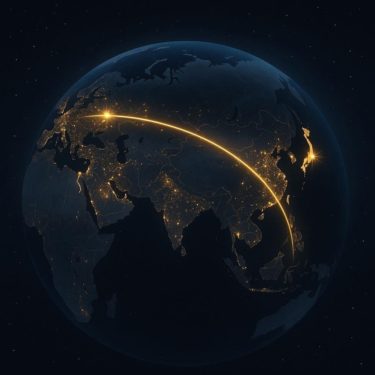
From the airplane window, I gaze down at the Earth at night.
And I always think:
The spark of civilization has always ignited at the boundaries.
Knowledge is born through fusion—the mingling of differences.
Creativity emerges where unlike elements meet.
This mingling is not only of blood,
but also of cultures, languages, and ideas.
When different values collide and search for harmony,
new ways of thinking and expression take root.
Hybridity is an engine of evolution,
a catalyst for civilization itself.
History shows that cultural fusion has always accelerated civilization.
Alexandria, where Greek, Egyptian, and Jewish cultures converged.
Renaissance Italy, where Islamic scholarship blended with European thought.
And modern America, the crucible of countless heritages.
Whenever different bloodlines and memories intertwine,
the power to imagine new worlds is born.
The Japanese archipelago floats at the intersection
of the Asian continent and the Pacific Ocean—
a laboratory of culture.
The fusion of Jōmon and Yayoi peoples,
the adoption of Tang and Silla culture,
the study of Dutch science under isolation,
and the Meiji spirit of Japanese soul, Western learning—
Japan’s history is not one of rejection,
but of absorption, transformation, and transcendence.
The introspection of Sōseki,
the theories of Hideki Yukawa,
the dreams of Hayao Miyazaki—
each is a form of knowledge
that turns inward yet speaks to the world.
Poland, too, stands at the border between East and West.
Through repeated partitions and waves of exile,
it has rebuilt its culture again and again.
Copernicus proposed his heliocentric vision
in a land where German and Latin converged.
Chopin wove the sorrow of Poland
with the elegance of France.
Marie Curie transcended nations
and made science itself her homeland.
Division was not tragedy—
it was the trial that sharpened the mind.
Japan and Poland—
two nations distant on the map,
yet sharing the same sensibility of borderland peoples.
Neither assimilation nor exclusion,
but a dialogue between differences—
and from that dialogue, a new knowledge of the in-between emerges.
That is the very energy that moves the world.
Hybridity is a conversation carried out within the body,
and a prayer repeated within culture.
When different souls, memories, and rhythms meet,
civilization begins to breathe.
Japan and Poland—
from their quiet, hybrid horizons,
the intelligence of the boundary continues to illuminate the world today.
世界三大宗教って?
今や キリスト教、イスラム教、仏教じゃないんですね。
現在猛追中のイスラム教徒の数。ニューヨーク市長も。2050年にはキリスト教とイスラム教が30億人でぼぼ同数になるそうです。
そして現在ヒンドゥー教は12億人。
仏教は5億人。
今や仏教信者は世界人口の10%を切ったのです。世界常識は仏教的な思考ではないと考えるのが妥当かもしれません。
What are the three major world religions?
It seems they are no longer simply Christianity, Islam, and Buddhism.
The number of Muslims is growing rapidly — even the Mayor of New York is Muslim. By 2050, it’s said that the numbers of Christians and Muslims will each reach about 3 billion, making them roughly equal in size.
Currently, there are about 1.2 billion Hindus and 500 million Buddhists.
Today, Buddhists make up less than 10% of the world’s population.
It might be reasonable to say that global common sense is no longer based on Buddhist ways of thinking.
「科学少年の帰還 ― 観察者から発信者へ」
理科が好きだった少年時代の僕。
学研の『科学と学習』を卒業したあと、自宅には創刊0号から『Newton』が揃っていた。学研の付録の万華鏡や顕微鏡を覗き込みながら、光の粒子や磁力線の不思議に夢中になっていたあの頃。今思えば、その瞬間こそが僕の科学への旅の始まりだったのかもしれない。
「Newton」創刊号(1981年5月号)は、まさに日本におけるサイエンス・リテラシーの象徴とも言える存在だった。(Newton, 1981, Vol.1, No.0)。
最近、ふと書店で手に取った新刊のNewton別冊を読んでいて、気付いた。
――ああ、今の自分の知識のほうが明らかに新しいのだ。
少年のころ憧れた「Newton」や「科学の先生」の世界が、いつの間にか自分の背後に来ている。今は知識を「得る側」ではなく「発信する側」に立っているのだ。
レーザー医学会の国際学会でも、登壇者と「セイハロー」はするものの、話の内容はすでに自分の研究範囲内。もはや“知識をもらいに行く場”ではなく、“仲間に挨拶をしに行く場”になってしまった。
科学を学ぶ少年は、いつしか科学を創る大人になった。
そして、科学の書を読む読者は、いまその書を書く側にいる。
時の流れは不思議だ。あの頃ページの隅に書き込んでいた「光とは何か」という問いを、いま臨床の現場で、レーザー治療や再生医療という形で、日々追い続けているのだから。