













TakahiroFujimoto.com

HOME MAIL
HOME PROFILE BOOKS MUSIC PAPERS CONFERENCES BLOG MAIL CLOSE

BLOG 藤本幸弘オフィシャルブログ

BLOG|ブログ

ガトウィックにいます ディレイ Delay

航空機のディレイって数時間単位になる事があるのでなかなか辛いですよね。今回の出張では12回も飛行機で飛ばないといけないのですが、ついに引っかかりました。3時間ディレイが決まり、朝からすでに5時間待ってます。

Kindleも色々読んでしまったし、流石に疲れが。

元々ストレス耐性は高いんですが、どうにもならないこともありますよね。

「待たされる」という行為は、単に“時間の浪費”ではなく、脳の生理学的ストレス反応を伴う行為です。研究によって、慢性的に「待たされる」「コントロールできない遅延」にさらされると、脳のいくつかの領域に明確な影響があることがわかっています。

Ⅰ. 前頭前野(Prefrontal Cortex)の疲弊

「待つ」というのは実は高度な抑制行動です。
私たちは待っている間、「イライラする気持ち」や「早く動きたい衝動」を抑制しています。

このとき酷使されるのが前頭前野、特に背外側前頭前野(DLPFC)です。

この領域は注意制御・意思決定・衝動抑制を司るため、長時間の“待ち”はエネルギーを消費し、認知疲労を引き起こします。

Ⅱ. 扁桃体(Amygdala)の過剰反応

「自分のコントロールが効かない」状態は、脳にとって“恐怖”や“不安”と同じストレスになります。

扁桃体はこの“不確実性ストレス”に過敏に反応し、交感神経を活性化。結果として、心拍上昇・血圧上昇・コルチゾール分泌が起こります。

慢性的に繰り返すと、扁桃体が過活動化し、
→ 前頭前野とのバランスが崩れ
→ 情動のコントロール低下・怒りっぽさ・不安傾向
を引き起こすことが知られています。

この辺りは訓練が大事ですよね。

Ⅲ. 海馬(Hippocampus)の萎縮リスク

待たされている間に分泌されるストレスホルモン「コルチゾール」は、短期的には覚醒を高めますが、慢性化すると海馬の神経新生を阻害します。

海馬は記憶とストレス制御の中枢。
そのため、長期的に「待たされるストレス」にさらされる環境(渋滞・順番待ち・遅延多発など)では、記憶力や集中力の低下、睡眠障害に繋がることがあるのです。

Ⅳ. ドーパミン系の乱れ

「報酬が遅れる」=「待たされる」は、脳の報酬系(VTA-線条体経路)にも影響します。
ドーパミンは“報酬予測誤差”に応じて分泌されますが、
予想よりも報酬が遅れると、その分泌リズムが崩れ、
意欲低下・快感の減少・集中困難が起こることが確認されています。

Ⅴ. しかし「待つ力」も鍛えられる

面白いのは、意図的に待つ訓練を行うと逆に脳が強化されることです。

マインドフルネスや瞑想で得られる“間(ま)”の意識は、
前頭前野と扁桃体の結合を強化し、ストレス耐性を高めることが示されています。

結論

「待たされる」ことが脳に与えるダメージとは、

• 前頭前野の疲弊(判断力低下)
• 扁桃体の過活動(怒り・不安)
• 海馬の委縮(記憶低下)
• ドーパミン系の乱れ(意欲喪失)

という多層的ストレス反応です。

ただし、“自分で待つことを選ぶ”とき、それは「忍耐」や「洞察力」へと変わり、脳を鍛える最高のメンタルトレーニングにもなり得ます。人間万事塞翁が馬ですからね。
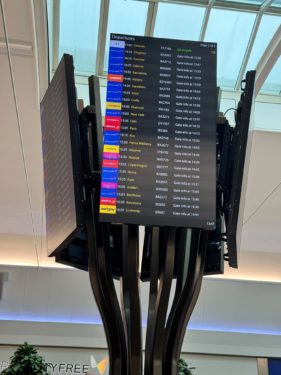
Delays in air travel can be tough—sometimes stretching into hours. On this business trip, I have to take 12 flights, and I finally got caught in a significant delay. It’s officially a 3-hour delay, and I’ve already been waiting for 5 hours since this morning.

I’ve read through quite a bit on my Kindle already, and I’m honestly starting to feel pretty drained.

I usually have a high tolerance for stress, but some things are just out of our control, aren’t they?

Being “made to wait” isn’t just a waste of time—it actually triggers physiological stress responses in the brain. Studies have shown that chronic exposure to uncontrollable delays can have clear impacts on various brain regions.


I. Fatigue of the Prefrontal Cortex

Waiting is, surprisingly, a high-level act of self-control.
While we wait, we’re constantly suppressing feelings of frustration and the impulse to act.

This suppression relies heavily on the prefrontal cortex, especially the dorsolateral prefrontal cortex (DLPFC).

This brain area governs attention, decision-making, and impulse control. Prolonged periods of “waiting” drain its energy, leading to cognitive fatigue.


II. Hyperactivity of the Amygdala

Being in a situation you can’t control is registered by the brain as a form of threat or uncertainty, which triggers stress responses.

The amygdala is particularly sensitive to this kind of stress and activates the sympathetic nervous system—resulting in increased heart rate, higher blood pressure, and cortisol release.

If this happens repeatedly over time, the amygdala becomes overactive, leading to:

  • Imbalance with the prefrontal cortex

  • Reduced emotional control

  • Increased irritability and anxiety


III. Risk of Hippocampal Atrophy

Cortisol, the stress hormone secreted while waiting, can boost alertness in the short term—but chronic secretion inhibits neurogenesis in the hippocampus.

The hippocampus is central to memory and stress regulation.
So in environments where people are repeatedly exposed to the stress of waiting (traffic, long lines, constant delays), this can eventually lead to:

  • Decreased memory and focus

  • Sleep disturbances


IV. Disruption of the Dopaminergic System

Delayed rewards—like being made to wait—also impact the brain’s reward system, particularly the VTA-striatal dopamine pathway.

Dopamine is released in response to reward prediction errors.
When a reward (e.g., boarding a plane) comes later than expected, the rhythm of dopamine release is disrupted.

This leads to:

  • Decreased motivation

  • Reduced pleasure

  • Difficulty concentrating


V. But… The Power to Wait Can Be Trained

Interestingly, intentional training in patience can actually strengthen the brain.

Practices like mindfulness and meditation, which emphasize awareness of the “pause” or “space” between actions, have been shown to:

  • Strengthen connections between the prefrontal cortex and amygdala

  • Enhance stress resilience


Conclusion

The stress of “being forced to wait” can impact the brain in multiple ways:

• Fatigue in the prefrontal cortex (↓ decision-making)
• Overactivation of the amygdala (↑ anger & anxiety)
• Atrophy risk in the hippocampus (↓ memory & focus)
• Disruption in dopamine systems (↓ motivation)

However, when we choose to wait intentionally, it can become a form of mental training—cultivating patience and insight.

As the saying goes: Every misfortune can be a blessing in disguise.


契約の文明

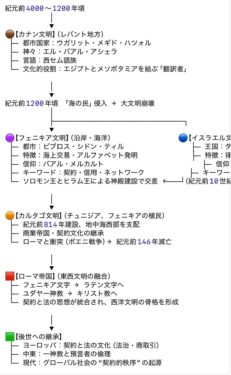
契約の文明:文明の系譜図:カナンから地中海文明へ

ーーフェニキア・イスラエル・カルタゴ・日本、四つの約束ーー

Ⅰ. カナンの双子:海と砂漠の兄弟文明

地中海の東岸、レバノンからイスラエルにかけての細長い地帯――古代カナン。
ここから二つの兄弟文明が生まれた。

北に海を抱くフェニキア。
南に砂漠を抱くイスラエル。

同じカナン語を話し、同じ神々を祀りながら、
一方は「海の契約」を、もう一方は「神の契約」を発明した。

フェニキア人は港を神殿のように設計し、
イスラエル人は神殿を契約の象徴として築いた。
宗教と経済をつなぐ“信義の文明”――
その原点がカナンにあった。

Ⅱ. フェニキア人:海を渡る契約の民

フェニキア人は、海と契約の民であった。
彼らにとって取引とは単なる商行為ではなく、
「契約(b’rt)」=誓い=神への責務であった。
この語源は、イスラエルの「契約(berith)」と同根である。

彼らは信義を刻むために文字を生み出し、
その表記体系はやがてアルファベットとして世界に広がった。
――“書くこと”は、“信頼を記す”ことだったのだ。

ティルの王ヒラムがソロモン王にレバノン杉を送り、
エルサレム神殿の建築を助けたとき、
そこに生まれたのは単なる貿易ではなく、文明の契約だった。

「ヒラムはソロモンの求めに応じ、レバノンの杉を与えた。」
— 『列王記上』5章6節

フェニキア人は信義の技術者であり、
その精神はのちに海上商業の倫理として受け継がれる。

Ⅲ. 西へ:カルタゴ、海上の契約国家

フェニキア人が地中海を渡り、北アフリカのチュニスの地に築いた都市――それがカルタゴ(Carthago, “新しい都市”)である。
カルタゴはフェニキア文明の西方的進化形であり、契約の精神を制度化した国家だった。

カルタゴの港湾は二重構造を持ち、
軍港と商港を分け、全てが法的契約で運営された。
その構造には、すでにローマ法の萌芽が見られる。

カルタゴ人にとって「信頼」とは宗教的価値であり、
商業とは神と人との約束の延長であった。
彼らは地中海世界に“契約社会の原型”を築いたのである。

フェニキア→カルタゴの系譜は、
“契約の合理化”という形で西洋へと受け継がれた。
それはローマ法、商事法、契約自由の原理へと変容してゆく。

Ⅳ. イスラエル:砂漠に生まれた倫理の契約

一方、砂漠の民イスラエルは、
神との契約(berith)を文明の中心に据えた。

十戒は宗教儀礼ではなく、共同体の社会契約であり、
神の法による合意社会の最初のモデルであった。

預言者たちは契約が歪められるたびにその倫理を正し、
「正義と義」を共同体の羅針盤とした。

宗教を超えて倫理を基軸にする――
それがイスラエル文明の真骨頂である。

Ⅴ. 契約の内面化:ディアスポラが生んだ知恵

バビロン捕囚ののち、イスラエル人は世界に離散した。
だが彼らは「契約を記憶する民族」として生き残った。

神殿を失っても、律法(トーラー)があれば共同体は維持できた。
契約は制度から内面へ、形式から理念へと変化した。

血縁ではなく理念でつながる共同体――
そこに、近代的「信義社会」の萌芽があった。

Ⅵ. 東へ:日本、沈黙の契約国家

そして東の果てに辿り着くもうひとつの契約文明――日本。

「天の誓約(うけい)」や「盟神探湯(くかたち)」は、
神々の真実を試す契約儀礼であり、
イスラエルの契約思想と驚くほど響き合う。

イスラエルが“言葉による契約”で社会を保ったのに対し、
日本は“沈黙による契約”で秩序を維持した。
書かれた律法の代わりに、和と空気がそれを担った。

それでも根底にあるのは同じ――
誠(makoto)=信義の倫理である。

Ⅶ. 山本七平『日本人とユダヤ人』:沈黙と契約の比較文明

1970年、山本七平は「イザヤ・ベンダサン」というユダヤ名で『日本人とユダヤ人』を著した。

外交官を志していた高校時代の僕は、
父の本棚からその一冊を取り出して繰り返し読んだ記憶がある。

宗教ではなく社会構造の比較として、“無宗教の日本人も契約倫理を共有している”という洞察に、強く心を打たれた。

「日本人は神を信じないが、空気を信じる。
ユダヤ人は神を信じるが、空気を信じない。」

ユダヤ社会では“契約”が秩序を生み、
日本社会では“空気(無言の合意)”が秩序を保つ。
形式は違えど、どちらも「信義を中核とする文明」である。

山本の直観は、
古代カナンに始まる“契約的精神の遺伝子”を見抜いていた。

畢竟、四つの文明はそれぞれ、
異なる形で“信義を制度化する”ことに成功した。
それが文明を持続させた共通の力――契約の哲学である。

Ⅸ. 結語:契約の星空の下で

フェニキアの船乗りも、イスラエルの預言者も、
カルタゴの商人も、日本の祭司も――
同じ星空を見上げていた。

その星は、信義という普遍の光。

海の契約、神の契約、法の契約、天の契約。
四つの文明がそれぞれの方角で、
人間が「信頼」を形にする方法を模索した。

文明とは、神話ではなく信頼の形式である。
そして誠実とは、最古にして最も普遍的な契約の言葉なのだ。

あとがき

フェニキアが「文字で契約を記した」文明なら、
イスラエルは「言葉で契約を語った」文明、
カルタゴは「法で契約を管理した」文明、
日本は「沈黙で契約を守った」文明である。

――その四つの文明が描くのは、
人類が“信頼”を軸に構築してきた契約の銀河図。

文明の核心とは、信仰でも技術でもなく、
「誠実であろうとする意思」なのかもしれない。


The Civilizations of the Covenant: A Genealogy of Civilizations – From Canaan to the Mediterranean World

Phoenicia, Israel, Carthage, Japan — Four Promises


I. The Twins of Canaan: Brother Civilizations of Sea and Desert

On the eastern shore of the Mediterranean — a narrow strip stretching from Lebanon to Israel — once lay ancient Canaan.
From this land, two sibling civilizations emerged:

Phoenicia, cradled by the sea to the north;
Israel, embraced by the desert to the south.

They spoke the same Canaanite language and worshipped the same gods.
Yet one gave rise to the “Covenant of the Sea”, the other to the “Covenant with God.”

The Phoenicians designed their harbors as if they were temples.
The Israelites built their temple as a symbol of covenant.
A “civilization of faith and trust” — linking religion and commerce —
had its origin in Canaan.


II. The Phoenicians: A Seafaring People of Covenant

The Phoenicians were a people of the sea and of covenants.
To them, a transaction was not merely commerce —
it was a “b’rt” — an oath, a responsibility to the divine.
This word shares its root with the Hebrew “berith” — also meaning “covenant.”

In order to record their pledges, they invented writing.
Their script would later evolve into the alphabet we use today.
To write was to record trust.

When King Hiram of Tyre sent cedars of Lebanon to King Solomon
to help build the Temple in Jerusalem,
what was born was more than trade — it was a covenant of civilization.

“Hiram gave Solomon all the cedar and cypress timber he desired.”
1 Kings 5:10

The Phoenicians were engineers of faith,
and their spirit lived on in the ethics of maritime commerce.


III. Westward: Carthage, a Maritime Covenant-State

Crossing the Mediterranean, the Phoenicians built a city on the shores of North Africa — Carthage (meaning “New City”).
Carthage was a western evolution of Phoenician civilization,
a state where the spirit of covenant was institutionalized.

Its harbor had a dual structure:
one for military, one for commerce — both governed by legal contracts.
In this system, we see early traces of Roman law.

To the Carthaginians, “trust” was a sacred value.
Commerce was an extension of the promises made between gods and humans.
They laid the foundation of a “covenantal society” across the Mediterranean world.

The lineage from Phoenicia to Carthage was passed on to the West
as the rationalization of covenant
transforming into Roman law, commercial codes, and the principle of freedom of contract.


IV. Israel: An Ethical Covenant Born of the Desert

Meanwhile, the desert people of Israel placed their covenant with God — berith — at the heart of civilization.

The Ten Commandments were not mere religious rites,
but a social contract for the community —
an early model of a society bound by divine law.

Each time the covenant was distorted, the prophets restored its ethics,
making “justice and righteousness” the compass of their community.

To base society not just on religion, but on ethics
that was the core spirit of the Israelite civilization.


V. Internalizing the Covenant: Wisdom Born of Diaspora

After the Babylonian exile, the Israelites were scattered across the world.
Yet they survived as a people who remembered the covenant.

Even without the Temple, the Torah sustained their communities.
Covenant shifted from system to interiority, from form to principle.

A community bound not by blood, but by shared ideals —
this was the seed of the modern “society of trust.”


VI. Eastward: Japan, a Silent Covenant Civilization

At the far eastern end of the world lies another covenantal civilization: Japan.

Rituals such as the “Oath of Heaven” (ukei) and the “Trial by boiling water” (kugatachi)
were ceremonies to test divine truth —
remarkably resonant with Israel’s covenantal worldview.

While Israel maintained society through covenants of words,
Japan upheld order through covenants of silence.
Instead of written law, harmony and atmosphere played that role.

Yet the underlying principle is the same:
Makoto — sincerity — the ethics of trust.


VII. Shichihei Yamamoto’s The Japanese and the Jews: A Comparative Civilization of Silence and Covenant

In 1970, Shichihei Yamamoto, under the Jewish pseudonym Isaiah Ben-Dasan, published The Japanese and the Jews.

As a high school student dreaming of diplomacy,
I remember repeatedly reading the book from my father’s shelf.

His insight struck me deeply:
as a comparison of social structures, not religions —
that even non-religious Japanese share a covenantal ethic.

“The Japanese don’t believe in God, but they believe in atmosphere.
The Jews believe in God, but not in atmosphere.”

In Jewish society, covenant creates order.
In Japanese society, atmosphere (silent consensus) preserves it.
Different in form, yet both are civilizations centered on trust.

Yamamoto’s intuition perceived the genetic spirit of covenant
that began in ancient Canaan.

Ultimately, these four civilizations each succeeded in institutionalizing trust in distinct ways.
That shared force — the philosophy of covenant — sustained their civilizations.


IX. Conclusion: Beneath the Starry Sky of Covenant

Phoenician sailors, Israelite prophets, Carthaginian merchants, Japanese priests —
they all looked up at the same starry sky.

And those stars shone with the universal light of trust.

A covenant of the sea, a covenant with God, a legal covenant, a heavenly covenant.
Each civilization, from its own direction,
searched for a way to give form to human trust.

Civilization is not a myth —
it is a structure of trust.
And sincerity is the oldest, most universal word of covenant.


Postscript

If Phoenicia was a civilization that wrote its covenants,
Israel was one that spoke them,
Carthage regulated them by law,
and Japan upheld them in silence.

Together, these four civilizations depict
a galactic map of humanity’s pursuit of trust through covenant.

At its core, civilization is neither faith nor technology —
but the will to be sincere.


兄弟文明の系譜

兄弟文明の系譜:フェニキア・イスラエルからカルタゴ・日本へ――

Ⅰ. カナンの兄弟たち

フェニキアとイスラエル——
この二つの民族は、古代オリエントのカナン人(Canaanites)という共通の母胎から生まれた兄弟である。

フェニキア人は海へ、イスラエル人は砂漠へ。
兄は船を造り、弟は律法を記した。
片や海の契約、片や神の契約——
その二つの「契約文明」が、地中海の東岸で同時に萌芽した。

フェニキア語とヘブライ語はほぼ同系であり、
フェニキア文字はアルファベットの祖として、
ヘブライ文字の形に転じて今も生き続けている。

つまり、彼らは「言葉を持つ海の民」と「律法を持つ砂漠の民」だった。
そのどちらも、“契約”という観念を神と人、人と人の間に置いた最初の文明だったのである。

Ⅱ. 契約という文明の発明

フェニキア人にとって契約(b’rt)は「商業の約束」であり、
イスラエル人にとって契約(berith)は「神との誓約」であった。

語源は同じ。
つまり「契約」は、信仰と経済の両輪を動かすひとつの言葉だった。

海を渡る交易と、律法による秩序。

それは、文明のハードウェアとソフトウェアの関係に似ている。フェニキアが物流(flow)を創り、イスラエルが倫理(law)を定義した。
この二つの文明が交差した点に、後の地中海世界の“合理と信義”が芽生えた。

Ⅲ. 西の伝播:カルタゴという「海上の契約国家」

フェニキアの商人たちは地中海を渡り、北アフリカのチュニスに新しい都市を築いた。
それがカルタゴ(Carthago=新しい都市)である。

カルタゴは「契約の民族フェニキア」の理念をそのまま受け継ぎ、港湾を神殿のように設計し、信頼と商業を神聖なものとした。

彼らは「言葉よりも契約を信じる」民族であった。

その合理主義はやがてローマ法へ、
そして近代ヨーロッパの商業倫理へと受け継がれてゆく。

カルタゴとは、フェニキア文明が「神から経済へ」と変化した場所。
信仰の契約が、商業の契約に転化した瞬間だった。

Ⅳ. 東の伝播:日本という「律令の契約国家」

一方、イスラエルの「律法契約」は東方へと旅を続けた。
メソポタミアからペルシア、インド、中国を経て、
ついに律令国家・日本に辿り着く。

日本神話の「天の誓約(うけい)」、そして『古事記』『日本書紀』に見られる“神と人の約束”の構造。

それはイスラエル的な「神の契約」を思わせるものがある。

日本ではこの理念が、宗教ではなく政治的秩序へと昇華された。

天=律、国=令。

フェニキアが“海で秩序を結んだ”のに対し、日本は“天で秩序を結んだ”。

イスラエルの「律法国家」が神の声を聴く社会であったように、日本の「律令国家」もまた天の声(天命)を聴く社会だった。


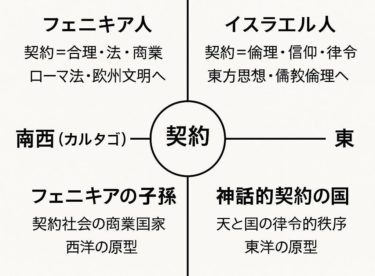
西にカルタゴの「契約都市」、東に日本の「律令国家」——

図の文字が変なので書きますと

方向
民族
概念
結果

西
フェニキア人
契約=合理・法・商業
ローマ法・欧州文明へ


イスラエル人
契約=倫理・仰・律令
東方思想・儒教倫理へ

南西(カルタゴ)
フェニキアの子孫
契約社会の商業国家
西洋の原型

東方(日本)
神話的契約の国
天と国の律令的秩序
東洋の原型その対比は、まるで文明の鏡像である。


The Genealogy of Brother Civilizations: From Phoenicia and Israel to Carthage and Japan


I. Brothers of Canaan

Phoenicia and Israel—
These two peoples were brothers, born from the same mother civilization: the ancient Canaanites of the Orient.

The Phoenicians turned to the sea, the Israelites to the desert.
The elder built ships, the younger inscribed laws.
One forged a covenant of the sea, the other a covenant with God—
Thus, two “covenantal civilizations” emerged simultaneously along the eastern shores of the Mediterranean.

Phoenician and Hebrew are virtually sibling languages.
The Phoenician script, progenitor of the alphabet, lives on in the form of the Hebrew script to this day.

In other words, they were “the people of the sea with language” and “the people of the desert with law.”
Both were among the first civilizations to place the concept of “covenant” between God and humanity, and among humans themselves.


II. The Invention of a Covenantal Civilization

For the Phoenicians, b’rt (covenant) meant a “commercial contract.”
For the Israelites, berith meant a “sacred oath with God.”

They share the same linguistic root.
In essence, “covenant” was a single word that moved both faith and economy.

Maritime trade and legal order—
This relationship is akin to hardware and software in civilization.
Phoenicia created the flow of goods; Israel defined the law of ethics.
Where these two met, the Mediterranean world’s later ideals of “rationality and trust” began to blossom.


III. Western Transmission: Carthage, the Maritime Contract State

Phoenician merchants crossed the Mediterranean and founded a new city in present-day Tunis.
That city was Carthage (Qart-ḥadašt—“New City”).

Carthage fully inherited the Phoenician ideal of a “covenant people.”
Its harbors were designed like temples, and commerce was sanctified as an act of trust.

They were a people who “trusted in covenants more than in words.”

This rationalism would later influence Roman law,
And eventually shape the commercial ethics of modern Europe.

Carthage marked the point where Phoenician civilization shifted “from God to economy”—
The moment when religious covenant transformed into commercial contract.


IV. Eastern Transmission: Japan, the Legal-Ritual Contract State

Meanwhile, Israel’s “covenantal law” continued its journey eastward—
Through Mesopotamia, Persia, India, and China—
And finally arrived in Japan, a legal-ritual (ritsuryō) state.

The myth of the “Heavenly Covenant” (ukei) in Japanese mythology,
And the structure of divine-human promises in the Kojiki and Nihon Shoki,
All echo the Israelite notion of “God’s covenant.”

In Japan, this idea was sublimated not into religion, but into political order.

Heaven became law,
Nation became command.

Where Phoenicia “established order by sea,”
Japan “established order by heaven.”

Just as Israel’s law-based society listened to the voice of God,
Japan’s legal-ritual state listened to the voice of heaven—heaven’s mandate.

To the west, Carthage—the “city of contracts.”
To the east, Japan—the “state of legal order.”


[Table Translation]

Direction People Concept Result
West Phoenicians Covenant = Rationality, Law, Commerce Roman Law → Western Civilization
East Israelites Covenant = Ethics, Faith, Legal Order Eastern Thought → Confucian Ethics
Southwest (Carthage) Descendants of Phoenicia Commercial State of Contract Society Prototype of the West
East (Japan) Nation of Mythic Covenants Legal Order between Heaven and State Prototype of the East

This mirrored contrast is nothing less than a reflection—
a mirror image of civilizations themselves.


Vincent

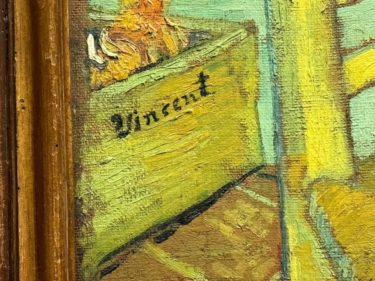
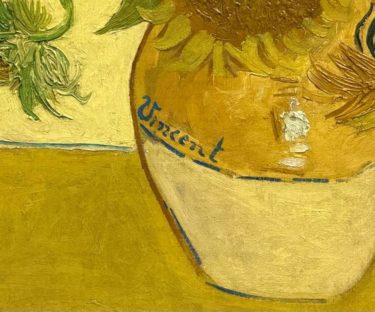
Vincent ゴッホという名の署名――

ロンドンのナショナル・ギャラリーで『ひまわり』を見つめていると、右下に赤く光るひとつのサインが目に入る。
“Vincent.”
たったそれだけ。

姓も称号もいらない。そこに在るのは、彼自身の存在そのものだ。

ゴッホは、いまや世界最高の画家の一人と称されながら、生前に売れた絵はたった一枚――1888年の《赤い葡萄畑》(Anna Bochが400フランで購入)。

彼がキャンバスに記した「Vincent」というサインには、姓ではなく“魂の名”として生きた芸術家自身の存在を刻もうとした意思があった。

孤独の中で絵筆を握り、死後に世界がその光に気づいた。

Ⅰ 家名を捨てた芸術家

ゴッホが「van Gogh」ではなく「Vincent」とサインしたのは、単なる発音の問題ではない。

彼は1882年の手紙でこう書いている。

“I want to sign simply ‘Vincent’ — because the people here have trouble pronouncing Van Gogh.”

「ただ『Vincent』とサインしたいんだ。ここの人たちは『ファン・ゴッホ』を発音しづらいからね。」

しかし、その裏にはもっと深い意味がある。

家名“van Gogh”は、商人の血、牧師の家系、そして社会に適応できなかった自分を常に縛る「過去」だった。

名だけを残したのは、「家」ではなく「個」として生きる」宣言である。

芸術の世界で生きるには、社会の系譜から自由でなければならない――

彼はそれを“Vincent”というたった七文字に託したのだ。

Ⅱ 観る者への呼びかけ

もうひとつの理由は、「他者との対話」である。
絵の中の“Vincent”は、観る者に語りかけている。
孤独の中で描かれた作品たちは、彼にとって「話し相手」そのものだった。

だからこそ、サインは自分の名を告げる挨拶のように、画面の片隅に置かれた。

“I, Vincent, am here with you.”
「私はここにいる、あなたと共に。」

『夜のカフェテラス』(1888)の右下の黄色いVincentは、まるでランプの灯の一部のように画面と融合している。
絵の中で、彼はもう孤独ではない。

Ⅲ 最後の署名

1890年、オーヴェル=シュル=オワーズでゴッホは命を絶った。

最期まで、サインは一貫して“Vincent”だった。
それはもはや署名ではなく、人生そのものの記名である。
弟テオの墓の隣に並ぶ墓碑にも、同じ書体でこう刻まれている。

Vincent

この七文字は、彼の芸術とともに永遠に呼吸し続ける。

Ⅳ 筆跡が語る心の変化

アルル期のサインは、やや斜め上に伸びる力強い筆致で、赤・黄色・群青の絵具が使われる。
それは太陽のような希望の象徴。
サン=レミ期に入ると、筆圧はやや弱まり、青や灰色のトーンへと変化する。
心の静寂と諦念が、そこに滲む。

心理学的に見ると、署名の傾きや太さは自己の統制感と密接に関係する。

ゴッホのサインの変化は、精神の嵐の中にあっても、自己と向き合い続けた記録なのだ。

Ⅴ 芸術の中に刻まれた存在証明

「Vincent」という署名は、

家からの独立
観る者への呼びかけ
生きた証としての記名

――この三つの意味を併せ持つ。

そして今、私たちはその名を見るたびに、
キャンバスの向こうで燃え尽きるように生きた一人の魂と再び出会うのだ。

それはまるで、
遠い時空を越えて響く声のように、静かにこう囁いている。
“Look at my colors, and remember my name — Vincent.”


The Signature Called Vincent — The Name That Painted His Soul

At the National Gallery in London, as I stood before Sunflowers,
my eyes were drawn to a small glow in the lower right corner.
A name, painted in red:

Vincent.
That’s all.

No surname, no title.
Just a presence.
Just the man himself.

Though now hailed as one of the greatest painters in the world, Vincent van Gogh sold only one painting in his lifetime
The Red Vineyard (1888), purchased by Anna Boch for 400 francs.

His signature—“Vincent”—was not just a name.
It was a declaration.
Not of lineage, but of soul.

He gripped his brush in solitude.
The world only saw the light after he was gone.


I. The Artist Who Let Go of His Family Name

Van Gogh didn’t sign as “Van Gogh,” but simply as “Vincent.”
This wasn’t just about pronunciation.

In an 1882 letter, he wrote:

“I want to sign simply ‘Vincent’—because the people here have trouble pronouncing Van Gogh.”

But behind this practical reason lay a deeper truth.

The name “van Gogh” carried the weight of merchant ancestry, a clergyman’s legacy, and the social expectations he never fit into.

By keeping only his first name,
he rejected the house and affirmed the self.
He was choosing to live, and die, not as a surname,
but as an individual.

To live in art, one must be free from inherited roles.
And so, he entrusted that freedom to seven letters:

Vincent.


II. A Name That Speaks to the Viewer

There was another reason:
his signature was a greeting—a quiet call to the viewer.

The works he painted in isolation were often his only companions.
So, the name Vincent became a whisper from the canvas.
Not just a label, but a presence, reaching outward:

“I, Vincent, am here with you.”

In Café Terrace at Night (1888), the yellow “Vincent” glows in the corner like part of the lamplight itself.
In that painting, he was no longer alone.


III. His Final Signature

In 1890, in Auvers-sur-Oise,
Van Gogh took his own life.

To the very end, his paintings bore the same simple name: Vincent.

By then, it was no longer a signature.
It was a record of existence.

Even his tombstone, beside that of his beloved brother Theo, bears just one word—carved in the same style as his canvas signature:

Vincent

Those seven letters continue to breathe through his art.


IV. The Brushstrokes That Reveal a Changing Mind

During his Arles period, his signature rises diagonally with bold, upward strokes.
Painted in reds, yellows, and ultramarine, it radiates like the sun—a sign of hope.

But in the Saint-Rémy period,
the pressure weakens.
The palette cools to grays and blues.
Resignation and stillness seep in.

Psychologically, the angle and weight of a signature often reflect one’s sense of inner control.

In that sense, the changing Vincent across his canvases is a chronicle of a man who, amid the storm of his mind, continued to face himself.


V. A Proof of Existence, Etched in Art

That single word—Vincent—contains:

  • A rejection of inherited identity

  • A hand extended to the viewer

  • A final record of life itself

And now, each time we see his name,
we encounter the soul of a man who burned with life behind the canvas.

As if, across the vastness of time and space,
his voice still reaches us—quietly, unmistakably:

“Look at my colors, and remember my name — Vincent.”


カテゴリー