













TakahiroFujimoto.com

HOME MAIL
HOME PROFILE BOOKS MUSIC PAPERS CONFERENCES BLOG MAIL CLOSE

BLOG 藤本幸弘オフィシャルブログ

BLOG|ブログ

美食の方程式

新国際学会周遊記

― サン・セバスチャン、美食の方程式 ―

バスクの港町サン・セバスチャン。

滞在しているとブログを上げたら、どの店がおすすめですか?との質問がたくさん。まさにUnderstandable。皆様の気持ちわかります。笑

僕はワインならば割と自信あって人にもお勧めできるんですが、料理にはそこまで自信無いんです。そして不思議な事に特に一期一会のレストラン名は本当に覚えられえない。もちろん美味しいものは美味しくいただきますが、基本好き嫌いがないので、なんでも食べられるというか、細かい味の違いには拘ってこなかったのかもしれません。

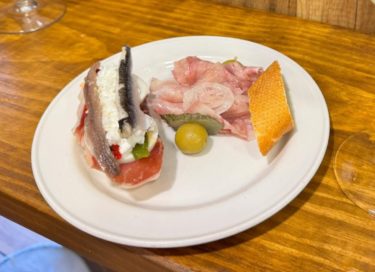
とはいえ、ピンチョスが並ぶ旧市街は本当に楽しい。えのおくさんに連れられて、何軒かおすすめを回りましたが、どのお店も素晴らしく、永久に食べられる胃袋が欲しかったですね。そして、全てのお店の場所を覚えましたが、お店の名前は覚えられませんでした。まあ後で領収書見れば書いてあるとは思いますが。笑。
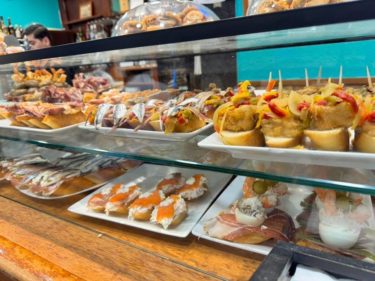
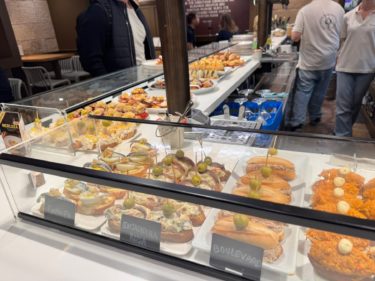
 

でもね。

人に聞く前に、良いものがありますよ。チャットGPT

以下の情報がほんの1秒で出てきました。

この街に立つと、「食とは文化そのものだ」という言葉の意味を、誰もが体感する。

青い海と山に抱かれたこの小都市には、世界一美味しい「日常」がある。星付きのレストランも、立ち飲みのバルも、同じ温度で人をもてなす。ここでは、料理が芸術であり、同時に生活の延長なのだ。

① 星が降る街のレストラン

旅の夜を彩るなら、まずは名店 Arzak(アルサック) を挙げないわけにはいかない。バスク・ヌーヴェルキュイジーヌの旗手、フアン・マリ・アルサックが築いた伝説の店だ。
伝統と前衛がひと皿の上で対話する。味はもちろん、構成が詩的だ。ここでは料理が「物理」ではなく「哲学」であり、熱伝導や分子結合が美味の思考実験に変わる。

もう一軒、郊外のRekondo(レコンド)。
ここは眺めも素晴らしい。坂の上から海を見下ろしながら、魚介と白ワインをゆったり味わう。
ワインリストは圧巻で、ソムリエとの会話がまるで学会討論のようだ。
“料理と液体の共鳴”を感じたいなら、この店に勝る舞台はない。

② バル巡礼という文化実験

この街の真の魅力は、ピンチョス(Pintxos) と呼ばれる小皿文化にある。

旧市街(Parte Vieja)の石畳を歩きながら、
少しずつ、少しずつ味を重ねていく——それは科学者がデータを積み上げるような行為だ。

最初に訪れたいのは La Cuchara de San Telmo。
カウンターの奥から次々に出てくる温かいピンチョスは、
まるで料理という現象の瞬間冷却実験。
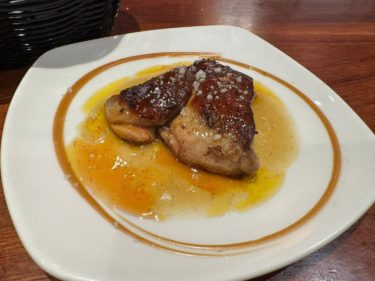
フォアグラのキャラメリゼ、豚ほほ肉の赤ワイン煮……その香りに心がほどける。

次に、老舗 Ganbara(ガンバラ)。
名物はマッシュルームのピンチョス。
一見シンプルだが、味の階層構造が緻密で、
まるで電子顕微鏡で観る断面図のように、層ごとの旨味が可視化されていく。

さらにBorda Berriでは、
厨房で作りたてを供する「ホット・ピンチョス」。
ここの仔牛のリゾットは、バスクの“魂の式”と呼んでもよい。

そして夜の締めには Atari Gastroleku。
教会前のテラスでグラスを傾けながら、
街灯と音楽の中に溶けていく瞬間は、まさに「美食と時間の干渉縞」である。

最適経路は
La Cuchara → Ganbara → Borda Berri → Casa Urola → Atari。
このルートを辿ると、街の「味覚勾配」を無駄なく横断できる。

④ 日常の中の非日常

サン・セバスチャンでは、星付きレストランと立ち飲みバルが同じ次元に存在する。
つまり、美食の民主化がこの街の本質だ。
豪華さよりも、“うまい瞬間”が最も尊ばれる。

旅人にとってそれは、どんな論文にも勝る発見となる。
一皿に宇宙があり、一口に思想がある。
この街では、食べることが「生きることの定義式」になるのだ。

⑤ 結語:美味の法則

サン・セバスチャンの美学は、こう言い換えられるだろう。

「美味とは、自然と人間の間に生じる一瞬の協奏である。」

そしてその協奏が、レストランの皿でも、バルのカウンターでも、
誰にでも等しく訪れる。

この街にいると、食べることが科学であり、芸術であり、祈りであることを思い出す。

参考:現地人気店リスト(2025年時点)
• Arzak(ミシュラン3つ星・モダンバスク)
• Rekondo(ワインと景観)
• La Cuchara de San Telmo(ホットピンチョス)
• Ganbara(老舗マッシュルームピンチョス)
• Borda Berri(煮込み系ピンチョス)
• Atari Gastroleku(夜のテラス)
• Casa Urola(伝統派)
• Sirimiri(モダン系)
• La Mejillonera(海辺のムール貝専門)


A New International Conference Travelogue

— San Sebastián: The Equation of Gastronomy —

The Basque port town of San Sebastián.

As soon as I posted that I was staying here, I got tons of messages asking, “Which places do you recommend?”
Totally understandable. I get it. Honestly, same. 😄

When it comes to wine, I’m fairly confident—I can give solid recommendations.
But with food, not so much.
And strangely enough, I can never seem to remember the names of restaurants I visit, especially those once-in-a-lifetime spots.
Sure, I enjoy good food like anyone else, but maybe because I’m not picky, I haven’t trained myself to notice the finer nuances in taste.

That said, the old town lined with pintxos bars is pure joy.
I wandered around with my friend Eno’s wife, who showed me some local favorites.
Every place was fantastic—I just wish I had an infinite stomach.
I remember exactly where each place was… but not a single name.
I mean, the names will probably be on the receipts, right? 😂

But listen.

Before you go asking people—there’s something even better: ChatGPT.

It gave me the following info in just a second:


**In this city, you don’t just eat—you feel what it means to say:

“Food is culture itself.”**

Nestled between the deep blue sea and gentle mountains, this small city offers the world’s most delicious daily life.
Whether it’s a Michelin-starred restaurant or a stand-up pintxos bar, the warmth of hospitality is the same.
Here, food is both art and a natural extension of life.


1. Restaurants Where Stars Fall

To begin your culinary nights, you can’t skip Arzak—the legendary restaurant founded by Juan Mari Arzak, pioneer of New Basque Cuisine.
Here, tradition and innovation converse on a single plate.
The flavors are incredible, yes—but the very structure of the dishes is poetic.
At Arzak, cooking isn’t physics—it’s philosophy.
Heat conduction and molecular bonding turn into gastronomic thought experiments.

Another must-visit is Rekondo, a bit outside the city.
With views from the hilltop overlooking the ocean, you can relax over fresh seafood and crisp white wine.
The wine list is a thing of awe, and speaking with the sommelier feels like participating in an academic conference.

If you want to feel the resonance between food and wine, there’s no better place.


2. Pintxos: A Cultural Experiment

The real charm of this city lies in its pintxos—small bites that define local life.

Strolling through the cobbled streets of the Parte Vieja (Old Town),
you gradually layer flavors, like a scientist compiling data step by step.

Start with La Cuchara de San Telmo.
From behind the counter, warm pintxos emerge one after another, like flash-frozen food experiments.
Caramelized foie gras, pork cheeks in red wine… their aroma alone melts the heart.

Next, the long-standing Ganbara.
Their specialty: mushroom pintxos.
Deceptively simple, but the layered flavor structure is so intricate, it’s like observing a cross-section under an electron microscope.

Then head to Borda Berri, where hot pintxos are served straight from the kitchen.
Their veal risotto could easily be called a “Basque soul formula.”

To finish the night, there’s Atari Gastroleku,
where you sip a glass on the terrace in front of a church,
melting into the streetlights and music—
a moment that feels like an interference pattern between flavor and time.

🗺️ Suggested Route

La Cuchara → Ganbara → Borda Berri → Casa Urola → Atari
This path takes you cleanly across the city’s gastronomic gradient.


3. The Extraordinary in the Everyday

In San Sebastián, Michelin-starred restaurants and casual pintxos bars exist on the same plane.
The democratization of fine food—that’s the essence of this city.
It’s not about luxury. It’s about the perfect moment of flavor.

For travelers, that becomes a discovery greater than any academic paper.
A plate holds a universe. A bite contains an idea.
Here, to eat is to live—to participate in the equation of existence.


4. Conclusion: The Law of Deliciousness

The aesthetics of San Sebastián might be summed up this way:

“Deliciousness is the fleeting harmony between nature and human hands.”

And that harmony arrives equally for everyone—
on a fine-dining plate or a pintxos counter.

Being in this city reminds you that eating can be science,
art,
and prayer, all at once.


🔖 Reference: Popular Local Spots (as of 2025)

Arzak – Michelin 3-star, modern Basque
Rekondo – Exceptional wine and ocean view
La Cuchara de San Telmo – Hot pintxos, foie gras & pork cheeks
Ganbara – Long-standing mushroom pintxos
Borda Berri – Hearty, soul-warming pintxos
Atari Gastroleku – Night terrace with atmosphere
Casa Urola – Traditional pintxos and fine cooking
Sirimiri – Trendy, modern bar
La Mejillonera – Mussel specialist by the sea


野球とゴルフのスイング

大谷翔平がリーグ優勝決定シリーズ第4戦で、投げた上にホームラン3本。運も持ってる本物のスーパースターですね。

野球とゴルフのスイングの動きは似ている様でちょっと違う。路面との臨機応変な対応を迫られるラリーと、精密なアクセルワークとハンドル捌きが必要なサーキットレースとの違いの様なものでしょうか。

① 野球は“ぶつける科学”

野球の打撃は、相手が投げてきた動いている球を打ち返す「衝突の科学」です。

ピッチャーのボール(秒速40m前後)とバットのスイング(秒速30m前後)が出会う瞬間、二つの速度ベクトルが正面衝突します。

このときの打球速度 vf は、おおよそ上式で決まります。

難しく見ええますが、要は「バットの速さと芯の当たり方で打球の速さが決まる」ということ。

eA は「どれだけ反発するか」を示す係数で、バットのしなりや当たった位置によって変わります。

この式の世界では、方向性よりもエネルギー効率が最優先。

打者は90度の扇の中で「引っ張る」も「流す」もOKです。
つまり、野球は“いかにズレを利用して飛ばすか”のスポーツなのです。

② ゴルフは“空気を操る科学”

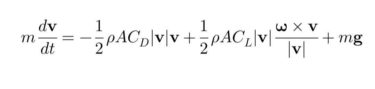
一方でゴルフは、止まっているボールを自らの運動で初速を作る「空力の科学」。

しかも打った瞬間から、ボールは空気の抵抗と揚力に支配されます。

空中でのボールの運命は下式で決まります。

式は難しく見えますが、ここで言いたいのはたった一つ。
ボールのスピンが空気を切り裂く羽になるということ。

ドローやフェードといった弾道の違いは、ボールの回転軸がほんの数度傾くかどうかで決まります。

だからこそ、ゴルフは方向性を±10°以内に収めるための「精密工学」なのです。

③ トルクが作り、遠心が整える

ゴルフスイングを力学的に見ると、「ダブル・ペンデュラム(二重振り子)」の動きに近い。

腰→肩→腕→クラブとエネルギーが伝達する順番が整っているほど、ヘッドスピードは上がります。
つまり、「下半身が生み出したトルク(回転力)」が「遠心力によってヘッドを整える」。

物理で書けば難しいですが、感覚的にはこうです。

野球は“ぶつけて飛ばす”
ゴルフは“回して飛ばばす“

④ 飛距離と方向性、そのトレードオフの哲学

野球の打者は「どれだけズレても飛べば正義」。
ゴルファーは「ズレずに美しく飛ぶこと」が勝利。

前者はエネルギーの最大化、後者は方向性の最小化。
同じ「飛ばす」という動作でも、方程式が違えば哲学も違うのです。

⑤ 結語:科学が教える“スイングの道”

野球は瞬間の衝突。
ゴルフは空間の制御。

両者を行き来する時、人は自分の中の“力”と“方向”のバランスを再発見する。

それはまるで、科学と芸術の間に揺れるスイングのように。


Shohei Ohtani: A Real Superstar

In Game 4 of the League Championship Series, Shohei Ohtani not only pitched but also hit three home runs.
He’s a true superstar—gifted, skilled, and lucky when it counts.

Baseball and golf swings may look similar, but they are fundamentally different.
Perhaps it’s like comparing a rally race, where you must adapt instantly to road conditions, to a circuit race that demands precise throttle control and steering technique.


1. Baseball: The Science of Impact

Baseball hitting is the science of collisions—reacting to a moving pitch and striking it.

When a pitch (traveling at around 40 m/s) meets a bat swing (around 30 m/s), the two velocity vectors collide head-on.

The resulting exit velocity vf of the ball is roughly determined by this equation:

(Here, a relevant physics formula would be shown in the original)

While the formula may look complex, the essence is simple:
the speed of the bat and how well it connects determines how fast the ball flies off.

The coefficient eA represents how “bouncy” the collision is, and changes depending on bat flexibility and point of contact.

In this world of physics, energy efficiency outweighs direction.

Batters can pull or go opposite field—it’s all acceptable within a 90-degree cone.
Baseball, then, is a sport where “using the deviation to your advantage” is the key to success.


2. Golf: The Science of Aerodynamics

Golf, by contrast, is the science of aerodynamics—generating speed from your own motion to strike a stationary ball.

From the moment the ball is struck, it is subject to air resistance and lift.

Its flight through the air is determined by a different kind of equation:

(Another formula would be shown here.)

The key point here:
Spin turns the ball into a wing that cuts through the air.

The difference between a draw and a fade can come down to a spin axis tilted by just a few degrees.

That’s why golf is precision engineering, where the margin for directional error is within ±10°.


3. Torque Creates, Centrifugal Force Aligns

From a mechanics perspective, the golf swing resembles a double pendulum.

The better the energy transfers in order—hips → shoulders → arms → club—the faster the head speed.

In other words:
Torque generated from the lower body creates rotation, and centrifugal force aligns the clubhead.

Written in physics terms, it sounds complex.
But in feel-based terms, it’s simple:

Baseball is about hitting to fly.
Golf is about turning to fly.


4. The Trade-off Between Distance and Direction

In baseball, if the ball flies—even off a mishit—it’s still a win.
In golf, the ideal shot is one that flies beautifully and precisely with minimal deviation.

Baseball prioritizes maximum energy.
Golf demands minimal directional error.

Even though both involve the act of “sending the ball flying,”
different equations give rise to different philosophies.


5. Conclusion: The Path of the Swing, as Taught by Science

Baseball is the science of moments and collisions.
Golf is the science of space and control.

Going back and forth between the two teaches us something about the balance between power and precision within ourselves.

Just like a swing that sways gently between science and art.


ゴルフスイングの物理学

新国際学会周遊記 〜ゴルフスイングの物理学:トルクが生み、遠心が整える 〜

今回はゴルフバックは携帯して来ませんでしたが、せっかくトラックマンの本社にも行ったので、ゴルフスイング物理学を医学的に解説してみたいと思う。


多くの人はゴルフを「技術」や「感覚」のスポーツと考える。一打には、驚くほど精緻な物理学の舞踏が潜んでいる。

だが実際には、ダブル・ペンデュラム(2重振り子)、トルク(ねじれ)、そして遠心力=向心力という三つの力が、身体の奥で静かに連鎖しているのだ。

① ダブル・ペンデュラムの原理

スイングの核心は「二重振り子」の原理にある。

肩から腕・手までが第一の振り子、クラブとヘッドが第二の振り子。

この二つが順に解き放たれると、エネルギーは滞りなく流れ、ヘッドは驚くほどの速度に達する。

クラブを握るその瞬間、すでにスイングは始まっている。
静から動へ。ねじれ、回転、解放。

ゴルフとは、力を加える技術ではなく、力を巡らせる芸術である。

②-1 遠心力 ― 解放の瞬間に整うフェース

ねじれがほどけ、エネルギーが外へと放たれると、クラブヘッドは遠心力によって弧を描く。

その外向きの張力こそが、フェースを自然に正面へ導く。

フェースは「合わせるもの」ではない。遠心力によって整うものだ。腕と手首の脱力が完璧なとき、ヘッドは円運動の張力に沿って、静かにターゲットを向く。

「合わせる」のではなく「任せる」。

これが、上級者が語る
“フェースが勝手に戻る”という現象の真実である。

②-2 向心力 ― 軸が生む静の秩序

外へ解き放たれたエネルギーを、内で制御するのが向心力。

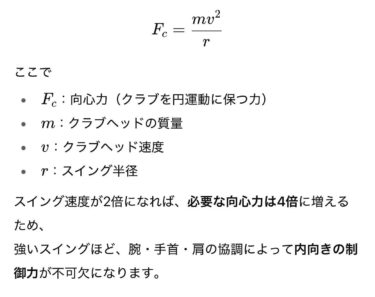
背骨を中心とした軸が、クラブの暴走を防ぎ、身体全体の回転を一点に集束させる。計算するとクラブスピードが倍になると、スイングを整えるのに中心点をずらさないで、4倍の向心力が必要になる。

遠心力が「動」のエネルギーなら、向心力は「静」の秩序。
両者の緊張が保たれた瞬間、スイングはひとつの円の美を描く。

③ トルク ― 内に宿る螺旋の起点

スイングの始まりは、足の裏にある。

地面を踏みしめた圧が、骨盤をねじり、体幹にトルクを蓄える。

このねじれが、背骨を軸に解き放たれる瞬間、それは外へと伝わる回転の波となる。

トルクとは、力を溜める「螺旋」であり、それを解放する「リズム」でもある。

身体の中心で生じた小さな渦が、腕、手、クラブ、ヘッドへと伝わり、やがて遠心力へと昇華する。

科学と身体が共鳴する瞬間

トルクが回転を生み、
遠心力が解放を導き、
向心力が秩序を与える。

この三つの力が拮抗する一瞬、

フェースは自然に整い、
スイングは音楽になる。
力の起点は「足」、
中心は「軸」、
終点は「フェース」。

美しいスイングとは、力を入れずに力を伝えること。

フェースは合わせず、整うもの。

内が静まり、外が開いたその瞬間、
遠心の張力がフェースを真っ直ぐに導いてくれる。

結語

ゴルフは、物理と感覚のハーモニーである。

外へと解き放ちながら、内で整える――

その両義のリズムこそが、「美しい一打」を生み出すのである。

短時間にこの運動を指示することは大脳には出来ない。ゴルフはスイング理論を理解した上で、10時間程度の練習(=小脳による習熟)が必要。

逆上がりも、自転車に乗るのも10時間ぐらいは練習しましたよね。何も考えないで、ビュッと振る。これが大事だと思います。


The Physics of the Golf Swing: Torque Creates, Centrifugal Force Aligns

This time, I didn’t bring my golf bag with me.
But since I had the opportunity to visit the headquarters of TrackMan, I’d like to take a moment to explain the physics of the golf swing from a medical and biomechanical perspective.

Many people think of golf as a sport of technique or feel.
But behind each shot lies an astonishingly intricate dance of physics.

In reality, the swing is governed by three key forces quietly interacting deep within the body:
the double pendulum, torque, and centrifugal (and centripetal) force.


1. The Principle of the Double Pendulum

At the heart of the swing is the principle of the double pendulum.

The first pendulum is your shoulder to arm to hands.
The second is the club and clubhead.

When these two segments release in sequence, energy flows without obstruction—allowing the clubhead to reach incredible speed.

The swing begins the moment you grip the club.
From stillness to motion: twist, rotate, release.

Golf is not a technique of applying force
It is an art of circulating force.


2-1. Centrifugal Force – The Face Aligns at the Moment of Release

As the stored twist unravels and energy is released outward, the clubhead draws a wide arc through centrifugal force.

It is this outward tension that naturally aligns the clubface toward the target.

The face is not something you “manually square.”
It naturally aligns itself through centrifugal force.

When the arms and wrists are completely relaxed, the head follows the tension of the circular motion, and gently faces the target.

It’s not about “adjusting”—it’s about “allowing.”

This is the truth behind what advanced players mean when they say:
“The face just returns on its own.”


2-2. Centripetal Force – The Quiet Order Born from the Axis

While energy is released outward, something must control it internally—that is the role of centripetal force.

The spine-centered axis stabilizes the swing, preventing the club from spiraling out of control, and channels the body’s rotation into a single point.

As a rough calculation: if clubhead speed doubles, the centripetal force required to maintain order increases by four times—without shifting the axis.

If centrifugal force represents the “active” energy, then centripetal force is the “still” order.

When the tension between both forces is perfectly balanced,
the swing forms a single, beautiful circle.


3. Torque – The Inner Origin of the Spiral

The swing begins from the soles of your feet.

The pressure against the ground twists the pelvis, storing torque in the core.

The moment this twist is released around the spinal axis, it becomes a rotational wave that flows outward.

Torque is a spiral that stores power,
and a rhythm that releases it.

A small vortex born at the center of the body travels through the arms, hands, club, and eventually evolves into centrifugal force.


When Science and the Body Resonate

Torque creates rotation.
Centrifugal force releases energy.
Centripetal force provides order.

In the fleeting moment where these three forces balance—
the clubface naturally aligns,
and the swing becomes music.

The starting point of power: the feet.
The center of power: the axis.
The end point: the face.

A beautiful swing is one that transmits power without effort.

The face isn’t forced into position—it naturally aligns.

At the very moment when the inside quiets and the outside opens,
the outward tension of centrifugal force will gently guide the face square.


Conclusion

Golf is a harmony of physics and feel.

Energy is released outward, but must be ordered inward—
and this dual rhythm is what creates a truly beautiful shot.

The human cerebrum cannot command these complex motions in such a short span of time.
That’s why golf requires not only theoretical understanding, but also around 10 hours of practice—to train the cerebellum to internalize the movement.

Just like learning a backflip or riding a bike—you probably practiced around 10 hours, didn’t you?

Don’t overthink it—just swing freely.
That, I believe, is the key.


美は脳のスイッチ Beauty as the Brain’s Switch

新国際学会周遊記

――創造の呼吸法:美は脳のスイッチである――

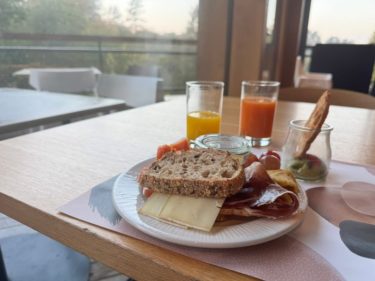
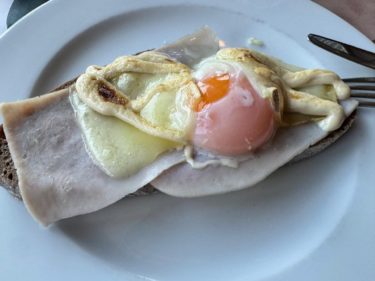
サンセバスチャン最後の朝食を食べながらふと思いつく。

「美は創造性の神経スイッチである」

美しいものに触れたとき、脳は再び柔軟になり、固定化された思考回路から自由になる。

だからこそ旅をし、音を聴き、光を観る。

それらは心の呼吸を整え、再び“創る”ための準備運動なのだ。

観る・聴く・感じる――深く吸い込む。

書く・語る・創る――静かに吐き出す。

そしてその間に、止めるという沈黙を置く。

この三拍のリズムこそ、創造の呼吸法である。

吸って、止めて、吐く。

呼吸は生きるための最も基本的なリズムであり、同時に、創造のプロセスそのものでもある。

私たちは日々、世界から情報を吸い込み、それを心の奥で一度静止させ、やがて言葉や形として吐き出していく。

しかし現代は、あまりにも“吸う”ことに偏りすぎている。

情報のインプット過多の社会では、心が過膨張を起こし、創造の肺がうまく動かなくなっている。

旅に出るのは、その呼吸を取り戻すためだ。

止めるという行為。

それは、創造の中で最も見落とされがちなプロセスだ。しかし、音楽の休符が旋律を形づくるように、静寂の瞬間こそが、思考を再構成する。

思えば、沈黙とは、発想の種が芽を出す“神経的な余白”なのだ。

そして最近の神経科学が教えてくれるのは、

創造性とは天賦の才ではなく、脳内ネットワークの動的な再構成によって生まれる「状態」であるということ。

創造的な発想が生まれる際には、デフォルト・モード・ネットワーク(DMN) が活性化し、自由連想や記憶の統合が促される。


その一方で、過剰な自己検閲を司る実行制御ネットワーク(ECN)は一時的に抑制され、感性や直感的な発想が湧きやすくなる事がわかってきた。

つまり、美しいものや芸術に触れることは「脳をインスピレーションのモード」に切り替えるスイッチのようなもの。

音楽、美術、デザイン、美しい風景――それらを味わう瞬間、私たちの脳は自らを再編し、思考の限界を静かに超えてゆく。

人間の創造力もまた、少しの余白を必要としている。

吸って、止めて、吐く。

そしてまた吸う。

この繰り返しの中で、

私たちの脳も、心も、再び動的に再構成されていくのだ。

創造とは、深呼吸の延長線上にある生き方。

そして美とは、その呼吸を始動させるスイッチである。

インプット(美的体験)とアウトプット(創造的表現)のバランスが取れてこそ、人は本来の創造力を発揮できる。

今日もまた、世界が静かに息をしている。


The Breathing of Creation: Beauty as the Brain’s Switch —

Over breakfast on my last morning in San Sebastián, a thought suddenly comes to me:

“Beauty is the neural switch of creativity.”

When we encounter something beautiful, the brain becomes supple again, liberated from rigid patterns of thought.

That’s why we travel, why we listen to sound, and why we gaze at light.

These acts regulate the breath of the heart — warm-ups to prepare us for creation once more.

To see, to listen, to feel — inhale deeply.


To write, to speak, to create — exhale gently.


And in between, allow a moment of pause.

This three-beat rhythm is the breathwork of creation.

Inhale, pause, exhale.


Breathing is the most fundamental rhythm of life —


and at the same time, it is the very process of creativity.

Each day, we inhale information from the world, let it settle quietly in the depths of our minds, and eventually exhale it as words and forms.

But today’s world leans too heavily toward inhaling.

In a society overwhelmed by input, the mind becomes overinflated, and the lungs of creativity cease to function properly.

We travel to reclaim that breath.

To pause


this is the most overlooked part of the creative process.


Yet just as rests give shape to melody, it is in moments of stillness that thought finds its form.

Come to think of it, silence is the neural margin where the seeds of ideas begin to sprout.

Recent neuroscience also tells us something important:

Creativity is not a gift bestowed at birth — it is a “state” born from the dynamic reconfiguration of neural networks.

When a creative idea emerges, the Default Mode Network (DMN) becomes active, encouraging free association and the integration of memory.


At the same time, the Executive Control Network (ECN) — which governs self-censorship — is temporarily suppressed, allowing intuitive and sensory ideas to surface more freely.

In other words, encountering beauty or art acts as a switch that shifts the brain into an inspirational mode.

Music, visual art, design, breathtaking landscapes — in those moments of appreciation, the brain quietly reorganizes itself, surpassing the boundaries of thought.

Human creativity, too, requires a little space to breathe.

Inhale. Pause. Exhale.


And inhale again.


In this repetition,our brains and hearts begin to dynamically reassemble themselves once more.

Creation is a way of life that extends from deep breathing.
And beauty is the switch that sets that breath in motion.

Only when input (aesthetic experience) and output (creative expression) are in balance can we access our true creative potential.

And today, once again, the world breathes quietly.


不思議な場所 Eduardo Chillida

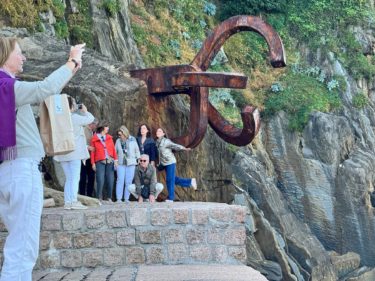
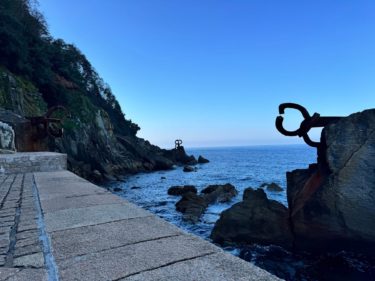
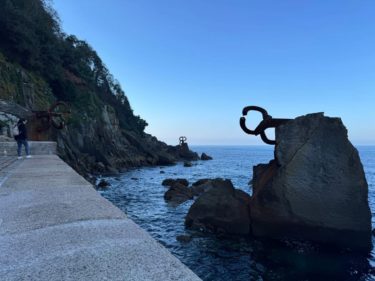
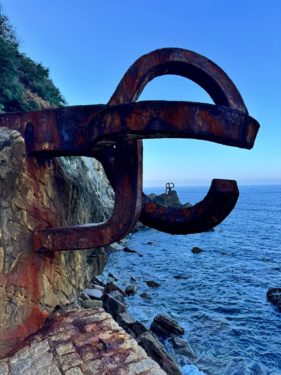
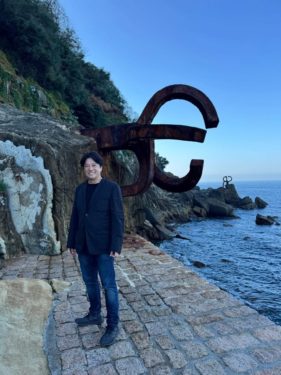
サンセバスチャンの湾の反対側にある芸術作品

Comb of the Wind (Eduardo Chillida, 1976)。

岩に三つの鉄杭が付いているだけなんですが、観光客が後を絶ちません。

不思議な場所だ。

Comb of the Wind (Eduardo Chillida, 1976), an artwork located on the opposite side of the bay in San Sebastián.

It’s just three iron structures fixed into the rocks, yet tourists keep coming one after another.

Something very interesting to see and visit. I actually enjoyed it


カテゴリー