














Why Do Men Die Younger? — The Day We Graduate from the “Blueprint”
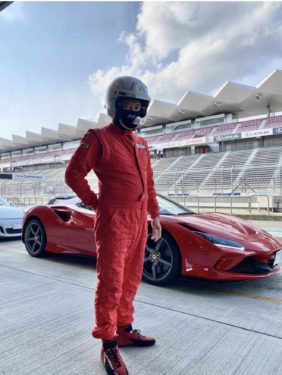
On a flight, I watched the film F1.
A veteran racer played by Brad Pitt, alongside younger drivers overflowing with testosterone.
Fully aware of the danger, they push past their limits—sometimes colliding, sometimes erupting into fierce arguments—yet they keep racing.
Watching them, I found myself thinking honestly:
Ah. This is what men are.
The world of Formula 1 is one of the few remaining “officially sanctioned danger zones” in modern society.
Speed.
Collision.
The possibility of death.
Risks that reason would normally tell us to avoid are, for them, a profession.
Is this mere recklessness?
Or is it simply the most unfiltered expression of a program etched deep into our evolutionary past?
Testosterone: The Energy of a “Sacred Zone”
From a medical standpoint, testosterone increases aggression, heightens impulsivity, and dulls risk assessment.
In clinical settings, it is often treated as something to be controlled in order to reduce health risks.
Yet testosterone has another side—one that is profoundly positive.
It is, quite literally, the drive to confront difficulty, the vitality to carve into the unknown, and the passion to accomplish something meaningful.
The men depicted in the film inhabit a world that can only be reached through the overwhelming energy this hormone provides.
To run faster than anyone else, they accept greater risk than anyone else and push themselves beyond reason.
That very breakthrough force is what has propelled civilization forward.
It closely resembles the surge of life itself—sperm competing through sheer number and speed, rushing relentlessly toward a single goal.
Men Die Younger Because They Were “Designed” To
“Men die younger because that’s how they were designed.”
From the perspective of someone who works daily with medicine and anti-aging, this idea is deeply provocative.
Medical science explains differences in lifespan through hormones and lifestyle habits.
Evolutionary thinking, however, questions the assumptions beneath those explanations.
In hunter-gatherer societies, men wielded high testosterone to take on dangerous hunts and explore unknown territories.
A group could survive the loss of some men.
The loss of women, however, threatened the survival of the entire group.
Within that structure, it was evolutionarily rational for men to shoulder risk—and to die earlier as a result.
Just as sperm evolved to specialize in “quantity and speed” because they are replaceable, men too evolved with a kind of disposable operating system—optimized not for longevity, but for the continuation of the species.
Mastering the “Old OS” with Intelligence
There is, however, one crucial fact.
The fact that men now live this long is an extremely recent achievement in human history—made possible only by civilization and modern medicine.
In clinical practice, I often see men in their 50s who are still “driving” their lives the way they did in their 20s.
Cutting sleep.
Living with chronic inflammation.
Mistaking stress for strength while keeping the accelerator floored.
That is not true mastery of testosterone.
It is the body being dragged along by an outdated operating system that was never updated.
Just as a veteran F1 driver—who fully understands the limits of the machine—can draw cleaner, more elegant racing lines than younger drivers, we too must rewrite our OS.
Conclusion: From Living as a “Role” to Living as an “Individual”
It is not that “men were meant to be short-lived, so it can’t be helped.”
The truth is the opposite.
The modern strategy for men is this:
to fully harness the gift of testosterone—the drive to move forward—while using medicine and intelligence to control its side effects, namely physical damage.
Monitor your health with data.
Do not ignore inflammation or fatigue.
Seek medical help early.
This is not about losing your edge.
It is pit work—necessary maintenance so that you can race longer, harder, and enjoy the race called life.
After fulfilling our biological role—our once “disposable function” of carrying the species forward—what comes next is something unprecedented in human history:
Time.
Time for men to live as individuals.
To keep the passion to press the accelerator, while also acquiring the intelligence to read the line and use the brakes.
That is not abandoning masculinity.
It is, for the first time, truly driving the machine that is your own life.
When the next corner comes, will you step on the gas reflexively?
Or will you glance at the gauges for just a moment?
That single moment may be what separates a man who lives as a role
from a man who lives as an individual.