














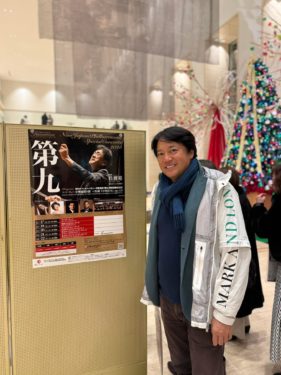
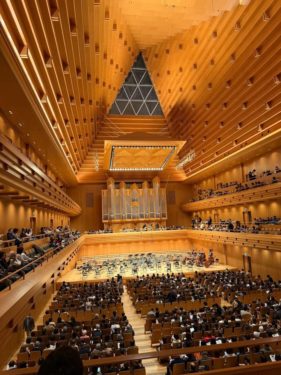
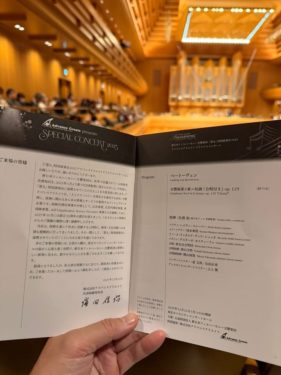
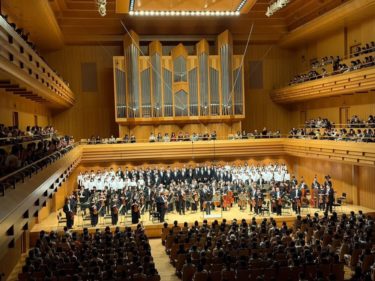
本日はオペラシティにて佐渡裕さん指揮の第九でした。
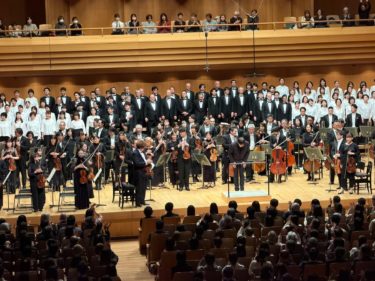
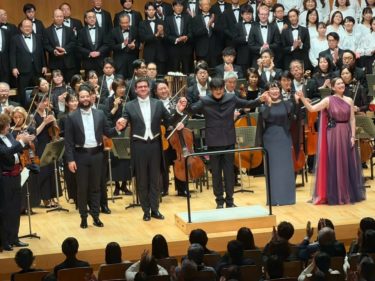
——なぜこの国では、年末に人々が「歓喜」を歌うのでしょうか——
考えてみれば、日本ほど、交響曲第9番が生活に溶け込んでいる国は多くありません。おそらく世界でもっともこの曲が演奏されるのは日本です。
12月になると、全国のホールで合唱団が集い、プロもアマチュアも関係なく、多くの人が同じ旋律を口ずさみます。日本では第九は「聴く音楽」ではなく、参加する音楽として親しまれてきました。
欧米全体|12月は「クリスマス音楽」
くるみ割り人形
アメリカやヨーロッパでは、
12月=クリスマスシーズン。
その中心にあるのが《くるみ割り人形》です。
・家族
・子ども
・夢
・贈り物
年末は「総括」ではなく、
物語とノスタルジーの時間として扱われます。
オーストリア・ドイツ圏|新年は「祝祭」と軽やかさ
こうもり(Die Fledermaus)
ウィーンを中心としたドイツ語圏では、
大晦日といえば《こうもり》が定番です。
・仮装
・勘違い
・シャンパン
・身分の入れ替わり
——物語は徹頭徹尾「人間くさく、陽気」。
年の終わりは
反省よりも笑い、厳粛さよりも祝祭。
これがドイツ語圏の年越しの美学です。
英語圏|宗教的年末
メサイア
イギリス、アメリカでは
12月に《メサイア》、特に「ハレルヤ・コーラス」。
ここでは年末は
救済史の一部です。
・誕生
・受難
・復活
音楽は「年を越える道具」ではなく、
信仰暦の一環として存在しています。
ーーーーーーー
始まりは「祈り」でした
日本で第九が初演されたのは1918年、第一次世界大戦のさなかです。
徳島の坂東捕虜収容所で、ドイツ人捕虜によって演奏されたことはよく知られています。異国の地で奏でられた「歓喜」は、勝利の音楽ではなく、耐え、越え、共に在るための音楽として日本人の心に届きました。
この受け止め方こそが、その後の日本における第九の位置づけを決定づけたと言えるでしょう。
2なぜ「年末」なのでしょうか
年末は、日本人にとって区切りと浄化の時間です。
大掃除、除夜の鐘、年越し――一年を振り返り、未完のままでも次へ進む準備をします。
第九終楽章の合唱は、その時間感覚と不思議なほど重なります。
Alle Menschen werden Brüder
すべての人は兄弟となる
これは理念の宣言というより、一年を生き抜いた人々が声をそろえる行為として響いています。
「聴く音楽」から「歌う音楽」へ
日本では、第九は鑑賞作品にとどまりませんでした。合唱に参加し、時に音程を外し、隣の声に支えられながら、数百人、数千人で一つの和音を作ります。この身体的な体験が、第九を文化へと押し上げました。「一万人の第九」に象徴されるように、完成度よりも集うことそのものに価値が置かれてきたのです。
宗教なき社会の祝祭音楽
キリスト教的背景を持つ作品でありながら、第九は日本では宗教色を帯びませんでした。それは、日本が宗教を排する社会ではなく、宗教性を生活に溶かす社会だからです。第九は信仰告白ではなく、年に一度、声を合わせるための儀式音楽として再解釈されました。
なぜ今も歌われ続けるのでしょうか
分断や孤立が進む現代において、人は「同じ場で、同じ呼吸をする」体験を求めています。第九の合唱は、常に少し不完全で、しかし前へ進みます。それでもよいと教えてくれる点が、毎年必要とされる理由なのでしょう。
日本人にとっての第九とは
日本の年末は「祝祭」ではなく「総括」です
日本の年末は、
・大掃除
・仕事納め
・除夜の鐘
に象徴されるように、一年を振り返り、整え、静かに閉じる時間です。そこにあるのは、一度すべてをリセットする感覚です。
「苦悩→統合」という構造は、日本人の人生観そのものです
第九は、最初から明るくありません。むしろ重く、暗く、葛藤に満ちています。心理学的に言えば、これは感情の否認をしない構造です。
日本文化には、
我慢
忍耐
積み重ね
を経て、最後に静かに報われるという物語が多く存在します。
第九は、
「最初からポジティブであれ」とは言いません。
苦しんだままで、最後に一緒になる音楽です。
日本人は「一人で救われる」より「一緒に整う」ことを選びますが
西洋の宗教音楽は、個人と神の関係を軸にします。
Beethoven’s Ninth at Year’s End
Tonight, at Opera City, I heard Beethoven’s Ninth Symphony conducted by Yutaka Sado.
— Why, in this country, do people sing of “joy” at the end of the year? —
When you think about it, there are few countries where Symphony No. 9 is woven so deeply into everyday life as in Japan. In fact, Japan is likely the place where this work is performed most frequently in the world.
As December arrives, choirs gather in concert halls across the country. Professionals and amateurs alike raise their voices to the same melody. In Japan, the Ninth has never been merely music to be listened to; it has long been music to participate in.
The West: Music for December
Europe and North America — December as “Christmas music”
The Nutcracker
In the United States and Europe, December means Christmas season. At its heart is The Nutcracker.
-
Family
-
Children
-
Dreams
-
Gifts
The end of the year is treated not as a time of reckoning, but as a season of stories and nostalgia.
Austria and the German-speaking world — New Year as celebration and lightness
Die Fledermaus
In Vienna and the German-speaking regions, New Year’s Eve belongs to Die Fledermaus.
-
Disguises
-
Mistaken identities
-
Champagne
-
Social reversals
The story is, from beginning to end, delightfully human and cheerful.
Here, the year ends not with reflection, but with laughter; not with solemnity, but with festivity. This is the aesthetic of the German-speaking world’s New Year.
The English-speaking world — A religious year’s end
Messiah
In Britain and the United States, December brings Messiah, especially the “Hallelujah Chorus.”
Here, the end of the year is part of salvation history.
-
Birth
-
Suffering
-
Resurrection
Music is not a tool for crossing into a new year, but an element of the liturgical calendar.
It Began as a Prayer
Beethoven’s Ninth was first performed in Japan in 1918, during World War I. It was played by German prisoners of war at the Bando POW camp in Tokushima. This episode is well known.
The “Ode to Joy” performed on foreign soil was not heard as music of victory. It reached Japanese listeners as music for enduring, for overcoming, and for coexisting. This way of receiving the Ninth would ultimately define its place in Japanese culture.
Why the End of the Year?
For the Japanese, the year’s end is a time of closure and purification.
Deep cleaning, the tolling of temple bells, crossing into the New Year—people look back on the year just passed and prepare to move forward, even if everything remains unfinished.
The final choral movement of the Ninth overlaps uncannily with this sense of time.
Alle Menschen werden Brüder
“All people shall become brothers.”
This sounds less like a declaration of ideals, and more like an act—voices joining together after having lived through another year.
From Listening to Singing
In Japan, the Ninth did not remain a work to be admired from a distance. People joined choirs, missed notes, leaned on the voices beside them, and together—hundreds, sometimes thousands—formed a single chord.
This physical, communal experience elevated the Ninth into culture. As symbolized by events like “The Ninth with Ten Thousand Voices,” value has been placed not on perfection, but on gathering itself.
Festival Music in a Non-Religious Society
Despite its Christian background, the Ninth never became overtly religious in Japan. This is not because Japan rejects religion, but because it absorbs religiosity into everyday life.
The Ninth was reinterpreted not as a confession of faith, but as ritual music—a once-a-year occasion to breathe and sing together.
Why Is It Still Sung?
In an age of increasing division and isolation, people yearn for the experience of being in the same place, sharing the same breath.
The choral finale of the Ninth is always slightly imperfect, yet it moves forward. Perhaps this reassurance—that imperfection is acceptable—is why it is needed every year.
What the Ninth Means to the Japanese
Japan’s year-end is not a festival; it is a reckoning.
Marked by:
-
deep cleaning
-
the closing of work
-
the tolling of bells
it is a quiet time to look back, to put things in order, and to close the year gently. There is a sense of resetting everything once again.
From Suffering to Integration
The Ninth does not begin brightly. It is heavy, dark, and full of conflict. Psychologically speaking, it does not deny difficult emotions.
Japanese culture holds many stories in which:
-
endurance
-
patience
-
accumulation of effort
are finally rewarded, quietly, at the end.
The Ninth does not say, “Be positive from the start.”
It is music that allows suffering to remain—and still brings people together in the end.
The Japanese tend to choose “being restored together” over “being saved alone,”
while Western religious music centers on the relationship between the individual and God