













動物占い。僕はゾウなんですが、ゾウの絵をいただきました。
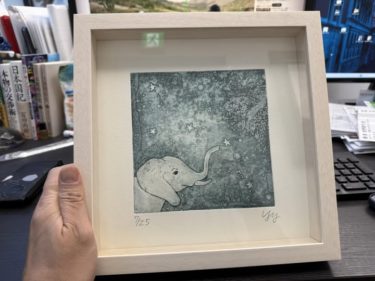
In the Japanese “Animal Fortune-Telling” personality test, I’m an elephant—so I was given this lovely elephant drawing.

 藤本幸弘オフィシャルブログ
動物占い。僕はゾウなんですが、ゾウの絵をいただきました。
In the Japanese “Animal Fortune-Telling” personality test, I’m an elephant—so I was given this lovely elephant drawing.
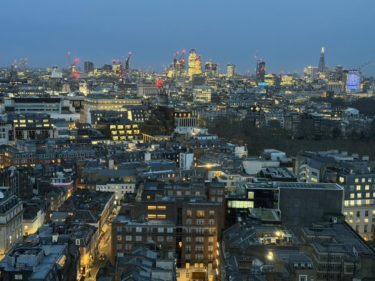
ピラミッド型のビルが観えますが、視界を右にずらすとロンドンです。背の高いビルが少ないのでロンドンの夜景はちょっと珍しいですよね。

Can you guess which city this night view is from?
You might notice a pyramid-shaped building—but if you look a little to the right, it’s actually London.
Because the city doesn’t have many very tall skyscrapers, a skyline like this is a bit unusual for London.
麗らかな春日和ですね。
学会シーズンなのか、本日土曜日の午後の患者さんは、なぜか各科のお医者さんが多いのです。
診察するごとに「先生、先生」の呼びかけになってしまいます。
こんな日もありますよね(笑)。
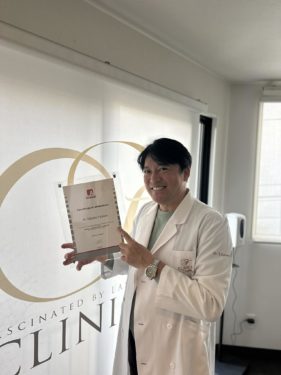
手に持っているのは、2015年1月に取得した「いびきと無呼吸」のレーザー治療、ナイトレーズのサーティフィケイトです。

A Pleasant Spring Day at the Clinic
It is a beautifully mild spring day today.
Perhaps it is conference season, but interestingly, many of the patients visiting our clinic this Saturday afternoon happen to be physicians from various specialties. As I move from one consultation to the next, I find myself repeatedly addressing my patients as “Doctor.” It is one of those slightly amusing days at the clinic.
In the photo, I am holding a certificate for NightLase, a laser treatment for snoring and sleep apnea, which I obtained in January 2015.
NightLase is a non-invasive laser therapy designed to reduce snoring and improve airway function during sleep. It is one of the treatment options we offer for patients who suffer from snoring or sleep-related breathing issues.
楽団に場所を貸すという、小さな社会貢献
先日、ゴルフ医科学研究所に一つの相談がありました。
「弦楽団の練習場所を貸してもらえませんか?」
メンバーは15人ほど。
年齢は40〜60代が中心。
月に一度くらい集まって弦楽合奏を楽しんでいる、大人のアマチュア楽団です。
プロのオーケストラのように完璧な演奏というわけではありません。
しかし、楽器ケースを抱えて集まり、譜面を広げ、音を合わせる姿を見ていると、ふと思うのです。
社会というのは、こういう静かな営みで支えられているのではないか。
東京のような都市では、意外なことに楽器を演奏できる場所が少ない。
防音の問題。
近隣への配慮。
公共施設の予約の取りにくさ。
結果として、多くのアマチュア音楽家が「練習場所難民」になっています。
音楽大学やプロのオーケストラには立派なホールがありますが、趣味で音楽を続けている人たちには、そうした場所はなかなか開かれていません。
それならば、ゴルフ医科学研究所の空間を、レッスン時間を一旦閉めて、無償で弦楽団に貸してみようと。それが今日でした。
研究所にヴァイオリンの音が響く。
コントラバスやチェロが低く鳴り、ヴィオラがその間を満たす。
普段は医学や研究の話をしている場所に、音楽が流れ込む。
これは単なる場所貸しではなく、文化の小さな循環なのかもしれません。
都市というものは、不思議なもので、大きなイベントや派手な施設よりも
・月に一度の合奏
・小さな展覧会
・誰かが集まる場所
そうした静かな文化によって、じわじわと豊かになっていきます。
音楽は、おそらく人類最古の「癒やし」です。
言葉が生まれる前から、人はリズムを刻み、音を重ねてきました。
それは祈りであり、慰めであり、共同体の象徴でもありました。
だからこそ今でも、人は忙しい生活の合間を縫って楽器を弾くのかもしれません。
都市のどこかに音が生まれる場所が一つ増える。
それだけでも、十分に意味がある気がするのです。


A Small Contribution to Society: Lending Space to a String Ensemble
The other day, the Golf Medical Science Institute received an unusual request.
“Would it be possible for us to use your space for our string ensemble rehearsals?”
The group consists of about fifteen members.
Most of them are in their forties to sixties.
They are an amateur ensemble of adults who gather about once a month to enjoy playing string music together.
Their performances are not perfectly polished like those of a professional orchestra.
Yet when you see them arrive carrying instrument cases, spreading out their sheet music, and gradually blending their sounds together, a thought comes to mind.
Perhaps society is sustained by quiet activities like these.
In a city like Tokyo, somewhat surprisingly, there are actually very few places where people can freely play musical instruments.
There are issues of soundproofing.
Consideration for neighbors.
And the difficulty of reserving public facilities.
As a result, many amateur musicians end up becoming what one might call “rehearsal-space refugees.”
Music colleges and professional orchestras have magnificent halls, of course. But for people who continue making music simply as a hobby, such spaces are rarely accessible.
So we thought: why not make use of the space at the Golf Medical Science Institute?
For today, we temporarily closed our regular lesson schedule and offered the room to the string ensemble—free of charge.
Soon, the sound of violins began to resonate through the institute.
The double bass and cello produced their deep tones, while the viola filled the space between them.
Music flowed into a place that is normally filled with conversations about medicine and research.
Perhaps this is more than simply lending a room.
Perhaps it is a small circulation of culture.
Cities are curious things. Often it is not grand events or spectacular buildings that enrich them the most, but rather:
a monthly ensemble rehearsal
a small exhibition
a place where people gather
Through these quiet forms of culture, a city gradually becomes richer.
Music is perhaps humanity’s oldest form of healing.
Even before language existed, people marked rhythms and layered sounds together.
Music has been prayer.
It has been comfort.
It has also been a symbol of community.
Perhaps that is why, even today, people make time in their busy lives to play an instrument.
If somewhere in the city there is one more place where music can be born,
that alone may already have meaning.
イビキに効くレーザーとは
— 眠りの気道にレーザーの熱を置く —
国際学会を回っていると、ときどき「これは実にうまい発想だ」と感じる治療に出会います。
ナイトレーズ(NightLase)という、いびき治療のレーザーもその一つです。
実はこの技術が登場したのは、もう10年以上前になります。
僕自身もその頃、日本人医師としては最初にディプロマを取得しましたし、機器もありますのでクリニックFで施術可能です。
当時はそれほど一般に知られていたわけではありませんでしたが最近ではSNSの影響もあってか、他科の先生からの紹介などもあり、急に知名度が上がってきたように感じます。
レーザー医療に長く関わっていると、「コラーゲンを温めて組織を引き締める」というタイトニングの概念にはすっかり慣れています。
ところがその原理が、ある日睡眠中の咽頭に応用されているのを知ったときには、思わず膝を打ちました。
なるほど、そう来ましたか、という感覚です。
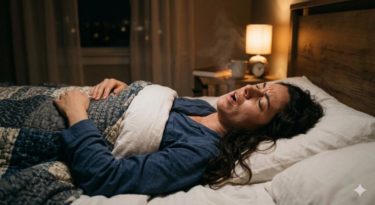
いびきという現象は、実はとても物理的です。睡眠時には筋緊張が低下します。すると軟口蓋や咽頭粘膜が弛みます。
そこへ呼吸の空気が通ると、柔らかい組織が振動し、音になります。
例えて言えば、柔らかい布が風でばたつく現象に近いものです。
したがって治療の本質はとてもシンプルです。
振動する組織を少し硬くすること。
ナイトレーズは、この単純ですが本質的なポイントをレーザーで解決しようとした治療なのです。
ナイトレーズで用いられるのはEr:YAGレーザー(波長2940nm)です。レーザー医学の世界では、この波長には特別な意味があります。
理由は一つ、水への吸収が極めて高いからです。
生体組織の大半は水で構成されています。この波長の光が当たるとエネルギーはほぼ水分子に吸収され、局所的な熱へと変換されます。
水の赤外吸収特性については古典的研究として
Hale と Querry の論文が知られており、2940nm付近が水吸収のピークであることが示されています(1)。
つまりこのレーザーは、生体組織に入るとすぐ水に捕まり、非常に浅い範囲で熱として作用する光なのです。
切らないレーザー治療
耳鼻科領域では、いびき治療にCO₂レーザーが用いられることがあります。
これは軟口蓋を蒸散させ形態を変える方法で、いわば外科的アプローチです。
しかしナイトレーズの発想は少し違います。
基本は「切らないレーザー」です。
Er:YAGレーザーを低エネルギーで照射すると、粘膜は蒸散する手前、約60℃前後まで温められます。
この温度帯には生体にとって重要な意味があります。コラーゲンが熱によって収縮する温度だからです。
コラーゲンの熱収縮については Ross らの研究で、約60〜65℃で三重らせん構造が変化し線維が短縮することが示されています(2)。
つまりレーザーはここで、切開器具ではなく、組織のテンションを調整するツールとして働くのです。
咽頭の空気力学
いびきは単なる音ではなく、流体力学の現象でもあります。
睡眠時の咽頭は柔らかいチューブのような構造です。
そこに気流が通ると陰圧が生じ、軟組織が振動します。
この現象は「flutter vibration」と呼ばれます。
いびきの気道力学については Huang らのレビューで詳しく整理されています(3)。
この研究では、軟口蓋の剛性や厚みがわずかに変わるだけでも、振動の発生条件が大きく変化することが示されています。
ナイトレーズはまさにこのポイントに働きます。
レーザー照射によって
粘膜がわずかに引き締まり、
軟口蓋が少し短縮し、
組織がわずかに厚くなる。
その結果、同じ呼吸でも振動が起こりにくくなるのです。
なぜ三回治療なのか
ナイトレーズは通常、数週間おきに三回行われます。
これにも生物学的な理由があります。
レーザーによる軽い熱刺激は、組織に小さな創傷治癒反応を引き起こします。その結果
線維芽細胞の活性化
新しいコラーゲン生成
組織リモデリング
が数週間かけて進行します。
レーザー後のコラーゲン再構築については Hantash らの研究で詳しく報告されています(4)
ここからは、工学博士号を持つレーザー専門医として、少し専門的な話をさせてください。
通常、Er:YAGレーザーは蒸散レーザーとして知られています。波長2940nmは水への吸収が非常に強いため、皮膚科では表皮を正確に蒸散させるレーザーとして使われてきました。
ところがナイトレーズでは、そのレーザーを蒸散させずに加熱だけに使うという、少し逆説的な方法が採られています。
ここで重要になるのが、レーザー医学の基本概念である熱緩和時間(thermal relaxation time)です。
これは「組織が熱を外へ逃がすまでの時間」を意味します。
この概念は Anderson と Parrish によって提唱された選択的光熱分解理論として知られています(5)。
SMOOTHモードという工夫
ナイトレーズでは、レーザーは単発パルスではなく、多数のマイクロパルスの列(SMOOTHモード)として照射されます。
一つ一つのパルスは蒸散を起こさない程度のエネルギーですが、連続することで熱が徐々に蓄積します。
その結果、組織温度は
蒸散温度(約100℃)には達せず、
コラーゲン収縮温度(約60℃)付近まで上昇します。
つまり
蒸散を起こさず、温熱効果だけを引き出す
ことが可能になるのです。
このようなサブアブレイティブ加熱の生物学的作用については Dierickx のレビューで詳しく議論されています(6)。
どんなイビキに効くのか
ここまで読むと、「いびきなら何でも治るのか」と思われるかもしれません。
しかし臨床的には、レーザーが効きやすいタイプとそうでないタイプがあります。
ナイトレーズが最も効果を発揮するのは、軟口蓋型いびきです
睡眠中に軟口蓋が弛み、そこが振動して音を生じるタイプです。
この場合、レーザーによって粘膜が引き締まり、組織の剛性が上がることで振動が減少します。
睡眠医学の研究では、睡眠時無呼吸の閉塞部位として
軟口蓋
舌根
側咽頭壁
など複数の解剖学的要因が関与することが知られています。
この点については Schwab らのMRI研究がよく知られており、睡眠時無呼吸症候群では咽頭軟部組織の解剖学的構造が重要な役割を持つことが示されています(7)。
このあたりを見極めるのが、やはり臨床医の仕事になります。
工学と医学の美しい接点
ナイトレーズを少し離れた視点から見ると、実に興味深い治療です。
皮膚科では
「しわを改善するためのタイトニング」
耳鼻科では
「いびきを減らすためのタイトニング」
同じレーザー物理が、異なる臓器で応用されています。
医療というものは結局のところ、生体という物理系に対してどのようにエネルギーを与えるかという問題でもあります。
その意味でナイトレーズは、レーザーを「切る道具」としてではなく、組織の力学を調整するツールとして使うという、非常に現代的な発想の治療と言えるでしょう。
眠りの気道に、静かにレーザーの熱を置く。
そんな穏やかな物理学が、いびきという日常的な問題を少し軽くしてくれるのかもしれません。
参考文献
1) Hale GM, Querry MR. Optical constants of water in the infrared. Applied Optics. 1973;12:555-563.
2)Ross R et al. Thermal stability of collagen. Journal of Biomechanics. 1998;31:159-165.
3)Huang L et al. Biomechanics of snoring. Sleep Medicine Reviews. 2008;12:139-148.
4)Hantash BM et al. In vivo histological evaluation of fractional laser resurfacing. Lasers in Surgery and Medicine. 2007;39:96-107.
5)Anderson RR, Parrish JA. Selective photothermolysis: precise microsurgery by selective absorption of pulsed radiation. Science. 1983;220:524-527.
6)Dierickx CC. The role of deep heating for nonablative skin rejuvenation. Lasers in Surgery and Medicine. 2006;38:799-807.
7)Schwab RJ et al. Upper airway and soft tissue structural changes induced by CPAP in obstructive sleep apnea. American Journal of Respiratory and Critical Care Medicine. 1996;154:110-117.
A Laser Treatment for Snoring
— Placing Gentle Heat in the Airway of Sleep —
When traveling to international conferences, I occasionally come across treatments that make me think, “That is an elegant idea.” One such example is a laser treatment for snoring known as NightLase.
This technology actually appeared more than a decade ago. At the time, I became one of the first Japanese physicians to obtain a diploma for the procedure. Since our clinic owns the device, the treatment can also be performed at Clinic F.
Back then it was not widely known. Recently, however—perhaps influenced by social media—its name recognition has increased rapidly. We now receive referrals even from physicians in other specialties.
For those who have worked in laser medicine for a long time, the concept of tightening tissue by heating collagen is already very familiar. But when I first realized that this principle had been applied to the pharynx during sleep, I had to smile. It was a clever idea—simple, yet insightful.
The Physics of Snoring
Snoring is, in fact, a highly physical phenomenon.
During sleep, muscle tone decreases. As a result, the soft palate and pharyngeal mucosa relax. When air passes through the airway, these soft tissues begin to vibrate, producing sound.
One might compare it to a piece of soft cloth fluttering in the wind.
The therapeutic concept is therefore quite simple:
Make the vibrating tissue slightly firmer.
NightLase attempts to achieve this fundamental goal using laser energy.
Why an Er Laser?
NightLase uses an Er laser with a wavelength of 2940 nm. In laser medicine, this wavelength is special for one main reason: it has an extremely high absorption in water.
Because biological tissues consist largely of water, energy at this wavelength is rapidly absorbed by water molecules and converted into localized heat.
The infrared absorption spectrum of water has long been studied, notably in the classic work by Hale and Querry, which demonstrated that absorption peaks around 2940 nm (1).
In other words, when this laser enters biological tissue, its energy is almost immediately captured by water, producing heat within a very shallow depth.
A “Non-Cutting” Laser Approach
In otolaryngology, snoring has sometimes been treated with CO₂ lasers, which vaporize portions of the soft palate to reshape the tissue—a surgical approach.
NightLase, however, takes a different path.
It is essentially a non-ablative laser treatment.
When an Er laser is delivered at lower energy levels, the mucosa is heated to roughly 60°C, just below the point of vaporization.
This temperature range has important biological significance. It is the temperature at which collagen contracts.
Research by Ross and colleagues demonstrated that collagen’s triple-helix structure begins to change around 60–65°C, causing the fibers to shorten (2).
Thus, the laser acts not as a cutting instrument but as a tool for adjusting tissue tension.
Aerodynamics of the Pharynx
Snoring is not merely an acoustic phenomenon—it is also a matter of fluid dynamics.
During sleep, the pharynx behaves somewhat like a soft tube. As air flows through it, negative pressure is generated, causing the soft tissues to vibrate. This phenomenon is often described as flutter vibration.
The airway biomechanics of snoring have been thoroughly reviewed by Huang and colleagues (3). Their work shows that even small changes in the stiffness or thickness of the soft palate can significantly alter the conditions under which vibration occurs.
NightLase acts precisely at this point.
Laser irradiation causes:
• slight tightening of the mucosa
• mild shortening of the soft palate
• a modest increase in tissue thickness
As a result, vibration becomes less likely to occur under the same airflow conditions.
Why Three Treatments?
NightLase is typically performed three times at intervals of several weeks.
This schedule also has a biological basis.
Mild thermal stimulation from the laser triggers a small wound-healing response in the tissue. Over several weeks, this leads to:
• fibroblast activation
• new collagen formation
• tissue remodeling
The process of collagen remodeling after laser treatment has been well described by Hantash and colleagues (4).
An Engineering Perspective
Allow me to add a more technical perspective, speaking as a laser specialist with a background in engineering.
The Er laser is usually known as an ablative laser. Because the wavelength of 2940 nm is strongly absorbed by water, it has long been used in dermatology to precisely vaporize the epidermis.
Yet NightLase uses the same laser in a somewhat paradoxical way: not to ablate tissue, but only to heat it.
The key concept here is thermal relaxation time, a fundamental principle in laser medicine.
Thermal relaxation time refers to the time required for heat to dissipate from tissue. This concept is central to the theory of selective photothermolysis, proposed by Anderson and Parrish (5).
The Role of SMOOTH Mode
In NightLase, the laser is not delivered as a single pulse. Instead, it is emitted as a series of multiple micropulses, known as SMOOTH mode.
Each individual pulse carries energy below the threshold for ablation. However, when delivered sequentially, heat gradually accumulates.
As a result, tissue temperature:
• does not reach the vaporization threshold (~100°C)
• but rises to around the collagen-contraction range (~60°C)
This allows clinicians to extract thermal effects without causing ablation.
The biological effects of such sub-ablative heating have been discussed in detail in reviews by Dierickx (6).
Which Types of Snoring Respond?
At this point, one might wonder whether this treatment works for all types of snoring. Clinically, however, some forms respond better than others.
NightLase is most effective for soft-palate–type snoring.
In this form, relaxation of the soft palate during sleep leads to vibration and sound production. Tightening the mucosa and increasing tissue stiffness can therefore reduce the vibration.
Sleep-medicine research shows that airway obstruction in sleep apnea may involve several anatomical structures, including:
• the soft palate
• the tongue base
• the lateral pharyngeal walls
MRI studies by Schwab and colleagues have demonstrated how soft-tissue anatomy of the upper airway contributes to obstructive sleep apnea (7).
Determining the dominant site of obstruction remains an important task for the clinician.
Where Engineering Meets Medicine
Viewed from a broader perspective, NightLase is a fascinating example of how engineering and medicine intersect.
In dermatology, laser tightening is used to reduce wrinkles.
In otolaryngology, the same principle is used to reduce snoring.
The same laser physics, applied to different organs.
Ultimately, medicine is often a question of how energy is delivered to a biological system.
In that sense, NightLase represents a very modern concept: using lasers not as cutting tools, but as instruments for modulating the mechanical properties of tissue.
Placing a quiet touch of laser heat into the airway during sleep.
A gentle application of physics that may help ease one of the most familiar problems of everyday life.
References
1) Hale GM, Querry MR. Optical constants of water in the infrared. Applied Optics. 1973;12:555-563.
2)Ross R et al. Thermal stability of collagen. Journal of Biomechanics. 1998;31:159-165.
3)Huang L et al. Biomechanics of snoring. Sleep Medicine Reviews. 2008;12:139-148.
4)Hantash BM et al. In vivo histological evaluation of fractional laser resurfacing. Lasers in Surgery and Medicine. 2007;39:96-107.
5)Anderson RR, Parrish JA. Selective photothermolysis: precise microsurgery by selective absorption of pulsed radiation. Science. 1983;220:524-527.
6)Dierickx CC. The role of deep heating for nonablative skin rejuvenation. Lasers in Surgery and Medicine. 2006;38:799-807.
7)Schwab RJ et al. Upper airway and soft tissue structural changes induced by CPAP in obstructive sleep apnea. American Journal of Respiratory and Critical Care Medicine. 1996;154:110-117.