













TakahiroFujimoto.com

HOME MAIL
HOME PROFILE BOOKS MUSIC PAPERS CONFERENCES BLOG MAIL CLOSE

BLOG 藤本幸弘オフィシャルブログ

BLOG|ブログ

考えない国

考えない国 ― 多数決と正解主義の果てに

昨晩のもう一つの話題。

「日本の多数決って、ちょっとおかしくない?」

例えば、小学校のクラスでの決定時。よく考えた五人と、まったく考えない三十人。

その票の重さが同じなら、いったい何をもって“民意”と呼ぶのだろう。

数が多いことが、必ずしも考えた結果ではない。

それでも僕たちは「多数決こそ民主主義」と信じて疑わなかった。

過半数にこだわる国会がまさにそう。政党の派閥や体裁ではなく、国民から選ばれた代表として、それぞれが考えて結論を出して欲しい。

それが出来ないなら、国会議員を全員首にして、チャットGPTに決めさせればいいんだろう。

だが本来、民主主義とは数の力ではなく、思考の責任を共有する文化であるはずだ。

■ 正解を覚える国

日本人が「考える」ことを避けるようになった理由は、
おそらく戦後の小学校の教室にある。

先生が黒板に書く“正しい答え”を覚えることが教育と呼ばれ、

「なぜそうなるのか」を問うことは授業の妨げとされた。

考えるよりも、間違えないことを学んだ。

そしてその訓練は、社会人になっても続く。

誰もが正解を探し、空気を読み、波風を立てない。

失敗を恐れ、問いを持つことを忘れる。

そうして「考える力」は徐々に萎縮していった。

思考とは筋肉のようなもので、使わなければ衰える。

大人になってから突然「自分の頭で考えろ」と言われても、その神経はもう動かないのだ。

■ 熟議なき多数決

だから日本の多数決は、民主主義ではないと思う。

それは熟慮の果ての合意ではなく、空気の延長にすぎない。和を乱さないことが最優先され、異論を唱える者は敬遠される。

会議では「多数意見に従います」と誰かが言い、本音を語らぬまま賛成票が積み上がる。

その瞬間、民主主義は息を止め、「静かな専制」が始まる。

思考を手放した多数の合意は、ただの惰性だ。

それを民意と呼ぶのは、どこか悲しい。

考えることをやめた社会には、議論も進化もない。

■ 考える勇気

数ではなく、考える力こそ民主主義の礎だ。

そして思考とは、訓練であり、文化であり、勇気である。

空気に従う勇気ではなく、異を唱える勇気を持つ人々が増えたとき、この国は少しだけ前に進むのかもしれない。

正解を覚えるのではなく、問いを立てる。

勝ち負けを競うのではなく、理解しようとする。

それが、真に考える社会の始まりだ。

「考える国」は、遠い理想ではない。

それは一人ひとりが今日、たった一つの問いを立てることから始まる。

多数ではなく、思考の連鎖こそが未来を動かす。

僕は、日本においてもその小さな“問い”の光を、まだ信じている。

A Nation That No Longer Thinks — At the End of Majority Rule and the Pursuit of “Correct Answers”
Another topic from last night’s conversation:

“Isn’t Japan’s idea of majority rule kind of strange?”

Take a typical elementary school classroom, for example:

Five students who think deeply, and thirty who don’t think at all.

If every vote carries the same weight, what exactly do we mean by “the will of the people”?

A larger number doesn’t always mean a more thoughtful choice.

And yet, we were taught to believe—without question—that majority rule is the essence of democracy.

Just look at the Japanese parliament, where everything hinges on a simple majority.

Instead of worrying about party factions and appearances, each representative should think for themselves—as individuals chosen by the people—and reach their own conclusions.

And if they can’t do that?

Then maybe we should fire the entire Diet and let ChatGPT make the decisions instead.

But democracy, in its true form, isn’t about numbers.

It’s about a shared culture of responsibility for thought.

A Nation That Memorizes the “Right Answer”

Why have Japanese people come to avoid thinking?

The answer likely lies in the postwar classroom.

In school, “education” was defined as memorizing the “correct answers” the teacher wrote on the blackboard.

Asking why something was correct was seen as a disruption.

We were taught not to think, but not to be wrong.

That training continued into adulthood.

Everyone searches for the “right answer,” reads the room, avoids making waves.

We fear failure and forget how to question.

And so, our ability to think began to shrink.

Thinking is like a muscle—if you don’t use it, it atrophies.

So when, as adults, we’re suddenly told to “think for yourself,” the neurons simply don’t fire anymore.

Majority Rule Without Deliberation

This is why I believe Japan’s version of majority rule is not true democracy.

It’s not consensus built through deep discussion—it’s just the continuation of social pressure.

The highest priority is to maintain harmony.

Those who dissent are quietly pushed aside.

In meetings, someone inevitably says, “I’ll go along with the majority,”

and the “yes” votes pile up—without anyone ever speaking their true thoughts.

In that moment, democracy holds its breath.

And a quiet authoritarianism begins.

Consensus without thought is nothing more than inertia.

To call that “the will of the people” is, frankly, sad.

A society that stops thinking has no debate.

No progress. No evolution.

The Courage to Think

Democracy is not built on numbers.

It is built on the ability to think.

And thinking requires training. It requires culture. It requires courage.

Not the courage to conform to the atmosphere,

but the courage to disagree.

When more people in Japan find that kind of courage,

perhaps this country will begin to move forward—if only a little.

The goal is not to memorize the “right answer,”

but to ask the right questions.

Not to win or lose,

but to seek understanding.

That is where a truly thinking society begins.

A “thinking nation” is not some distant ideal.

It begins when just one person, today, dares to ask a single question.

The future is not moved by the majority—

but by a chain reaction of thought.

And I still believe in the quiet light of those small questions,
even here in Japan.


正義の名のもとに In the name of Justice

新国際学会周遊記 特別篇 「牙を抜かれた国 ― 正義の名のもとに」

昨晩えのおくさんと話していて、日本が牙を抜かれたのは 2011年の暴力団排除条例つまり、ヤクザが消えたことが原因の一つではないか。そんな話題になった。

もちろん、暴力団の存在を肯定するつもりはない。恐喝や抗争、反社会的な資金の流れ——。

そうしたものが浄化されていったのは、文明社会として当然の帰結だろう。

しかし、あまりに一気に、そして一方的に“消された”ことには、別の意味があるように思えてならない。

2011年の暴力団排除条例。

それは単なる治安政策ではなく、国家が「裏社会の統治権」を奪還した瞬間だった。

「近代国家とは、法の名のもとに暴力を独占する装置である」

つまり、暴力が無くなったのではない。

暴力を使う権利が国家に一元化されたのだ。

裏の秩序が消えた結果、権力は無風状態で膨張した。

「ヤクザの崩壊とは、国家が“裏の行政機構”を解体し、秩序の二重構造を終わらせた過程である」

それによって、日本社会からは「恐れ」と「矜持」という二つの緊張が失われた。

誰も怒らず、誰も闘わない。

そして、怒りさえ“ハラスメント”として封印された。

暴力団排除の正義が進む中で、本当に消されたのは、「悪ではなく野性」だったのかもしれない。

政治は安全という名の鎖を人々にかけ、国民は従順な羊の群れとなった。

“When a nation loses its darkness, it loses its depth.”
(国が闇を失うとき、その国は深みを失う)

光が強ければ、影もまた濃くなる。

日本は今、影を恐れ、光だけを求めている。

だが、影なき国に本当の力は宿らない。

暴力を失って平和になったのではなく、牙を抜かれて従順になっただけなのかもしれない。

それが、“正義の名のもとに去勢された国”

令和日本の静かな現実である。

A Nation Defanged — In the Name of Justice

Last night, in conversation with Eno-san, we found ourselves wondering—

Could the defanging of Japan have begun with the 2011 anti-yakuza ordinances?

The year the yakuza began to vanish from public life.

Let me be clear: this is not an attempt to justify the existence of organized crime.

Extortion, gang wars, illicit financial networks—

Cleansing society of such elements was, of course, a necessary step for any civilized nation.

And yet, the abruptness and totality with which they were erased seems to carry a different meaning altogether.

The 2011 Anti-Organized Crime Ordinance—

It was not merely a public safety measure.

It marked the moment when the state reclaimed its monopoly over the governance of the underworld.

As political theorist Max Weber once said:

“A modern state is a human community that (successfully) claims the monopoly of the legitimate use of physical force within a given territory.”

In other words, violence didn’t disappear.

The right to use violence was simply consolidated—placed entirely in the hands of the state.

When the underworld’s code of order vanished, authority was left unchecked, free to expand in silence.

The collapse of the yakuza was not just the fall of a criminal group.

It was the dismantling of a parallel administrative system—an underground structure that, for better or worse, coexisted with official power.

And with it, two vital forces disappeared from Japanese society:

Fear and pride.

No one gets angry anymore.

No one fights.

Even anger itself has been boxed in—reframed as just another form of “harassment.”

In the name of justice, what may have been truly erased was not evil,but wildness.

Politics bound the people in chains of “safety.”

And the people, in turn, became a flock of obedient sheep.

“When a nation loses its darkness, it loses its depth.”

The brighter the light, the darker the shadow.

But Japan today fears the shadow—seeks only the light.

And yet, a nation without shadows holds no true power.

We haven’t achieved peace by losing violence.

We’ve merely become docile—our fangs quietly pulled.

This is the quiet reality of Reiwa-era Japan:

A nation neutered in the name of justice.


滅びの国、再生の街バスク The Basque Country — A Land That Once Fell, a City Reborn

新国際学会周遊記──滅びの国、再生の街バスクを歩く

ピレネー山脈の麓、緑濃い丘陵の間にビルバオの町がある。

大西洋の風が吹き抜けるこの土地は、スペインの中でも異質な魂を持つと言われてきた。

彼らは自らをスペイン人ではなく、「バスク(Euskaldunak)」と呼ぶ。

独自の言語と文化を守り続けてきた人々だ。

しかしその誇り高き「国」は、ひとりの独裁者のもとに滅びた。

フランシスコ・フランコ将軍。1936年、スペイン内戦が始まると、バスク地方は共和派として自治を宣言し、独自の政府を樹立する。

だが、1937年4月26日。

世界を震撼させた「ゲルニカ空爆」が起こる。

ヒトラー率いるドイツのコンドル軍団がフランコの要請で空から襲いかかり、女子供を含む数千人が命を落とした。

街は焼け、言葉を失った。

国の軍隊が他国の民間人を殺戮した初めての大事件だった。

この流れが、第二次世界大戦の日本国民への惨劇につながっていく。

ピカソはパリでこの報を聞き、巨大なキャンバスに怒りと悲哀を描きつけた ──『ゲルニカ』(1937, Museo Reina Sofía)。

フランコ政権下では、バスク語は「国家への反逆」とされ、公の場での使用が禁じられた。

子供が母語を話せば罰せられ、町の看板からバスク語が消えた。

文化とは、言葉を通して受け継がれる命の形だ。

言葉を奪われた民族は、魂を凍らされる。

「バスクはフランコ将軍のために国が滅びてしまった土地」── この言葉には、その凍結された魂の痛みが宿る。

だが滅びは、再生の序章でもあった。

1975年にフランコが死去すると、スペインは民主化の道を歩み始め、1979年、バスク自治州が誕生する。

ビルバオは鉄鋼の街から芸術の街へと生まれ変わり、1997年に開館したグッゲンハイム美術館(Guggenheim Bilbao)は象徴となった。

かつて瓦礫と血で覆われた土地に、今はチタンの曲線が光を映す。

国家とは建物ではなく、人の心が作るものだと。

一度滅びた国が、再び立ち上がる姿──それは歴史の奇跡であり、人類の希望そのものなのだ。

Walking Through the Basque Country — A Land That Once Fell, a City Reborn

At the foot of the Pyrenees, nestled among lush green hills, lies the city of Bilbao.

Swept by Atlantic winds, this land has long been known as one with a spirit unlike any other in Spain.

The people here don’t call themselves Spaniards, but “Basques” (Euskaldunak)—a proud people who have preserved their unique language and culture for generations.
But this proud “nation” was once brought to ruin under the rule of a single dictator: General Francisco Franco.

When the Spanish Civil War began in 1936, the Basque region sided with the Republicans, declaring autonomy and forming its own government.

Then came April 26, 1937—the day the world was shaken by the bombing of Guernica.

At Franco’s request, Hitler’s German Condor Legion attacked from the skies. Thousands were killed, including women and children.

The town was reduced to ashes. The world was speechless.

It was the first major incident in history where a nation’s military had foreign forces slaughter its own civilians—an event that foreshadowed the horrors that would later unfold in World War II, including those suffered by the people of Japan.
Pablo Picasso, upon hearing the news in Paris, poured his outrage and sorrow onto a vast canvas.

The result: “Guernica” (1937, Museo Reina Sofía)—a timeless cry against war.

Under Franco’s regime, the Basque language was branded an act of rebellion. Speaking it in public was forbidden.

Children were punished for using their mother tongue. The Basque words disappeared from street signs.

Culture is the living form of a people, passed down through language.

To lose one’s language is to have one’s soul frozen in silence.

“The Basque Country is a land where a nation perished for the sake of General Franco.”

That phrase carries the weight of a soul held in suspension.

But even in destruction, there lies the seed of rebirth.

After Franco’s death in 1975, Spain began its journey toward democracy.

In 1979, the Basque Autonomous Community was officially established.

Bilbao, once a steel city, transformed into a city of art.

The Guggenheim Museum Bilbao, opened in 1997, became its shining symbol.

Where rubble and blood once covered the ground, now titanium curves reflect the light.

It reminds us: a nation is not made of buildings—it is made of the hearts of its people.

The rebirth of a nation once lost—

It is nothing short of a miracle of history, and a beacon of hope for humanity.


サンセバスチャンで”えのおく“さん

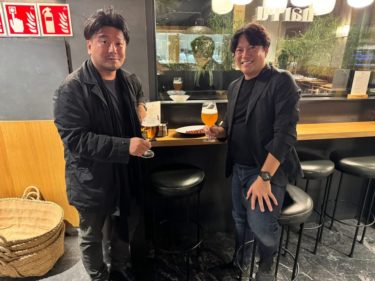
昨晩ご一緒したえのおくさん。

一年半ぶりの再会。

岡山県出身、現在サンセバスチャン在住で、日本とバスクの食文化を繋ぐ様な仕事をされています。

過去にガイドをお願いした人も多いのではないでしょうか?

海外在住だから見えてくる日本への視点。

色々語り合いました。

今の日本の常識は世界の非常識ですから。またこれについては別ブログで書いてみようと思います。

Last night, I had the pleasure of spending time with Eno-san, whom I hadn’t seen in a year and a half.

He is originally from Okayama Prefecture, and now lives in San Sebastián, where he works in a field that connects Japanese and Basque food cultures.

I imagine many of you may have asked him to be your guide in the past.

Living abroad gives him a unique perspective on Japan, and we had a deep conversation about many things.

What’s considered common sense in Japan today can seem completely irrational from a global point of view.

I’m thinking of writing more about this topic in a separate blog post.


カテゴリー